In the previous webinars discussing photography markets, I came across the work of Viviane Sassen. She is a Dutch photographer who is extremely successful in both fine art and fashion photography. Although her genre of photography seems completely unrelated to my own practice in urban photography, there was something about her work that really stood out to me and made an impact.
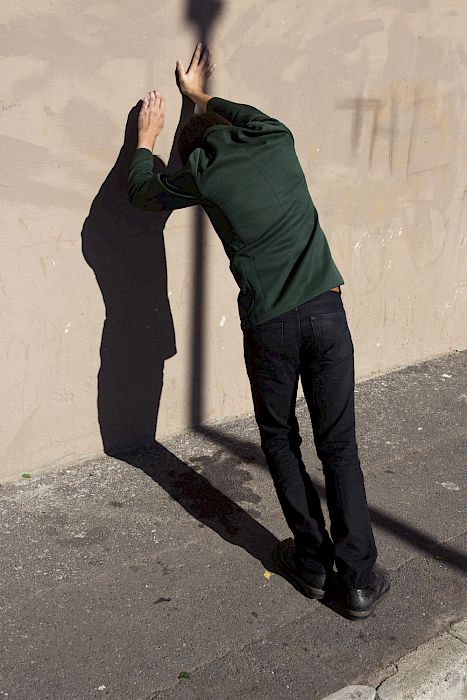
I was particularly drawn to her 2014 series, Umbra, in which she makes strong use of shadow, contrasts, colour, shadow and lines. When I came across the video below and heard Viviane Sassen describe how and where she discovered her photographic voice, I began to understand that I had been unconsciously drawn to the light and colours familiar to a landscape I had known most of my live, the African landscape, having grown up in South Africa. Viviane Sassen describes that it was only upon spending time in Africa that she connected to her creative voice and it is there that she learned about working with light and shadow, bright colours and sharp contrasts.
Her sensitivity to her subjects while in Africa is so clearly expressed and she acknowledges an awareness of the imbalance in power between her as the photographer and her subjects. Sassen approaches her subjects by gaining their understanding of her intention and that the photography is about concepts that are far larger and more abstract than themselves. She approached these images from a symbolic perspective and this resulted in a powerful series of portraits that made a tremendous impact on me because she has succeeded in capturing the essence of her subjects, somehow merging the present moment, with the cultural and historic inheritance of people and place.
“One of the best ways to appreciate Sassen’s work is through her photobooks. Flamboya merges documentary and fine art to find a new way of looking at Africa, one that is neither exoticising nor straightforward reportage. Parasomnia is a more dreamlike exploration of Africa that draws on those childhood memories and vivid dreams.” (O’Hagan, 2013) Sassen herself encourages photographers and artists to experiment and push the boundaries on creativity, working intuitively to create the magic . I feel truly inspired by her approach to photography and will refer to her work often as I experiment with the use of light, shadow, colour, contrast and line in my own work.
Viviane Sassen talks about her photographic process and how she discovered her creative voice.
Reference: O’Hagan, S. (2013). Fashion photographer Viviane Sassen: a different take. [online] the Guardian. Available at: https://www.theguardian.com/fashion/2013/oct/12/fashion-photographer-viviane-sassen [Accessed 8 Dec. 2019].

 Journey Through the Lens