Art and Commerce

The focus for our coursework this week was to explore how photographers mix art and commerce in different ways, as well as discussing the importance of developing a unique vision and distinctive visual language as this is the type of originality and consistency that clients are looking for. It is what makes a photographer stand out from the crowd and, very importantly in my opinion, makes them both recognisable and memorable. These qualities are essential now with the rise in digital technology and social media.

Personal branding is an important part of this too and must be considered when developing and online presence and creating content to be shared through these channels. The personal brand must not only be consistent with the professional image the photographer wants to create, but must also appeal to the appropriate market while remaining authentic and original. These aspects must all combine to compliment and highlight the visual language of the photographer.

Our tutor, Anna, emphasised that is is through the love of photography and the experience of practising it that we develop a personal style and visual language.  Having personal projects to work on not only helps to achieve this, but also keeps a connection to the love of photography. This is very important to allow for artistic expression, rather than having to focus on the commercial aspects of being a photographer and working within the design of the client brief.  It is important to create a balance between the art and the commercial practice

As Anna said, “Successful projects are produced by those who find interesting stories and interesting ways of telling them.” This really made an impact on me and got me thinking about the narrative aspect of photography, the visual story telling, something I would like to develop further in my own practice. It is important to create a balance between the art and the commercial practice of photography, and if done successfully, the two aspects could even merge, and personal projects may attract new clients.

As I am not yet a commercial photographer, I am predominantly working on personal projects and my MA Photography projects, so finding a balance would be about breaking into a commercial market, finding new clients and a market for my photography. I am still developing my style and visual language, which is one of the reasons I have chosen to do the MA Photography, as I believe this will help to challenge, inspire and develop my photographic practice.

 Some of the artists who inspire me and who have successfully combined their personal projects and vision with commercial photography are:

  • Zed Nelson is a highly successful documentary photographer and filmmaker who makes use of long-term personal projects to explore current social issues with a scope and depth that results in his very successful books and exhibitions. His project, The Family, for example, is ongoing since 1991 and will continue indefinitely.
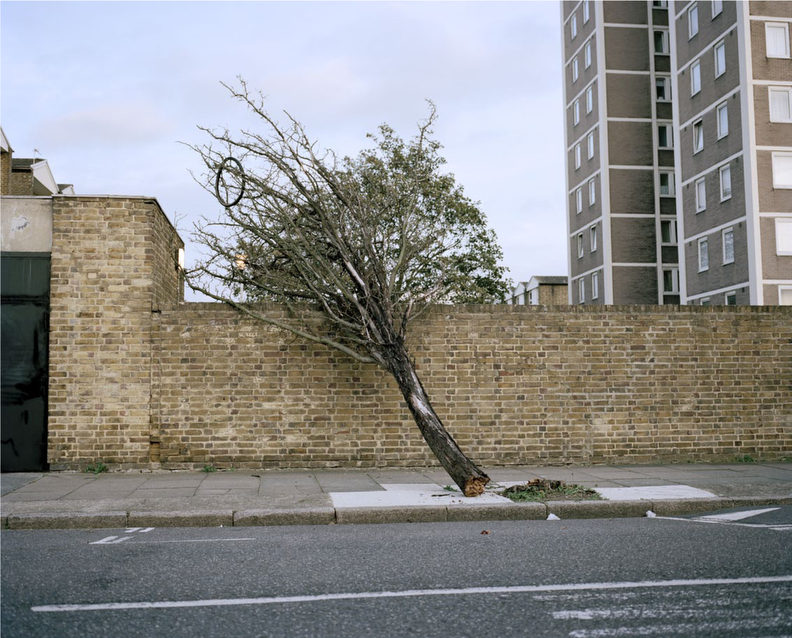
A Portrait of Hackney, 2014 © Zed Nelson
  • Alec Soth, the well known American documentary photographer who developed his unique style and visual language by wandering and exploring to find the subjects of his work. His first book, Sleeping by the Mississippi, was born out of his travels along the Mississippi River and was self-published in 2004. It was this project that drew attention from the art world and firmly established his career.
Harbor Marina (Morning), Memphis, TN, 2000 © Alec Soth

References:

Photoworks. (2019). New Writing: Hackney: A Tale of Two Cities | Photoworks. [online] Available at: https://photoworks.org.uk/hackney-tale-two-cities/

Widewalls. (2019). Alec Soth. [online] Widewalls. Available at: https://www.widewalls.ch/artist/alec-soth/
Rethinking Photographers

There are many opinions about photographers (some positive, some negative) and they’re not always accurate. The perception of photographers and what they do is heavily influenced by the media and other mainstream ways in which photography is portrayed, for example in news, film and advertising. These are often based on stereotypes, particularly those around gender stereotyping. Sometimes photography is portrayed as being an exciting, adventurous and highly paid profession with an accompanying lifestyle, or it can be portrayed as a ruthless, voyeuristic and dishonest profession.

This excellent video created by Mishka Henner and David Oates looks at the way photographers have been portrayed in film by creating a clever montage. Their introduction to the video is very apt:

“Voyeur, hunter and investigator are just a few of the roles that have characterized the photographer when depicted in modern cinema. In Photographers, hundreds of scenes involving this now ubiquitous character are remixed and re-sequenced to expose the clichés, tropes and accidental truisms associated with the medium. As the sole subject of the film, the photographer is turned from observer to observed.”

Advertising for cameras has always portrayed the camera equipment as being the key to successful photography, however, now more than ever with such rapidly changing digital technologies, there is a constant emphasis on the value of the equipment in creating professional images. The aim is to encourage purchasing and upgrading to new equipment and to do so means creating a hype around the value of the camera, rather than the value of the photographer. This puts tremendous pressure on photographers to keep up with the newest and latest equipment in order to compete with what is out there and also diminishes the value and skill of the photographer.

Smart phone technology has gone hand in hand with the rapid rise in social media use and has created a digital culture of image sharing and content creation. The capabilities of smart phone cameras have been developed to the point that many people no longer use cameras and indeed that’s the way the technology is marketed. There is a tendency for the technology to be marketed in such a way that it implies anybody with a good camera or smartphone can be a good photographer. This has resulted in our day to day lives becoming saturated with average images that can completely obscure real photography and visual arts.

I have chosen to work with digital technology and use a DSLR camera because of the image quality and the immediacy, however, there is a part of me that wants to explore analogue as an artistic medium and return to the older technology for the enjoyment of the process and the distinct style of analogue images. There is a growing trend towards retro cameras with new Polaroid type cameras and other retro styles becoming very popular. Personally, I would prefer the original technologies rather than new versions created to look old as it lacks authenticity.

I have readily embraced social media as a means to showcase photography and have enjoyed the experience so far. I have learned that there is a lot more required than good photography in order to succeed on social media, so this can be challenging initially when starting out. There are many large accounts on social media that are about content creation and I have repeatedly seen that the most successful ones are those that have strong personal branding.

I believe these days it is essential for photographers to have an online presence as this is where the audience is located, and also where the photographer’s work can be found by potential clients. The caution is that it is a highly competitive and saturated market, so it is essential to plan content and share high quality, memorable images that will not only stand out from the rest, but will also showcase the photographer’s personal style.

It is a constantly changing visual world with rapid advancements in digital camera and smart phone technology and the subsequent rise of social media. Photographers could easily become lost amid the constant visual noise so they need to always be creating, adapting and competing in this digital arena. The perceptions are quite often that photographers are not highly skilled and people are not always willing to pay for photographic services or products when they believe they can do just as well themselves.

It really is essential that photographers rethink where they are positioning themselves in the market, what they are offering and how they can adapt to the changing terrain of visual art and technology. It is also vital that photographers think about their personal branding, what visual language they are using and how they are being perceived.

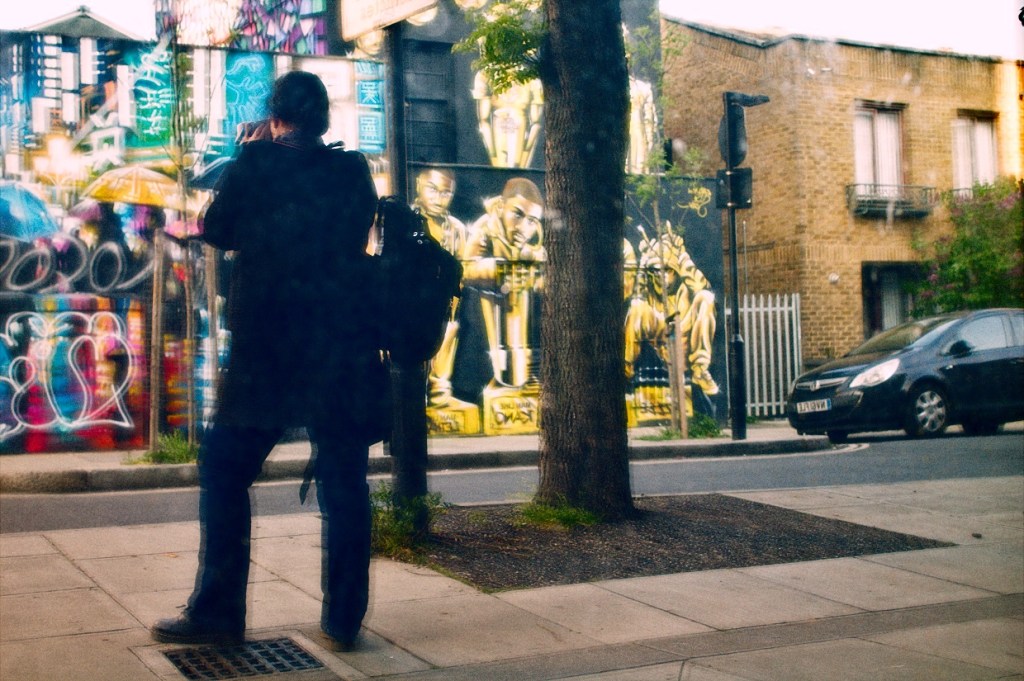
Artistic shot of me photographing street art in the rain. Photo by K.Magro