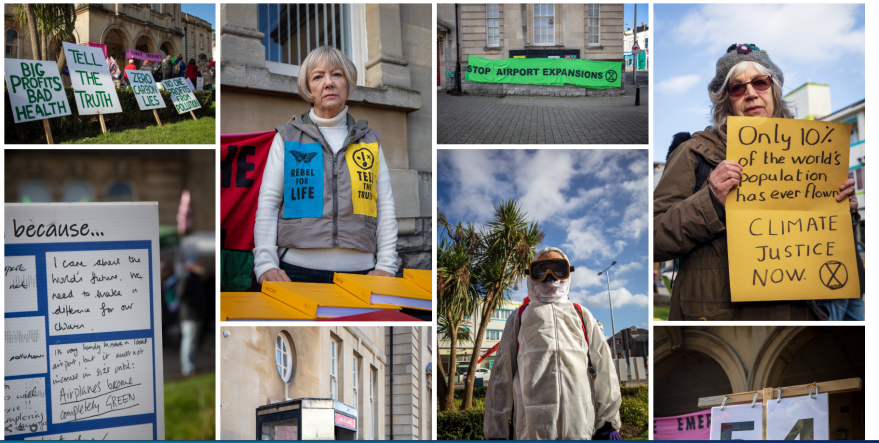
On February 8th 2020, Extinction Rebellion Bristol held a protest against plans for Bristol Airport expansion. The event was held at Weston-super-Mare beach and cleverly drew upon art and community to create awareness about the impact of airports on the environment and in the context of the climate crisis.
I spent the day at the event photographing events as they began and right through until the end of the day. It was a great experience doing this type of documentary work and engaging with activists as I tend to spend a lot of time working in isolation doing my urban landscape photography. It was great to challenge myself in this way and to immerse myself in a different type of photography for the day.
I had the opportunity while at the event to talk to some of the freelance journalists who were covering the event and to get some tips on best practice. It was a great mini-project for me to work on and it left me feeling inspired to do more of this type of photography. Documentary photography and photojournalism have always been an interest, so perhaps this is a direction I shall explore. The completed project can be viewed here.
Have you ever thought about how many photographic images you have seen in a single day? We are bombarded by visual stimulus and photographic images seemingly every minute of the day, from images on the internet, social media, newspapers, magazines, to posters and advertising billboards. The photographic image is everywhere I look, so much so that I do not always pay attention or think about the context in which I have seen photographs as they always seem to be in the background, something seen in passing.
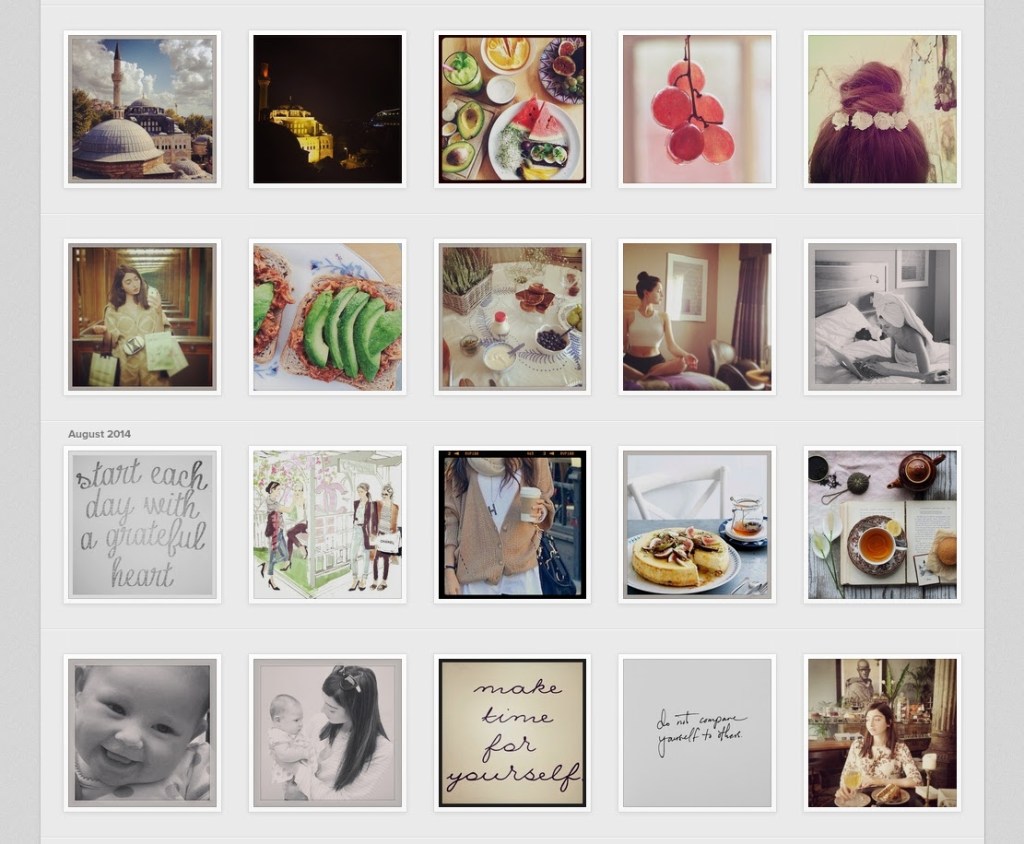
One thing I do know is that most of what I see in these images will be partly fictional, edited in some way, enhanced with a filter, retouched to remove imperfections and framed to show the perfect setting or perfect light or perfect pose….and so it goes on. Social media is always guilty of creating ‘fictions’ as people portray the image they would like to express and they highlight their perfect lives and perfect moments. Just like in advertising, this is not the reality for the everyday person but rather a fictitious, constructed and enhanced reality.
Amalia Ulman is a photographer who used Instagram to create an entire narrative around a fictional identity. In 2014, she used her social media profiles to stage a five-month scripted performance inspired by the extreme makeover culture. This was a project she called ‘Excellences & Perfections’ which explored the rise in social media, personal branding and lifestyle culture in a semi-fictional blend of her real life and online persona. The project can be viewed here: Excellences & Perfections.
This project emphasises how we cannot always discern between what is fact or fiction in the photographic image, or between which images are consciously made rather than taken. Quite often the photographic image is a combination of both and as a photographer, it is important to be able to recognise artifice versus authenticity and to be able to balance these within our own photographic practice.
Cindy Sherman is another well know photographer who constructed her images in a form of staged photography set up in a contrived environment but deliberately constructed to create the appearance of spontaneity. Sherman has always performed as the subject and becomes the characters of her works. She has created many different bodies of work exploring iterations of this idea and has completed many series, working with historical themes of portraiture, circus characters and the grotesque, and using a number of different props and techniques to create these images.
Linda Hutcheon (2003: 117) states that contemporary photography exploits and challenges both the objective and the subjective, the technological and the creative. In my opinion, the contemporary photographic artist will combine both constructed and authentic elements within their work, using both fictional and authentic components within their practice. It is about finding the balance between both aspects and creating an authentic narrative.
As my work is predominantly rooted in the urban landscape and some documentary photography, it is predominantly through the use of framing, editing and conscious use of camera angles that I may use some form of ‘construction’ within my photographic practice and perhaps this is a concept I could explore further by using different photographic media to create my images.
References:
Hutcheon, L. 2003. The Politics of Postmodernism. London: Routledge
When considering photography as an art and within our own practice, we should be questioning authenticity in the photograph and considering what sort of truth it may offer. It is also relevant to compare this with other art forms both visual and written representations of subject matter.
“The painter constructs, the photographer discloses. That is, the identification of the subject of a photograph always dominates our perception of it – as it does not, necessarily, in a painting.” (Sontag, 1977, p.92)
We generally tend to see photographs as representing the truth, as we believe they represent reality. Photographs are, however, an interpretation of reality, and an entirely subjective representation of the subject. In my own photographic practice, I had previously believed that my own work was a neutral documentation of the urban landscape. However, I have come to realise that neutrality is an impossibility as each image is a choice and a conscious decision to capture a specific subject matter, at a specific moment in time and to choose what will be included within or excluded from the frame. This in itself means there is subjectivity in the way reality is depicted.
Photographs are often viewed as evidence of the existence of something, but we must always be aware of the difference between what is photographic fact and what is constructed fiction.
“Photography’s plausibility has always rested on the uniqueness of its indexical relation to the world it images, a relation that is regarded as fundamental to its operation as a system of representation. For this reason, a photograph of something has long been held to be a proof of that thing’s being, even if not of it’s truth.”(Batchen, 2002, p.139)
Photography, however, cannot be relied upon as a mark of authenticity or truth. Photographic images do represent some sort of reality but what do they really tell us – are they metaphors, or constructed realities used to convey meaning? All images are based on something that once stood before the camera, however, the end result can be manipulated, particularly in the digital age.
I am of the opinion that photography is real and authentic but not always true – this will largely depend on the context of the image, and the intention of the photographer. Other forms of visual art are easily recognised as visual constructions and therefore subjective in their nature. Written representations are also viewed as subjective and evaluated according to their context. Yet photographs are readily assumed to be the truth because they so accurately represent our perceptions of reality and seem to replicate the same view as seen with the human eye. The mechanical processes and tools of photography lend it authenticity but this should not be confused with truth.
We should also remember that the mechanical aspect of photography is where the image begins or originates, but this does not entirely reflect its position as a form of art, or include its transformation from conception to art. Sontag (1997) emphasises that a photograph cannot exist without its subject, a fact that differentiates it from other art forms, but she also acknowledges that it is inherently an interpretation of the subject.
Photography is deliberate and the choices made by the photographer are what determine the photographic reality, while the subject itself creates authenticity. Truth however is not absolute and if there is such a thing as a photographic truth it could only ever be viewed as relative as it is dependent on the context in which it is created and the context in which it is consumed.
Thus, in my opinion, photography has both an indexical and an iconic nature, which is inherent in the relationship between the image and the subject. While indexicality is what gives an image authenticity, it is the iconic and symbolic nature which moves into the realm of art, interpretation and subjectivity.
In my own practice this makes it important to think about how I portray my subject as it will be interpreted according to both context and the perceived reality of the image. What I choose to include or exclude in the frame will be important, as will the use of photo-editing software and contextual placement of the image within the narrative of a project. Even when I’m working within the framework of the snapshot aesthetic, inspired by artists such as Stephen Shore, the images are entirely deliberate and carefully selected to create meaning, relationship and metaphor.
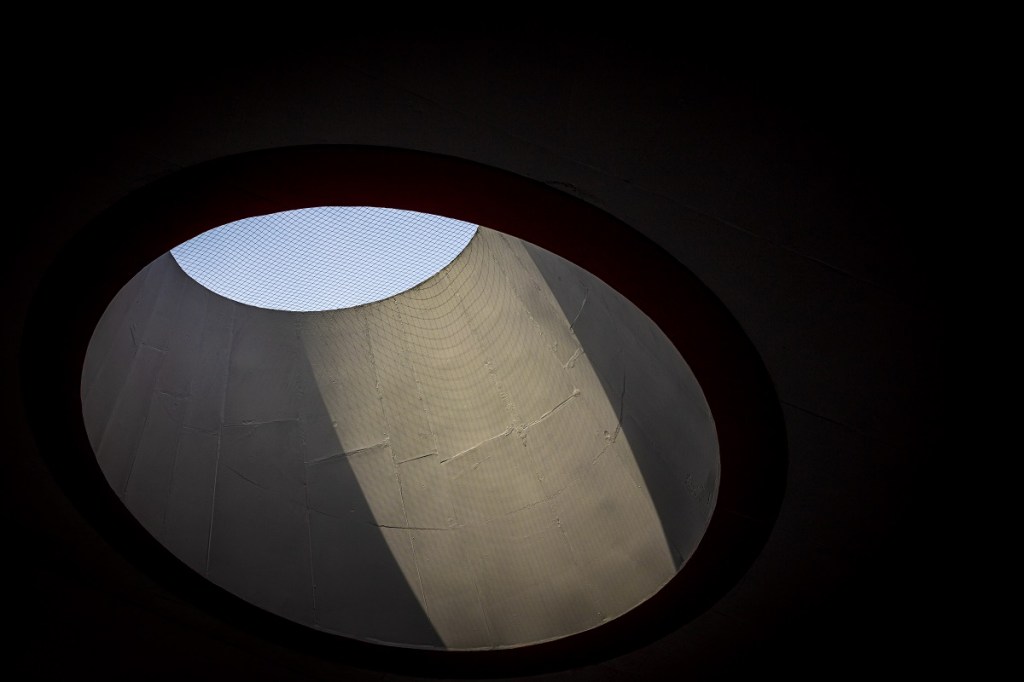
In my image below, the metaphor is implied in the title, the idea that things are looking up and there is a light at the end of the tunnel. The iconic aspect of the image is represented by the tunnel or portal as it appears to be depicted here and the indexical aspect is the physical concrete and mesh structure. My conscious choice as to what I included within the frame enhances the statement and bold impact of the image, and deliberately obscures the location in order to make this more symbolic.
Batchen, G. 2002. Each Wild Idea : Writing, Photography, History. Cambridge: MIT Press.
Sontag, S. 1977 Susan Sontag On Photography. London: Penguin.
STAUDINGER+FRANKE – Photography, Post Production & CGI. 2020. STAUDINGER+FRANKE – Photography, Post Production & CGI. [online] Available at: http://www.staudinger-franke.com/ [Accessed 23 June 2020].
The context in which we both create and consume photography is constantly changing and transforming, opening up new possibilities and directions.
Price, 1994, states that the use of the photograph determines it’s meaning. In other words, the context in which we view the image determines its meaning. This is illustrated very well in the Benneton Advert which formed part of their controversial 1992 ad campaign which used an image by journalism student, Therese Frare, originally published in November 1990 LIFE Magazine. The original black and white image was of gay activist and AIDS victim, David Kirby, as he lay on his death bed. Two years later this image was recolourised by artist Ann Rhoney and used by Benetton in its campaign.
Different groups had different reactions to this image, however, it received a lot of heavy criticism and backlash as it was perceived as spreading fear and profiting from the suffering of others. Yet David Kirby’s own parents had consented to the use of this image, as did the photographer, who believed this was a powerful message to raise awareness. Benetton themselves stated that this was the first public campaign to address AIDS and was intended to show solidarity. It is obvious there were different perceptions surrounding the way the image was portrayed.
Benetton often used pseudocumentary style images in their advertising campaigns and many of their adverts have been highly controversial, drawing different responses from different groups of people. Their campaigns often need to be looked at on a deeper level to understand the meaning. I don’t personally find their images offensive, instead I view them as provocative and challenging, inviting the viewer to connect with the concept and engage with it.
Reaction could thus be considered a success as it has evoked emotion and engagement. More thoughtful analysis of their adverts, however, would lead to a response rather than a reaction. Their campaigns certainly illustrate how meaning can be interpreted by the viewer and also by the context in which the image is placed. These images were likely to have been judged much more harshly when viewed as advertising and seen in the context of magazines, than if they were seen in the context of documentary photography or art. More of their historic campaigns can be viewed on their website: Benetton Group.
In looking at my own photographic practice and the context in which it is created and potentially received, I relate very strongly to this quote by Barthes, as it is closely aligned to my own relationship with photography and what I attempt to convey in my photographic practice:
“The photograph is a message. Considered overall this message is formed by a source of emission, a channel of transmission, and a point of reception.” (Barthes, 1977, p.15).
My own practice is located predominantly within documentary style and urban landscape photography, both of which could be consumed through the format of printed photographic images, either as part of a collection, exhibition or individual prints, or within the printed format of a photographic book. No doubt there are other contexts to consider but these are what I feel are most suited to my particular practice.
In considering how my photographic practice may be received and interpreted by viewers, I believe that the context is very relevant and relates to the audience or consumer of the work. An example of context is apparent in the feedback I received for last term’s Work in Progress. The tutors felt it was repetitive in places, and needed more depth and experimentation.
I had shown this work to others prior to submitting the assignment and received different responses from them. What I noticed was that people who lived in Bristol and weren’t photographers all felt a sense of sorrow within the images and knew exactly what the series of images was about. This led to them relating to the images and expressing their own feelings about the space being depicted and the events surrounding the images.
I also showed these images to people who were photographers but didn’t know the story behind the images. Most of them picked up on the narrative by spotting the clues in the images – things such as the changing seasons, the colour yellow and the link to the yellow lines, the strong sense of desolation and loss, and of course the missing bear.
What is very apparent is that there were three different perceptions and sets of responses to the same images based on the context in which they were viewed: critically as part of the MA Photography assignment, emotionally by people who lived in the area and related to the story, and technically by other photographers. This is something I will always need to consider when creating photographic projects and when making decisions about the context in which they will be consumed and who the audience is intended to be.
Resources:
Barthes, Roland (1977). ‘The Photographic Message’ in Image Music Text. London: Fontana.
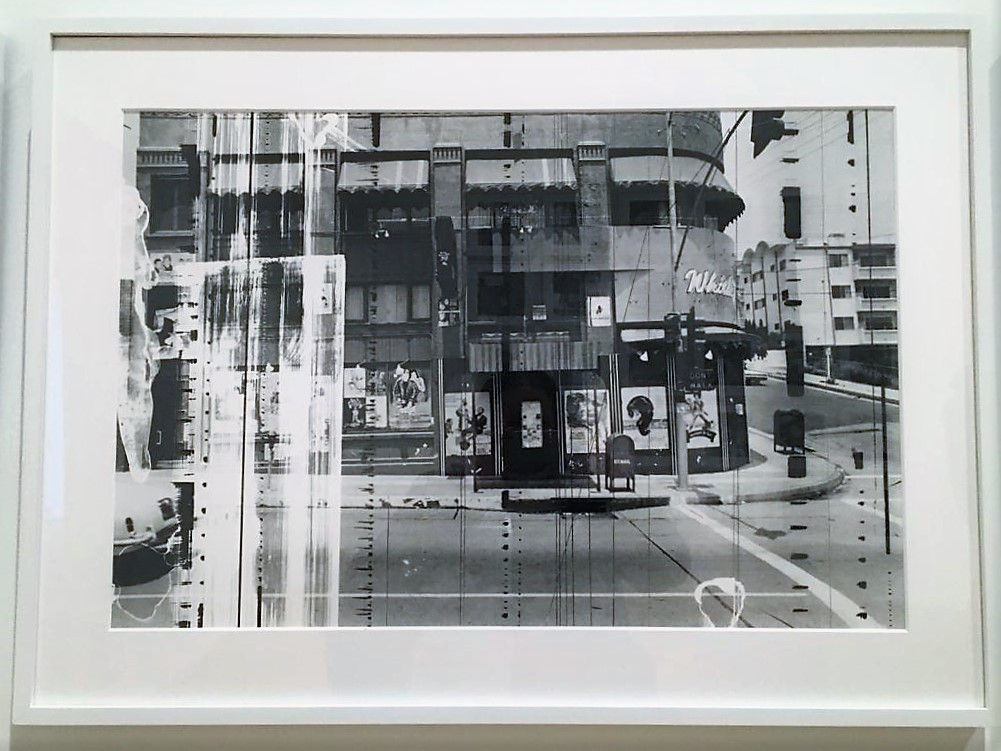
In January 2020, I visited the Tate Modern to explore the Ed Ruscha collection on display in their Artist Rooms. As an avid fan of Ruscha’s work I was eager to see this display encompassing a selection of his works spanning across his entire career and including his photographic books, photographic series and some of his iconic paintings.
Text has always been an integral part of Ruscha’s work with his clever use of typography and seemingly random use of isolated words and phrases. This was the first time that I have seen his paintings, all of which incorporated interesting textures and words or phrases superimposed on landscapes or sometimes on plain backgrounds.
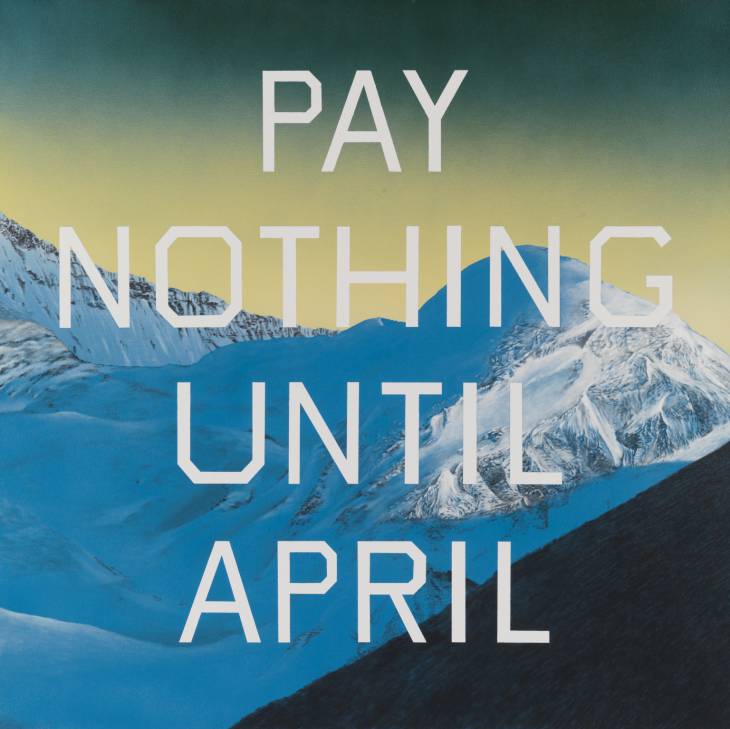
Ruscha’s early career was as a graphic artist and it is clear that he draws upon these techniques to create his art, cleverly working with different styles, fonts and layouts both on canvas and within is photographic books. Ruscha’s background in graphic art also influences his use of language and text as he frequently draws upon the language of advertising and adverts. This is quite obvious in works such as the one below:
Pay Nothing Until April 2003 Edward Ruscha born 1937 ARTIST ROOMS Acquired jointly with the National Galleries of Scotland through The d’Offay Donation with assistance from the National Heritage Memorial Fund and the Art Fund 2008 http://www.tate.org.uk/art/work/AR00047
The same language of advertising also appears in his photographic books with titles such as Some Los Angeles Apartments (1965) and Real Estate Opportunities (1970). Furthermore, this is a language that appears in Ruscha’s images and artwork not only as words, but also as a visual language through objects, signs and various other symbols.
Ruscha was fascinated by sign painters and he was inspired by the colourful billboard signs he saw all around him in Los Angeles. In a fascinating interview with Tate Modern’s Director, Frances Morris, he also refers to speeches made by people such as Mohammed Ali and authors such as Gertrude Stein, people who had a colourful and descriptive way with words. Ruscha describes these as being early influences that were part of his environment and his history and which later became incorporated into his work.
Ruscha is a talented conceptual artist and seeing his paintings gave me a greater understanding of his photographic works as it emphasised how he approaches his subject matter as a conceptual artist influenced by his earlier career as a graphic artist in the advertising industry. He incorporates text into his paintings in ways that are often out of context or at odds with the image in order to emphasise stereotypes and cultural conditioning. In his photographic books and series, this influences his choice of subject matter, the clever use of repetition of a theme or concept, his unusual book titles, and the use of very minimal words in his books, as well as the layout of his images.
His use of everyday words and phrases combined with images of the banal have create Ruscha’s iconic conceptual artworks. The image below is inspired by British writer J.G. Ballard whom Ruscha greatly admired. The text is taken from Ballard’s 1975 novel, High-Rise, a dystopian novel that revolves around a modern residential tower block and the process of social breakdown which occurs in this setting. The text appears at odds with the tranquil landscape it is superimposed upon, creating a contrast between two very different landscapes and states of being. Interestingly, J G Ballard, once said of Ed Ruscha: “The coolest gaze in American art.” (Ed Ruscha: ‘There’s room for saying things in bright shiny colours’, 2020)
Ruscha finds inspiration in his everyday environment and in the banal, transforming it into art and offering a form of commentary on American life and politics, stereotypes, consumerism and mass media imagery. He draws upon the topography, architecture, and mundane objects of his environment, in particular his home town Los Angeles and Hollywood and attempts to record what he sees. He draws consistently upon the urban landscape, as well as the typical cultural brands, icons, signs and language that form part of the ‘American Dream, for example cinema, the automobile culture, billboards.
For me there is a fascination with Ruscha’s focus on the icons of the ‘American Dream’ as there is something alluring about the concept of the American automobile culture and the classic road trip that is perhaps resonant with my own childhood experiences and landscapes growing up in South Africa. The similarity is in the wide open roads and constantly changing landscapes, the isolated petrol stations along the way, as well a the fascinating signposts, local icons and well known brands. The large American cities and icons were always present in the films of my teenage years and the Hollywood influence feels always familiar as a result. Ruscha’s interest in the urban landscape and it’s banal details, inspire much of my current photographic practice as I now find meaning in the urban landscape in which I find myself and which forms the narrative of my daily life.






 Journey Through the Lens