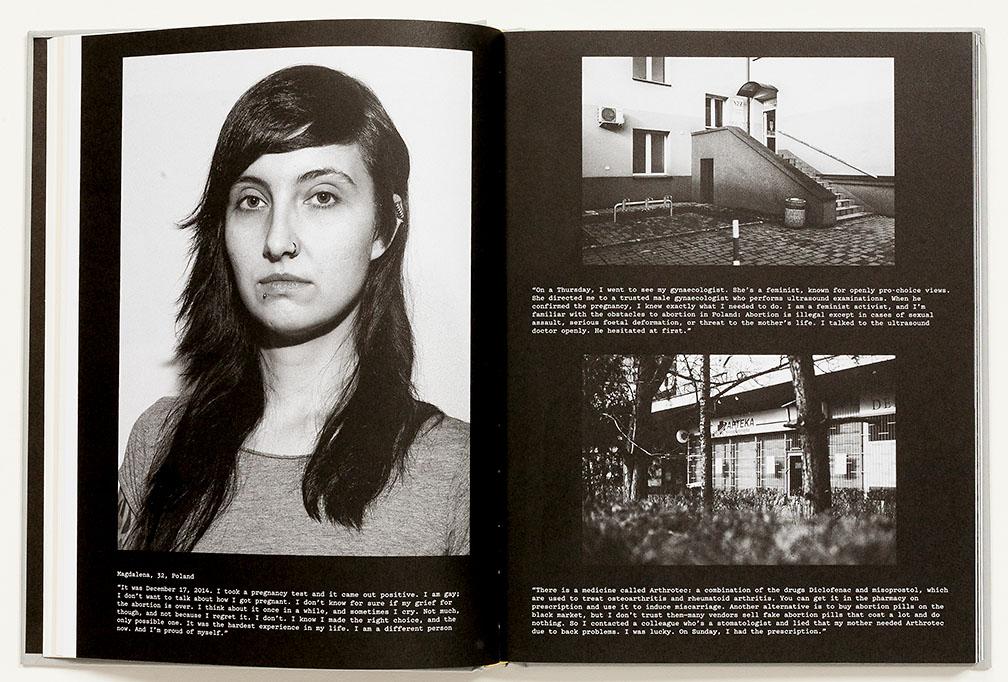
This was a fascinating talk that I attended with a fellow student on the MA Course. It was a Miniclick Photo Talk with Laia Abril, a photographer and multi-disciplinary artist who works across a number of different mediums and platforms. Her work relates to femininity but addresses the uneasy stories and realities around subjects such as gender equality. She has produced a number of books around these subjects, including A History of Misogyny: Chapter One: On Abortion (2018), which looks at abortion controls and how this appears across many different cultures, as well as showing the repercussions of these controls. Abril is currently working on A History Of Misogyny, Chapter 2: On Rape Culture.
This is not my usual choice of photography or artist, however I was quickly captivated by Abril’s own review of her work, which showed her to be a deeply insightful, sensitive and courageous human being. She spoke of how she considered her subjects and the potential danger they could be placed in through working with her. She was always aware of this every step of the way and was very protective of the woman who agreed to be her subjects. She also admitted that the danger and threat was also a potential for her as the photographer who could easily become a target around such emotional issues and readily acknowledged that she sometimes feels scared. I was very impressed with her strong sense of ethics and courage.
Abril approached these books by visualising complex situations and emotions, things that cannot be photographed. She then attempts to articulate and represent these visually. She supports her work by doing an immense amount of research and this stems from her journalism background. She said that reading and text research was central to her projects and that this is valuable when as a photographer you are located geographically far away from your subjects. Abril said that her process was one of accumulating information and then finding her position in it.
Her goal, she says, is usually a book and her aim is to make sure the viewer enjoys it from start to finish, so this can be difficult when presenting uncomfortable issues such as abortion. This has meant she has had to become very creative in how she designs a book or presents an exhibition. Abril focuses on how she groups images together, integrates text into the artwork, uses clever inserts and includes interesting representational images. She makes use of small, simple images because she believes it is more powerful for people to make the connections themselves.
Abril is always incredibly sensitive towards the women who are her subjects and says that it is through building a connection that they will talk to her, when they feel comfortable and safe. She cautions that it is important to be aware of how a subject experiences working with a photographer as we do not know the impact we have on them emotionally and psychologically. As photographers we must always consider how we portray our subjects, but also how we interact with them and what the impact on them will be.
Although, this is not my particular style of photography, I learned a tremendous amount from this discussion and would be apply to apply this in the future if I begin to work with subjects as part of social documentary projects.
 Journey Through the Lens