When considering photography as an art and within our own practice, we should be questioning authenticity in the photograph and considering what sort of truth it may offer. It is also relevant to compare this with other art forms both visual and written representations of subject matter.
“The painter constructs, the photographer discloses. That is, the identification of the subject of a photograph always dominates our perception of it – as it does not, necessarily, in a painting.” (Sontag, 1977, p.92)
We generally tend to see photographs as representing the truth, as we believe they represent reality. Photographs are, however, an interpretation of reality, and an entirely subjective representation of the subject. In my own photographic practice, I had previously believed that my own work was a neutral documentation of the urban landscape. However, I have come to realise that neutrality is an impossibility as each image is a choice and a conscious decision to capture a specific subject matter, at a specific moment in time and to choose what will be included within or excluded from the frame. This in itself means there is subjectivity in the way reality is depicted.
Photographs are often viewed as evidence of the existence of something, but we must always be aware of the difference between what is photographic fact and what is constructed fiction.
“Photography’s plausibility has always rested on the uniqueness of its indexical relation to the world it images, a relation that is regarded as fundamental to its operation as a system of representation. For this reason, a photograph of something has long been held to be a proof of that thing’s being, even if not of it’s truth.”(Batchen, 2002, p.139)
Photography, however, cannot be relied upon as a mark of authenticity or truth. Photographic images do represent some sort of reality but what do they really tell us – are they metaphors, or constructed realities used to convey meaning? All images are based on something that once stood before the camera, however, the end result can be manipulated, particularly in the digital age.
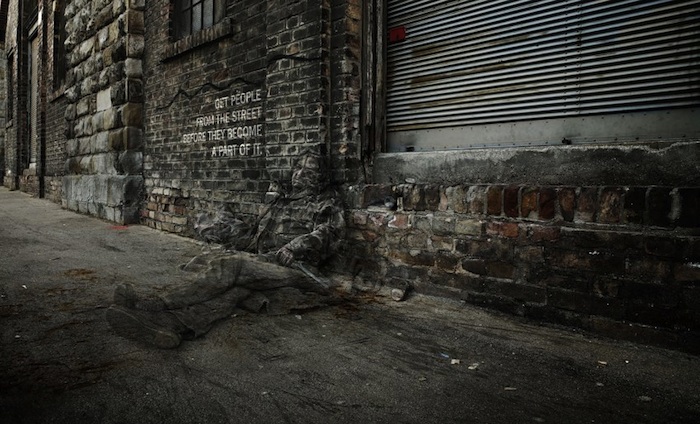
I am of the opinion that photography is real and authentic but not always true – this will largely depend on the context of the image, and the intention of the photographer. Other forms of visual art are easily recognised as visual constructions and therefore subjective in their nature. Written representations are also viewed as subjective and evaluated according to their context. Yet photographs are readily assumed to be the truth because they so accurately represent our perceptions of reality and seem to replicate the same view as seen with the human eye. The mechanical processes and tools of photography lend it authenticity but this should not be confused with truth.
We should also remember that the mechanical aspect of photography is where the image begins or originates, but this does not entirely reflect its position as a form of art, or include its transformation from conception to art. Sontag (1997) emphasises that a photograph cannot exist without its subject, a fact that differentiates it from other art forms, but she also acknowledges that it is inherently an interpretation of the subject.
Photography is deliberate and the choices made by the photographer are what determine the photographic reality, while the subject itself creates authenticity. Truth however is not absolute and if there is such a thing as a photographic truth it could only ever be viewed as relative as it is dependent on the context in which it is created and the context in which it is consumed.
Thus, in my opinion, photography has both an indexical and an iconic nature, which is inherent in the relationship between the image and the subject. While indexicality is what gives an image authenticity, it is the iconic and symbolic nature which moves into the realm of art, interpretation and subjectivity.
In my own practice this makes it important to think about how I portray my subject as it will be interpreted according to both context and the perceived reality of the image. What I choose to include or exclude in the frame will be important, as will the use of photo-editing software and contextual placement of the image within the narrative of a project. Even when I’m working within the framework of the snapshot aesthetic, inspired by artists such as Stephen Shore, the images are entirely deliberate and carefully selected to create meaning, relationship and metaphor.
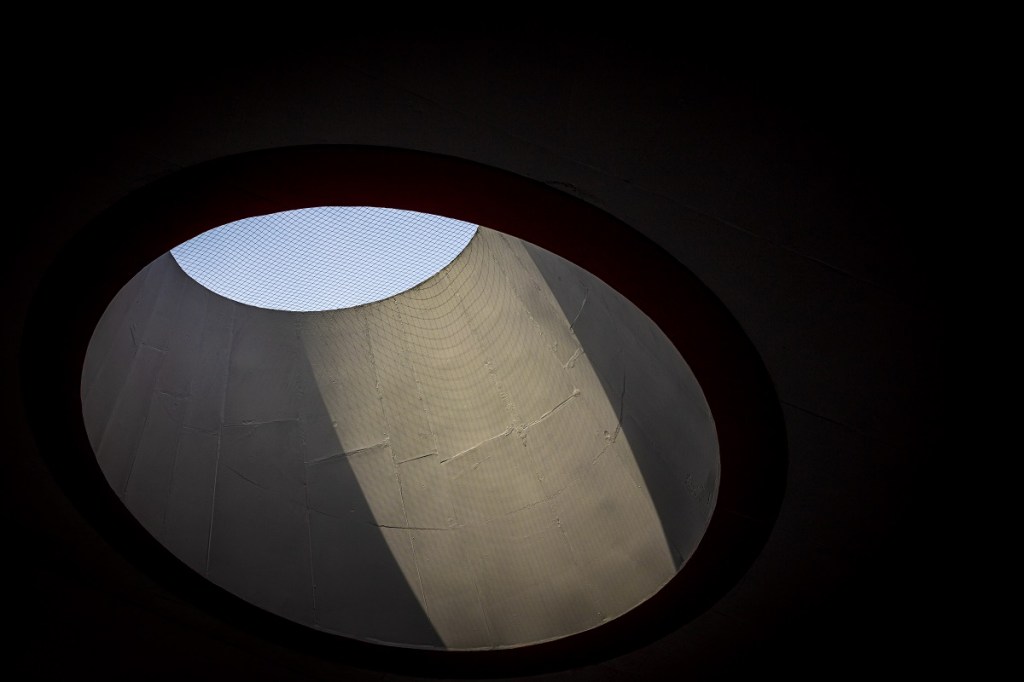
In my image below, the metaphor is implied in the title, the idea that things are looking up and there is a light at the end of the tunnel. The iconic aspect of the image is represented by the tunnel or portal as it appears to be depicted here and the indexical aspect is the physical concrete and mesh structure. My conscious choice as to what I included within the frame enhances the statement and bold impact of the image, and deliberately obscures the location in order to make this more symbolic.
References:
- Batchen, G. 2002. Each Wild Idea : Writing, Photography, History. Cambridge: MIT Press.
- Sontag, S. 1977 Susan Sontag On Photography. London: Penguin.
- STAUDINGER+FRANKE – Photography, Post Production & CGI. 2020. STAUDINGER+FRANKE – Photography, Post Production & CGI. [online] Available at: http://www.staudinger-franke.com/ [Accessed 23 June 2020].
 Journey Through the Lens