As part of our coursework we are being encouraged to explore Strategies of Freedom – the photographer’s relationship to the apparatus. This was a very interesting exploration as it challenged me to think beyond the camera and it’s prescribed way of working, to think of creative strategies to expand beyond its boundaries.
I regularly challenge myself in my own practice by making myself to work with a different lens to my usual preferred ones as it means I have to think and consider the way I am approaching my photography. I like to work with prime lenses so that I have to move around to find my composition and frame it the way I envisage it creatively.
I would like to explore different formats and have considered polaroid as an option, along with experimenting with 35 mm expired film to achieve interesting and unexpected effects. I have not considered any of these for my current project as they didn’t seem like suitable choices for what I was hoping to achieve, however, these could be an excellent fit for other landscape photography projects that I have in mind.
I feel that I have lost my creativity with my project and perhaps this has been due to feeling uneasy with the project itself and questioning whether this is the correct one for me to pursue. I also feel that I have limited myself in terms of technique and approach to my subject matter. This is something I will need to consider prior to my Final Major Project as I will need to find ways to stimulate ideas and create art.
In the meantime, I have found it helpful to work on other projects purely for the fun of it and to create a visual journal for myself as a way to experiment with my photography and approach it in a less serious way.
This week our coursework was focused on creative collaboration and learning how this could support and develop our photographic practice. The task was set to work in creative partnership with one or two of our peers to create and deliver a micro-project by the end of the week.
To find our creative partners, we were tasked to post something in our forum discussions, text or image, that we felt a connection to and which represented something about ourselves and our work. We then looked at the contributions shared by our peers to find a post that resonated with our own and from this established our groups.
I chose to post the following quote as it is how I approach much of my urban photography:
“To me, photography is an art of observation. It’s about finding something interesting in an ordinary place… I’ve found it has little to do with the things you see and everything to do with the way you see them.” – Elliot Erwitt
This immediately connected me with my peer, Dean, who posted these song lyrics: ” Life is just a bowl of All-Bran. You wake up every morning and it’s there. So live as only you can. It’s all about enjoy it ’cause ever since you saw it , there ain’t no one can take it away.” – lyrics from Happy Days Toytown by the Small Faces.
We both felt an immediate connection around finding beauty in the ordinary things and this became the foundation from which we structured our project. We had been given complete freedom to choose a theme, the content and creative direction of the project with the only specifications being that we needed to create a small body of work in it’s own right which was formed in collaboration and which could be presented in a digital format.
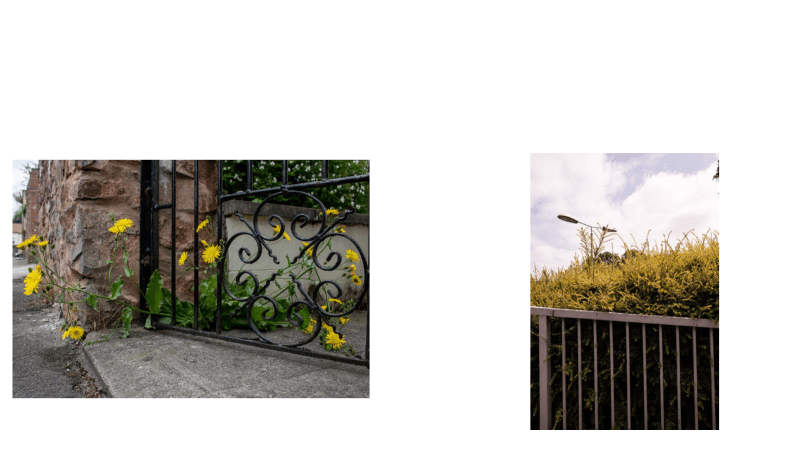
Dean and I had a conversation on the phone about the project and very quickly came up with a simple project idea and process. We agreed to take a walk in our respective cities with the parameters being the same day of the week, the same time and duration, and it had to be in a local context. The aim would be to look for the beauty in the ordinary along the path of the walk and this would generate a body of images we could then collate.
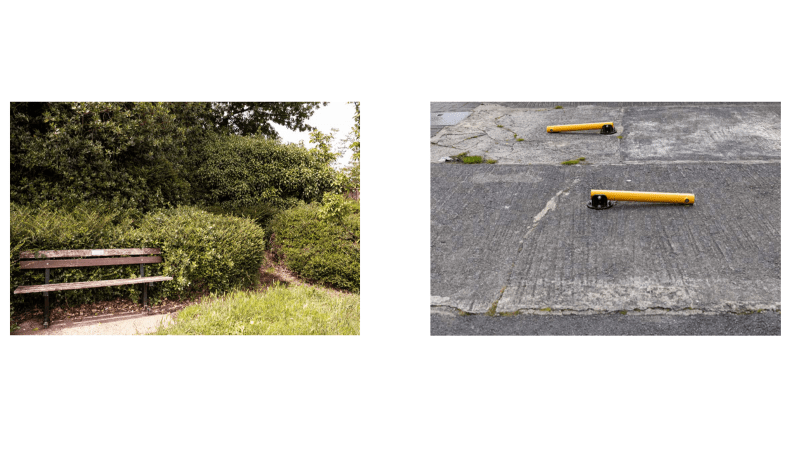
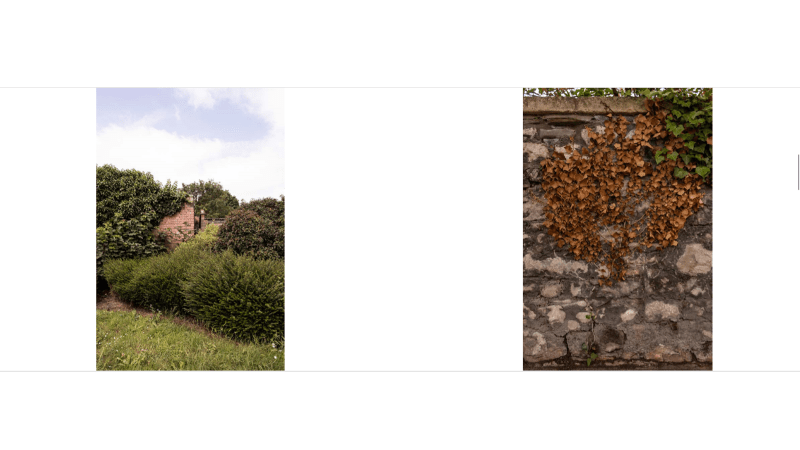
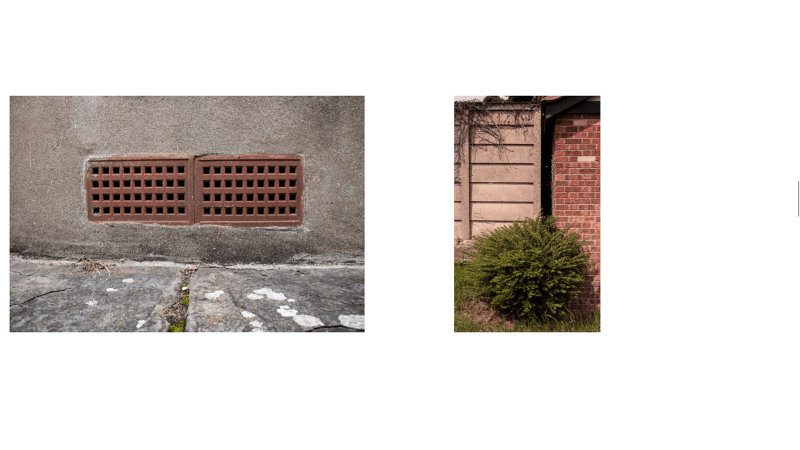
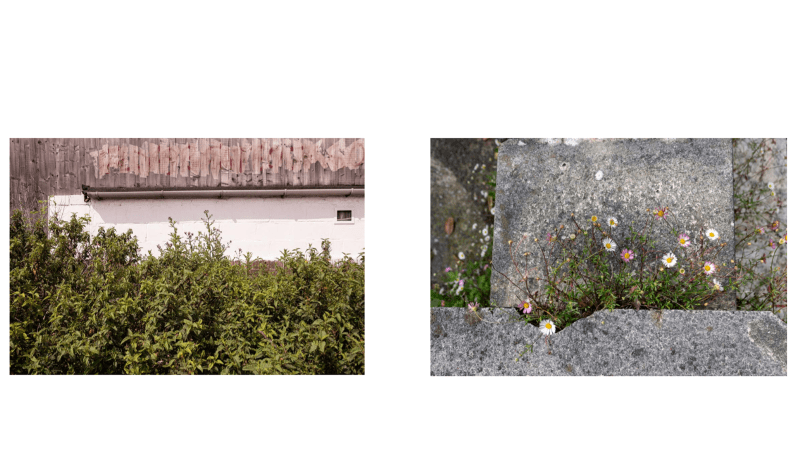
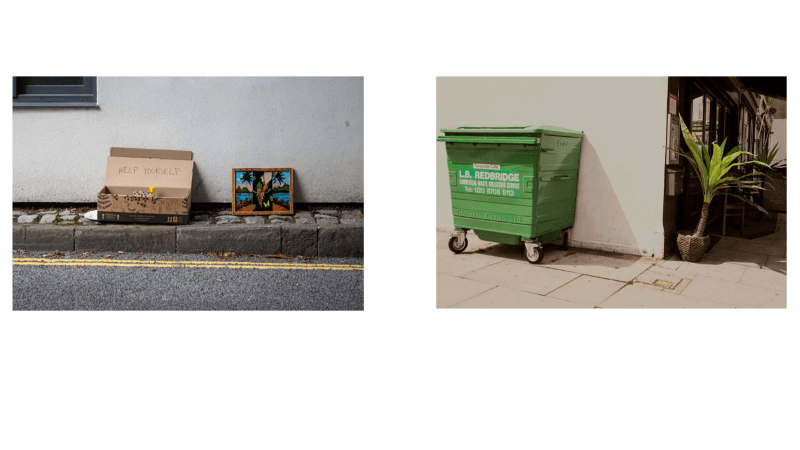
We both ended up wandering much further than we anticipated and went off the intended routes but the result was rather interesting. When we looked at our images side by side, we began to notice similarities in the forms, the themes, the subject and mood despite being in very different cities.
I had a good eye for pairing up images so that each page of our presentation has a side by side image by each photographer. Dean was brilliant at designing and compiling the presentation. We chose the images together, agreed on the layout and edit of the final compilation and created the text together. The entire process felt incredibly easy and fluid because we made such a great creative match based on the shared vision in our work.
When we presented it at our webinar, we both spoke about our images and why we took them, also looking at why we paired them the way we did. I felt that it was a balanced dialogue between us and the creative vision was easily articulated to our peers and tutor. We got very positive feedback at the webinar and also when we shared it in our discussion forum.
Looking at the work produced by our peers, it was very exciting and inspiring to see how others had approached this micro-project and the way they had chosen to present it. I was also amazed at the way in which certain themes repeatedly came through in each of the projects, for example environmental issues, the celebration of day to day life, finding meaning within the ordinary, and home or sense of place.
This was an incredibly valuable experience as I mostly work on my own and did not realise how working collaboratively can actually take the creative process into new directions and out of the usual comfort zones. It was a great activity and I learned so much from my peers and from working in creative partnership!
Two photographers with different styles and working in different genres, living in two different cities in the UK paired up to create this project. The connection happened through posting of two quotes that immediately revealed a similar vision or outlook on life.
Photographer 1 – Dean Belcher
Quote: “Life is just a bowl of All-Bran. You wake up every morning and it’s there. So live as only you can. It’s all about enjoy it ‘cause ever since you saw it there ain’t no one can take it away.” – Lyrics from Happy Days Toytown, by the Small Faces.
Photographer2 – Juanita McKenzie
Quote: “To me, photography
is an art of observation. It’s about
finding something interesting in an ordinary place…I’ve found it has little to
do with the things you see and everything to do with the way you see them.” –
Elliott Erwitt
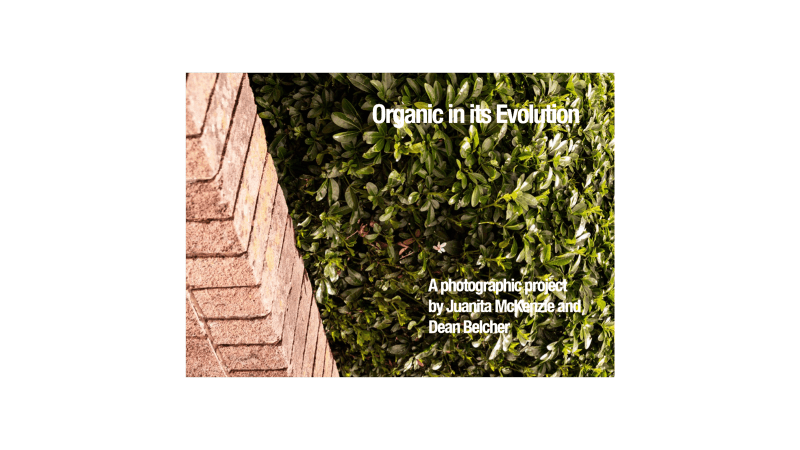
Organic in its Evolution is a project named after the process of collaboration as it unfolded but also describes the essence of our urban environments and their relationship to nature. It reflects our human responses to this constant dance of cycles between the apparent opposites and it speaks of our human desires to have spaces of our own and mark them in some way to defy the transience and isolation of modern and urban life.
Note: Journal reflection on this project can be read here.






 Journey Through the Lens