F22 Workshop

This week I attended the F22 – Survival Skills for Freelance Creatives Workshop in London as I was fortunate enough to be there at the time. I had seen the workshop advertised by the AOP and thought it would be invaluable for me as somebody who is planning to enter this market, and also felt it matched very well with this term’s coursework. The workshop was presented by Sheryl Garratt, previously the editor of The Face and The Observer magazine, and now a life coach working with freelancers and creative people.

In her workshop, Sheryl discussed the changing photographic market and the difficulties facing freelancers in the industry. She spoke of the constant pace of change and the lack of security in an industry that is in flux, as well as the impact of social media and the way in which ‘content creation’ threatens the photographic industry. This was confirmed by other people attending the workshop who have personally experienced this impact on their photographic careers.

One lady I spoke to was actually attending the workshop because she had previously worked as a freelance photojournalist but was no longer able to earn a living from this work due to the rise in citizen journalism and the use of image submissions from the public. She mentioned that both full-time and freelance jobs in this industry had been significantly reduced across the last decade or more. She was attending the workshop as she is hoping to take a new direction and break into the commercial photography market. It was very informative to hear from other photographers and people in the industry just how they were approaching their freelance work and where they felt the most impact.

Sheryl presented her workshop around ten core foundations that would assist in being successful in growing a business and doing the creative work that we love to do. Based on these principles I identified the following important steps I can take in developing my own freelance path:

  1. Get very clear on my creative vision, my reasons for doing what I do and what I hope to achieve.
  2. Create some great short descriptions of what I do and why I do it. Sheryl advises that we need to find ways of talking about what we do that makes it sound exciting.
  3. Marketing must become part of my daily routine as this is how I will get work.
  4. Do less and focus more on what matters. I would do well to simplify, streamline and focus my work in order to be more productive.
  5. I need to build up an effective working routine that suits my needs and this will increase my productivity.
  6. I should start a savings fund as this is what will give me the creative freedom to explore personal projects and have greater autonomy.
  7. It is essential for me to create a portfolio career, as multiple income streams are the only way to succeed as a freelancer nowadays. I will do some thinking about ways to do this and can also refer to our current coursework for ideas about other careers in the industry.
  8. Networking is extremely important, as is building peer support.
  9. Always invest in what I need to support my continued personal and business growth.
  10. Be realistic and manage my time and energy as this is my most important resource.

The workshop was a great experience as the content was excellent and I learned a number of important tips about how to find clients, how to manage my business and how to maintain a healthy balance between earning a living and doing what I love. It was also invaluable to meet other professionals in the industry, both to learn from them and to network among peers. For further information about Sheryl’s informative and insightful workshops and coaching, please visit her website.

Photography as a profession ©Juanita McKenzie

Who Buys Photography?

The coursework is now focused on an in-depth exploration of the market for selling photography, with a focus on identifying who the potential buyers are, understanding how to sell photography and how to price work for different markets. We explored practical aspects of pricing, writing estimates, production and invoices, as well as terms and conditions.

Our module leader, Anna, presented two live workshops to discuss the various markets and how to break into them. The discussions were intensive and sparked a number of questions, so Anna has agreed to follow up with further workshops on this subject.

We initially discussed the differences between editorial and advertising markets, summing up that the main difference are in the process, result and target audience. Advertising usually has a very specific brief and is about promoting a brand or product, whereas editorial photography is more open to a pitch and is about telling a story or illustrating something. Fashion photography falls into the category of editorial photography and is an example of visual story telling with no text involved. We also looked at how there is some crossover with fine art and fashion photography.

We further discussed the usage of images and discussed licencing as opposed commissions. The conclusion I came to was that licensing is by far the quickest and easiest option for commercial work. Being able to calculate the costs of licensing is an important part of calculating rates for work and a great resource to refer to is the AOP website which has guidance around this and on writing up terms and conditions, all of which are essential as a professional in the industry.

The fine art photography market is predominantly based in Paris and New York and centered around some of the important galleries, and annual fairs and exhibitions, such as the Paris Photo Fair. It is a very difficult market to break into and only a limited number of artists are successful in selling in the fine art industry.

A photographer who has been very successful in establishing a career in both the fashion and fine art world, is Dutch photographer Viviane Sassen. She has done a number of installations, exhibitions and books, and has received numerous rewards. She has developed a distinct visual language and strong personal brand which is one of the reasons she has been so successful. She is an artist whose work I was not familiar with previously but who I will research further as I believe there is a lot I can learn from her photographic practice and apply to my particular genre of photography.

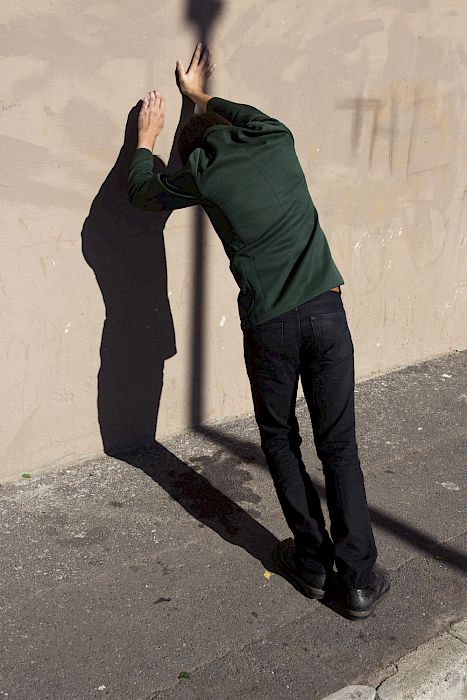
Heine #01 from UMBRA, 2013 ©Viviane Sassen
Heine #02 from UMBRA, 2013 ©Viviane Sassen

Journal Reflection -Sustainable Prospects Week 4

Reflecting on the topic for this week, I looked at where I am currently and where I imagine I would like to be in five years time. I am not yet a commercial photographer, so I do not have a current market, however, I do have a small and growing audience which has largely been gathered via social media, in particular, Instagram. My audience has good engagement with my content and there is a core group of loyal followers who consistently interact with my feed. 

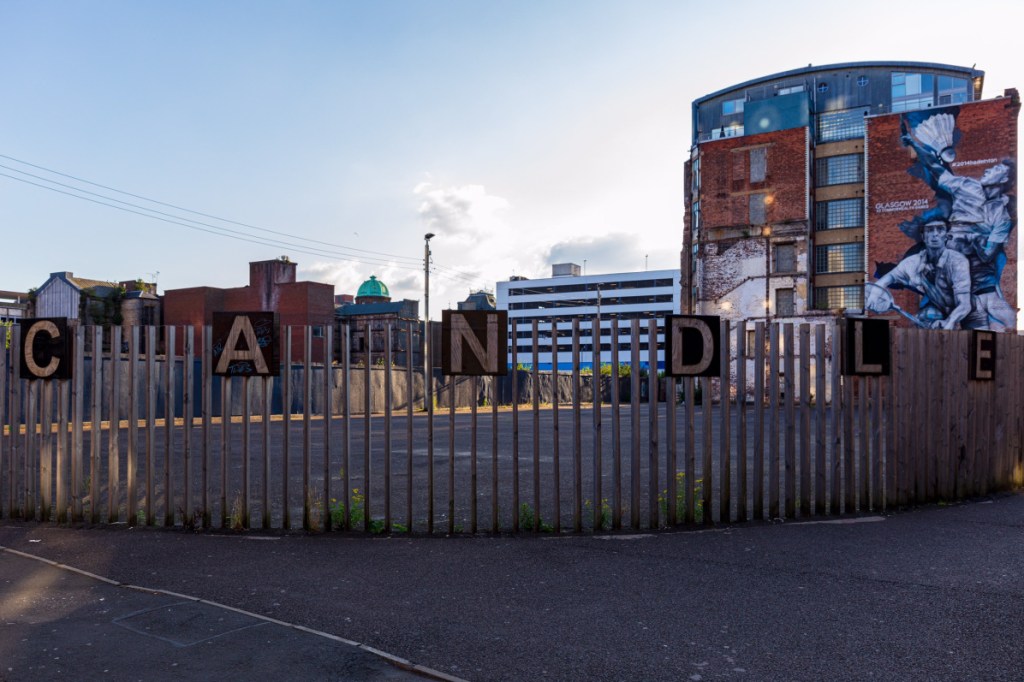
I started out sharing my photography on Instagram with no intention other than challenging myself to share my images and to make the commitment of sharing one image a day.  I was stunned by the response and positive feedback I received as I had never considered the prospect of an audience, and was merely posting images for myself.  This online platform has proven to be an incredible networking tool, helping me to connect to others and to form genuine relationships. Breaking Glass Magazine, who have recently shared some of my photography, are an example of the real networking, connection and community that I have discovered through Instagram. Below is one of my featured images from their October 2019 Anniversary Edition article which can be viewed here.

Candleriggs Square, Glasgow, July 2019 © Juanita McKenzie

I do now look at things like engagement statistics because they are a good measure of whether I am consistently creating quality content for my audience, but also it is a great marketing research tool as it can give good indications of trends, preferences and audience loyalty. However, I do not measure myself by my number of followers and likes, but rather on the quality of real engagement and authentic connection that I can form with others, and by staying true to my own artistic vision.

I imagine that in five years time, my audience would have grown considerably and I would have expanded my presence across other online channels.  I would also have begun to market my work and my personal brand through these channels and other areas that are industry relevant and which would place me in the correct market share for my work.  Networking is as important online as in person, so this will be central to connecting me to my particular market and over time, my audience and market would begin to see some overlap.

This would be achieved by a strong business plan which incorporates a marketing, communications and social media strategy, alongside creating the quality content and photographic products that my market and audience would engage with.  I am very interested in creating photographic books, selling prints and potentially doing freelance work for relevant publications, so my target market is easily defined.   I would also consider teaching, running workshops and curating content as supplements to my income in order to be able to freelance and commit to my photography as a full time and commercially viable practice.

The Current Commercial Environment

This week we explored commercial environments in photography and looked at whether there is a difference between commercial photography and art.  Although there is a clear difference in their intended audiences and market, the end result is the same, the aim is to gain income from the work.  This means that ultimately all photography could be considered as commercial, and it is not just confined to editorial or advertising markets.  What is also important to remember is that it is always the client who sets the rules for photography because they want content that matches their brand and their budget.  With the rise of digital technology and social media this has created an increased demand for images and quality content but it has also made the market far more competitive. 

In the publishing sector, many publications no longer have printed editions and have instead created online publications.  Their revenue has decreased and therefore so have their budgets, meaning that editorial work is now sparse and often poorly paid.  The rise of mobile phone technology and citizen journalism has also meant that many publications no longer need to pay for images and instead publish submissions from their viewers at no cost to themselves, further impacting on this market.  In an interview for the British Journal of Photography, Emma Bowkett, director of photography at the FT Weekend Magazine describes how online publication has changed the type of content needed and says:

“There has been a shift of focus from print to digital in newspapers and for our magazine, the challenge is to bring long-form journalism and visually rich content to this platform. We are working more with data and video to create a reader experience that is way beyond what we could achieve in print. It’s an interesting time for experimentation.” (Bowkett, Emma. 2017)

Advertising work has also had to change and adapt to the demand for online content and a changing audience.  The style of advertising has changed to reflect global brand identities and the aim of creating brand loyal communities.  There has also been a shift to using stock images for advertising campaigns rather than commissioning work, however, there is still a good market for photographers.  Stock photography is a potential commercial market for photographers to consider, however, it is important to consider the type of licensing and payment that will be received through this type of commercial market, and also what type of photographs are sold as all control over the use of these images is lost once sold as stock photography.  It is, however, a good market to consider as a supplement to earnings. 

One area of commercial photography that is still a good market and which is showing interesting and dynamic trends, is that of fashion photography.  There has been an increasing trend towards a merging of fine art and fashion photography which has resulted in some incredible editorial work.  A fine art fashion photographer whose work I admire is Lindsay Adler, an artist who has established herself firmly within the industry as both a photographer (doing commissioned fashion and editorial photography, as well as selling fine art prints) and an educator (selling books, tutorials and workshops).  She is an example of a photographer who has fully understood the modern commercial market and has created multiple income streams and a successful personal brand. 

Queen of the Desert © Lindsay Adler

References: Creative Brief Emma Bowkett. 2017. The British Journal of Photography, 164(7858), pp. 84-85.