Informing Contexts: Module Resources & References

Books

  • Barthes, R. (1977). ‘The Photographic Message’ in Image Music Text. London: Fontana.
  • Batchen, G. 2002. Each Wild Idea : Writing, Photography, History. Cambridge: MIT Press.
  • Berger, John (1972) ‘Understanding a photograph’ in Trachtenberg, Alan (1980) Classic Essays on Photography. New Haven: Leete’s Island Books.
  • Frith, Katherine. (2005). The Construction of Beauty: A Cross-Cultural Analysis of Women’s Magazine Advertising. Journal of Communication. 55. 56-70. 10.1093/joc/55.1.56.
  • Hutcheon, L. 2003. The Politics of Postmodernism. London: Routledge
  • Price, M. (1994). The Photograph, A Strange Confined Space.
  • Sontag, S. 1977 Susan Sontag On Photography. London: Penguin.California: Stanford University Press

Magazines & Articles

  • Creative Brief Emma Bowkett. 2017. The British Journal of Photography, 164(7858), pp. 84-85.

Online Resources

Video

Other

15 Minutes of Fame

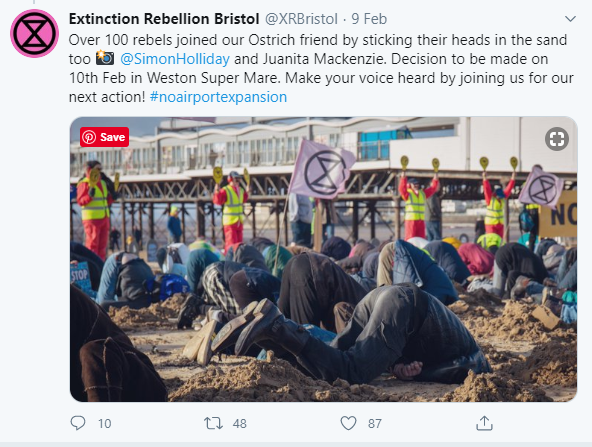
After attending the Extinction Rebellion Protests on 8th May at Weston-super-Mare, I was excited to find out that my image of climate protesters with their heads in the sand was shared by Extinction Rebellion Bristol on their official twitter feed.

https://twitter.com/XRBristol/status/1226463929033003008

The image was picked up by The Bristol Post and published on 9 February 2020: Extinction Rebellion members ‘stick heads in sand’ in Bristol Airport protest. It was later shared by The Guardian on 11 February 2020 in their article: Plan to expand Bristol airport rejected after climate protests.

Unfortunately, the original tweet had misspelled my name and this was duly shared in both newspapers with incorrect spelling. I also noted that the image which was shared was a very low resolution and the quality was poorer than what I would have provided had I been contacted.

Despite the error, I had a number of people contacting me through my own social media accounts to let me know they had seen the image in the newspapers. I was very pleased to see my image shared like this, however, I have learned a valuable lesson about making sure any image is credited correctly as it has a knock on effect across future publications.

Sustainable Prospects: Module Resources & References

Books

  • Augé, M. (1995). Non-places: Introduction to an anthropology of supermodernity (trans. J. Howe). London: Verso.
  • Coverley, M. (2018). Psychogeography. Chicago: Oldcastle Books.
  • Kagge, E. (2019). Walking. [London]: Viking.

Magazines & Articles

  • Creative Brief Emma Bowkett. 2017. The British Journal of Photography, 164(7858), pp. 84-85.

Online Resources

Video

Other

A cycle completed ©Juanita McKenzie

Exhibition: Sugar Paper Theories, Jack Latham

Sugar Paper Theories is a photobook created in 2016 by photographer, Jack Latham. This body of work had previously only been exhibited at the Reykjavik Museum of Photography and the exhibition being held at The Royal Photographic Society shows extra work created especially for this exhibition. Further information about the exhibition can be found here.

The photobook and exhibition is about the most controversial and infamous Icelandic murder investigation, the Guðmundur and Geirfinnur case, or the Reykjavik Confessions. Latham’s project brought together new images with the original images, as well as using archival images and he interviewed as many of the key people involved as was possible. Latham visited the original sites from the investigation and took new images that played upon the concept of truth and reality.

The visit to the exhibition was arranged as a voluntary face to face event for the MA students and we were able to see the exhibition as well as attend a panel discussion afterwards with Jack Latham, Gisli H. Gudjonsson, Professor in Forensic Psychology, and Erla Bolladottir, one of the six convicted in this case. It was an extremely interesting discussion about the case, the concept of ‘memory distrust syndrome’ and the concepts of truth, fact, and reality.

Latham did a lot of research for this project and sourced material from local newspapers and court cases and incorporated this archival material into his project in way that plays with the concept of the photographic narrative and causes the viewer to question that the differences are betwen what is factual and what is true.

Latham worked collaboratively with Erla Bolladottir and others involved in this case, saying that when photography is used to tell as story, then the photographer should become part of the story too which shifts the photographer from being an observer to being part of something. He emphasised that photographers who do this type of photography take on an obligation to represent the people accurately and tell their story authentically.

Jack Latham, Guðjón’s Church #2, 2015, from Sugar Paper Theories © Jack Latham

Journal Reflection -Sustainable Prospects Week 5

Individual Tutorial

This week I had my first individual tutorial with my tutor, Laura. I have not been able to attend many webinars so I do feel as though I have not been able to benefit fully from her experience and guidance through the weeks so far. Laura has, however, been brilliant in getting to know me and developing an understanding of my photographic practice and current work.

Laura observed that although I don’t believe I have yet found my creative voice, that I have already developed my own style which is consistent across the images I have presented to her. We talked about how I am grouping and sequencing my images and exploring ways to create a narrative through clever use of sequence. I mentioned that I think this project may lend itself to becoming a photography book and Laura has suggested I think about how I would incorporate some text and to research ways of doing a creative layout for a book.

Through questioning, Laura extracted that I spend a lot of time walking and exploring my environment to discover the things I photograph. She quickly identified that this is a core part of my photographic practice and she has suggested I do some reading on the subject of walking and try to reach a deeper insight around why this is so important to me and how this shapes my photographic practice. She has recommended a book that I have now added to my list of reading for contextual research.

I felt the tutorial was very encouraging and supportive, and I particularly liked that Laura asked a lot of questions which led me to some important insights about my practice. She is definitely getting me to explore a different layer of meaning within my current project and this is leading me to explore why I do what I do, why I have chosen this particular project and what it really means to me.

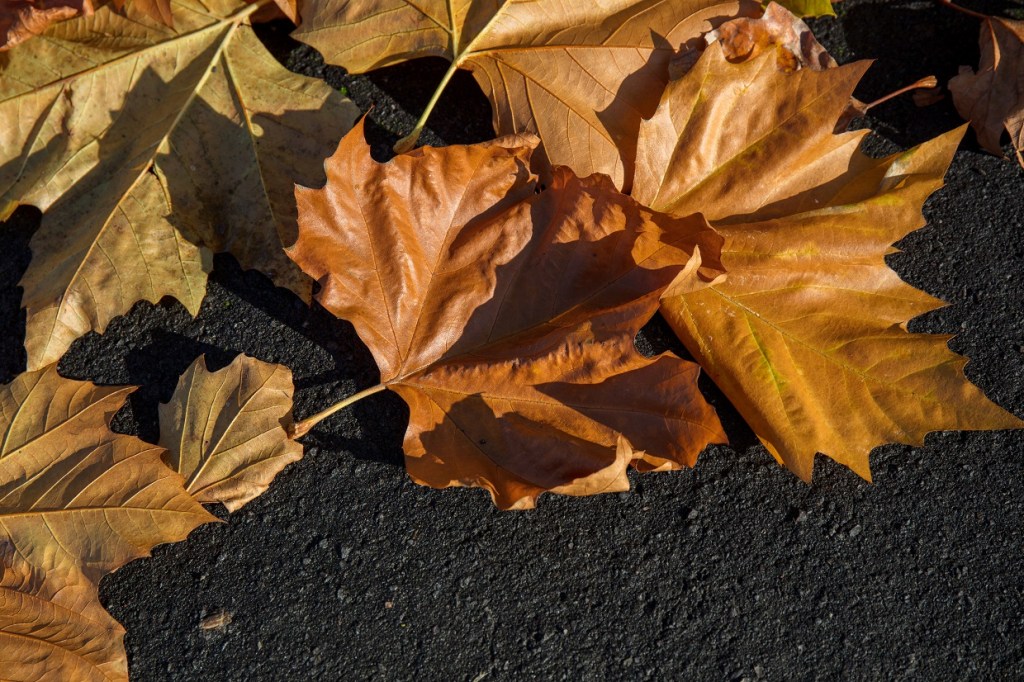
Fallen ©Juanita McKenzie