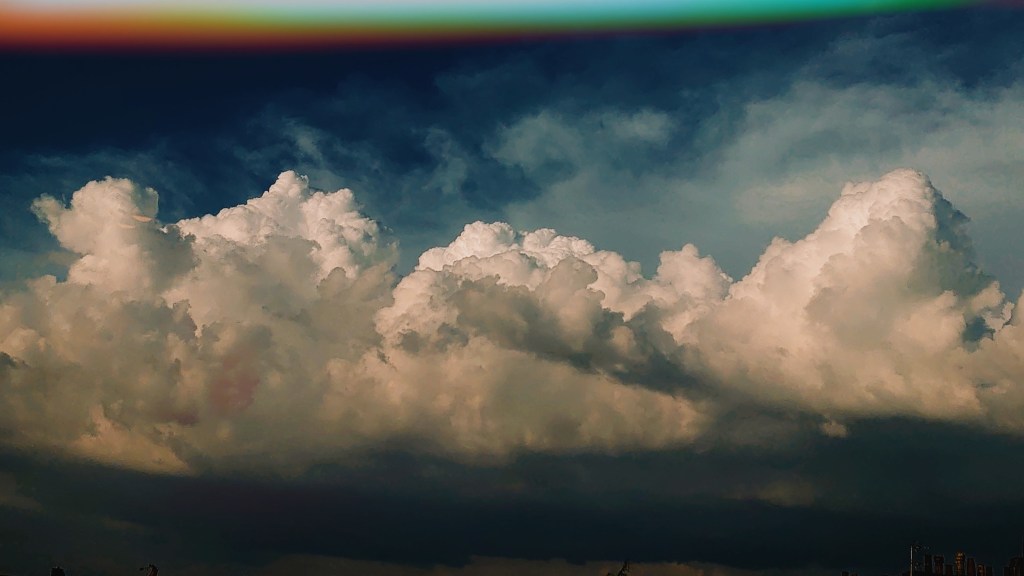
Visual Storytelling Workshop

As part of my ongoing personal development as a photographer, I attended an online workshop, the Social Documentary Photography Visual Storytelling Workshop. This was hosted by the Royal Photographic Society and presented by professional photographer and teacher, Stewart Wall. More information about his social documentary photography course can be found here.

The course was structured around three components:

  • Part one, imagining the photographic project – conceiving of an idea, making decisions on what the story is you would like to tell, planning out the project
  • Part two, creating the project – taking the images that you have envisioned and included in your plan.
  • Part three, completing the project – post production, sequencing and formats for presenting the finished work

Right from the start I found the course to be engaging and informative and I learned a tremendous amount from it that I will definitely be applying to my studies and FMP, as well as all future personal projects. We explored the work of other artists and how they have approached social documentary photography, how they have created compelling visual narratives and the various formats in which they have shared their final projects.

I was particularly interested in photobooks and zines as this is something I am considering for my Final Major Project. What stood out for me though, was the variety of different ways that a photographic project can be disseminated and shared with an audience – this can range from very simple artifacts such as postcards, to more complex projects such as books or documentary films.

Stewart encouraged us to think creatively about what we would like to document and tell a story about, as well as being creative and unique in the way we choose to present the project. He encouraged experimentation with methods, techniques and ideas that invite creativity and bring the individuality of the photographer to the fore.

We discussed a format and process for planning out a photographic project and deciding on what images to capture and include in a body of work in order to capture the narrative and visual story telling aspect. This process that we were shown really helped me to get an understanding of how to sequence my own photography to create a story or narrative.

As a group, we were given a brief and a task to work on using the techniques and methods we had learned. It was fascinating to see how everyone approached the task and how it was interpreted and expressed in very unique and individual ways.  The feedback session that followed was insightful and allowed us to share ideas and expand on them through group discussion. Below is the short project I created for the workshop:
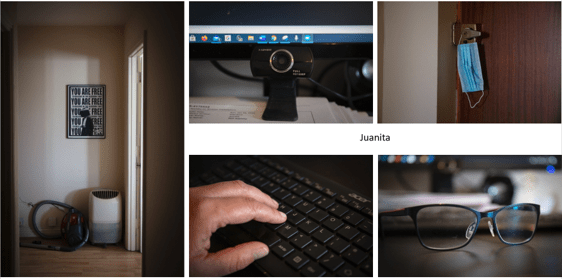
Working from Home 2020
©Juanita McKenzie

I chose to create a simple narrative depicting the reality of working from home as a part of life during the Covid-19 Pandemic. I chose to keep the images dark and shadowy to reflect the sombre mood and a sense of confinement.

I was definitely challenged to think outside the box and produce something different to what I usually do and I had a lot of fun working on the task.  I am reminded that it is always good to have personal projects to work on to allow creativity to flow without any pressure to produce something other than for the love of it.

This was an excellent workshop and it has definitely taught me the value of planning out my projects according to the narrative I wish to express and in line with the way I want to produce and share the project.
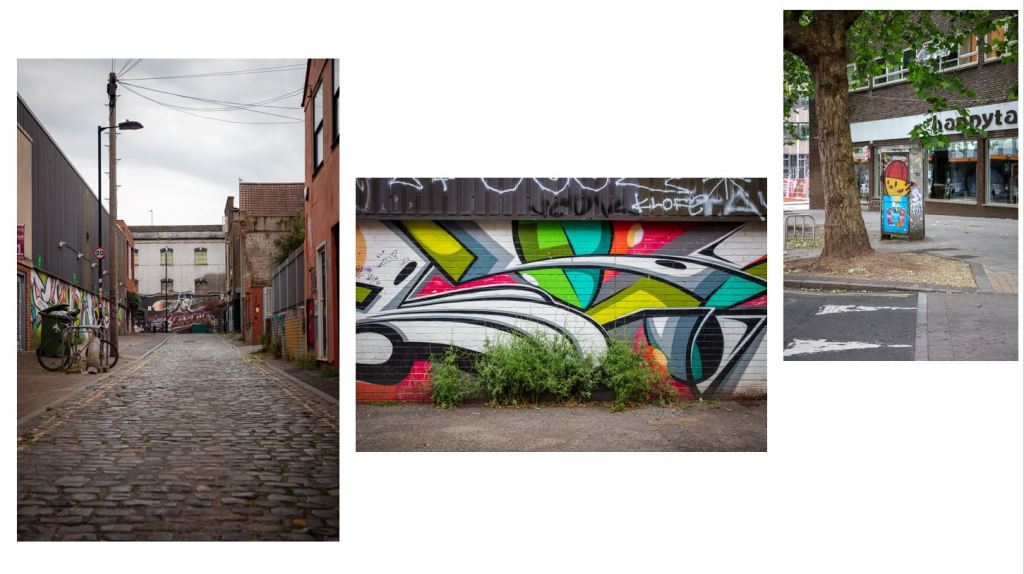
Surfaces and Strategies: Module Resources & References

Books

  • Alexander, J. 2015. Perspectives On Place. London: Bloomsbury.
  • Ceschel, B. 2015. Self Publish, Be Happy. New York: Aperture.
  • Coverley, M. (2006) Psychogeography. Harpenden, Herts: Oldcastle Books
  • Maginnis, P. 2011. Don Pedro Presents – Politics & Protest. Bristol: Tangent.
  • Read, S. 2017. Exhibiting Photography. Florida: CRC Press.

Online Resources

Video

Other

  • The Street. A film by Zed Nelson. Verve Pictures Ltd 2020.

Completion

As I completed the assignments for this module after a difficult term and amidst the changes happening in the world around me, it heightened my awareness of the amount of change that has happened and the enormity of it’s impact. My project began as an exploration of change and impermanence and this has indeed been the outcome. Sadly, I feel it is time to pause this particular project and consider whether I am able to progress it into the Final Major Project or whether I will need to rethink this.

My work in progress portfolio is a continuation of the portfolio’s submitted across the past terms and reflects the change across a period of time. The work in progress can be viewed here.

Work in Progress © Juanita McKenzie, 2020

My oral presentation as part of my assignments for this module is an informal discussion about the project so far.

Surfaces and Strategies

Part of the work this module is the opportunity to explore different surfaces and strategies for presenting our photography in a variety of ways that will engage diverse audiences. We will be exploring three areas in detail, namely those of publication, exhibitions and workshop.

I began my studies last year and from the outset, my long-term goal for my project was to create a photobook as a means of producing a photographic artifact that would preserve my images, as well as preserving something of the rapidly changing urban landscape by capturing and documenting it at this moment in time.  

During this term I have done research on various options for creating photobooks, trade books and zines, both in printed and digital formats. What I have learned is that the choice of medium can be critical to how the photography is perceived and experienced by the viewer. Choices of paper, layout, book format and size, all impact on the visual experience and need to be considered carefully when planning a photobook.

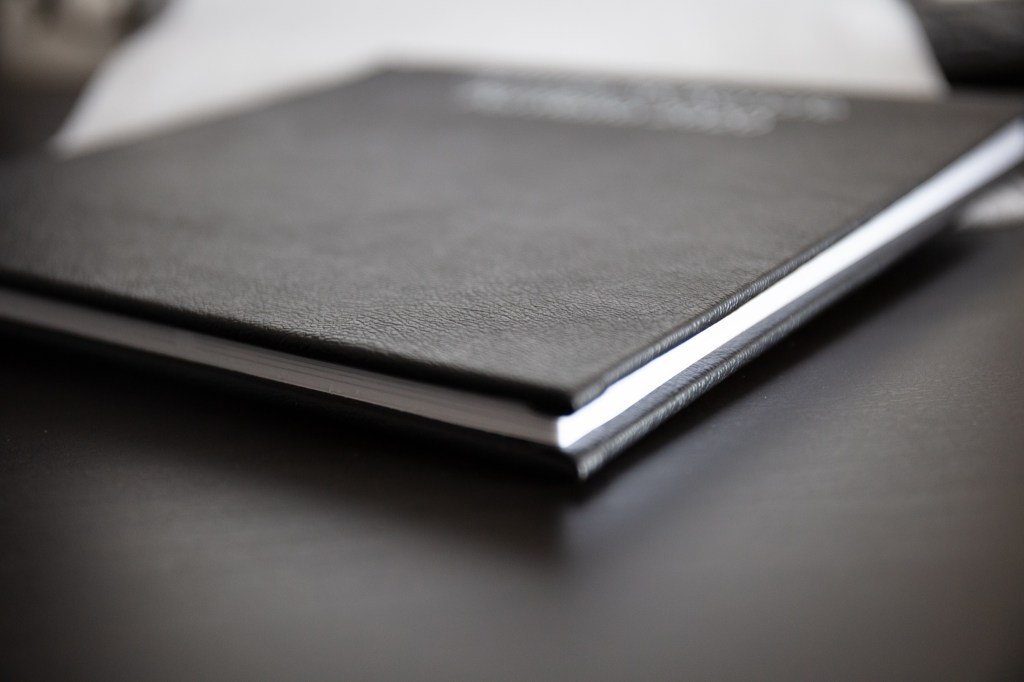
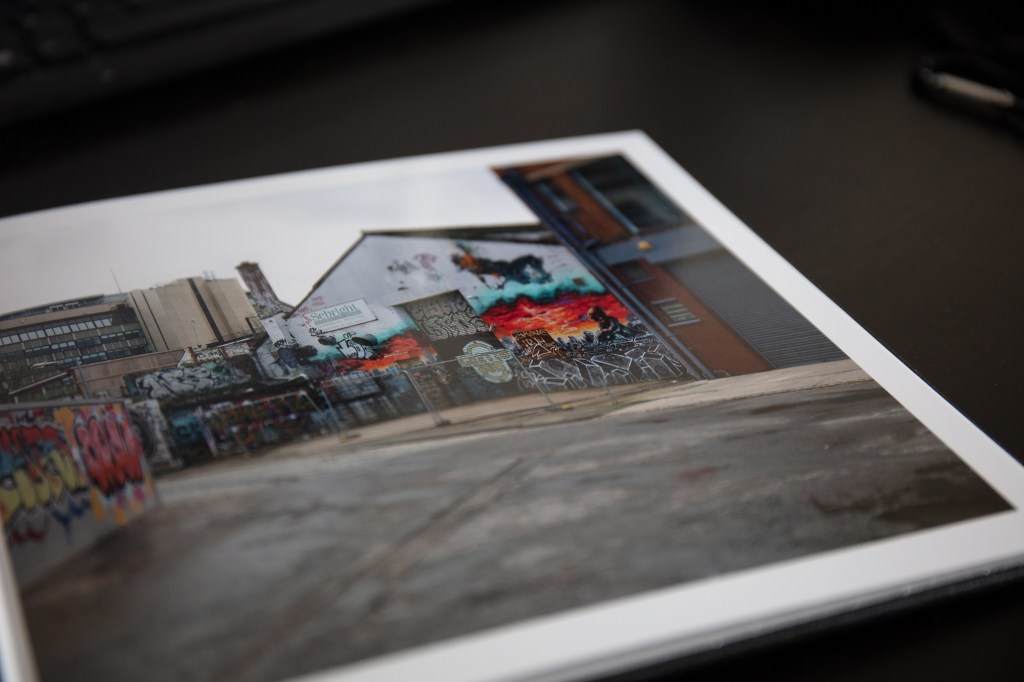
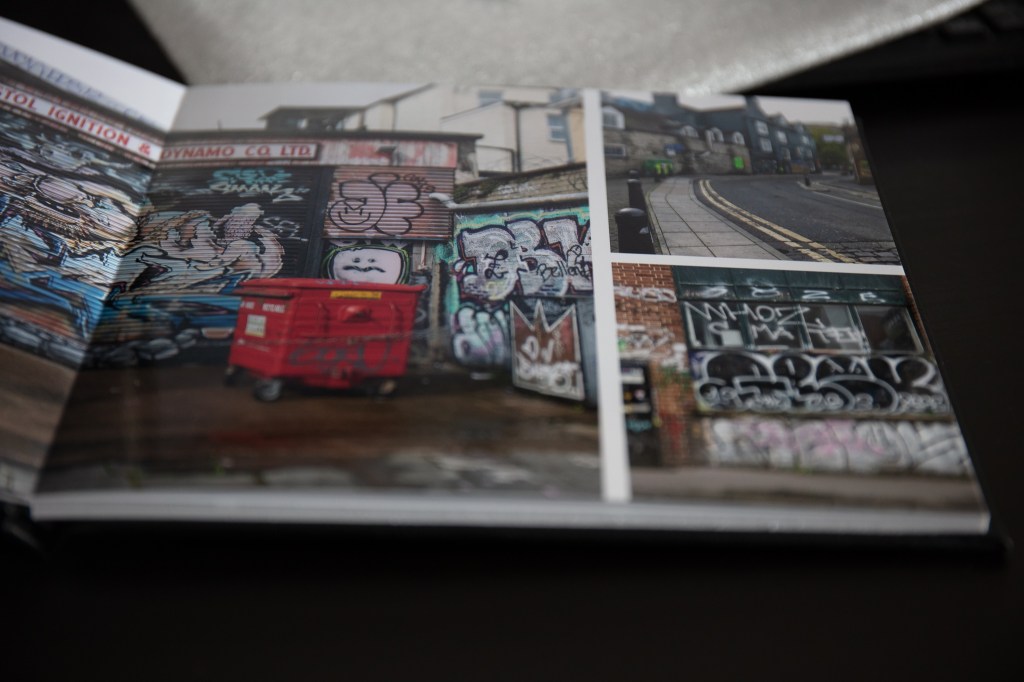
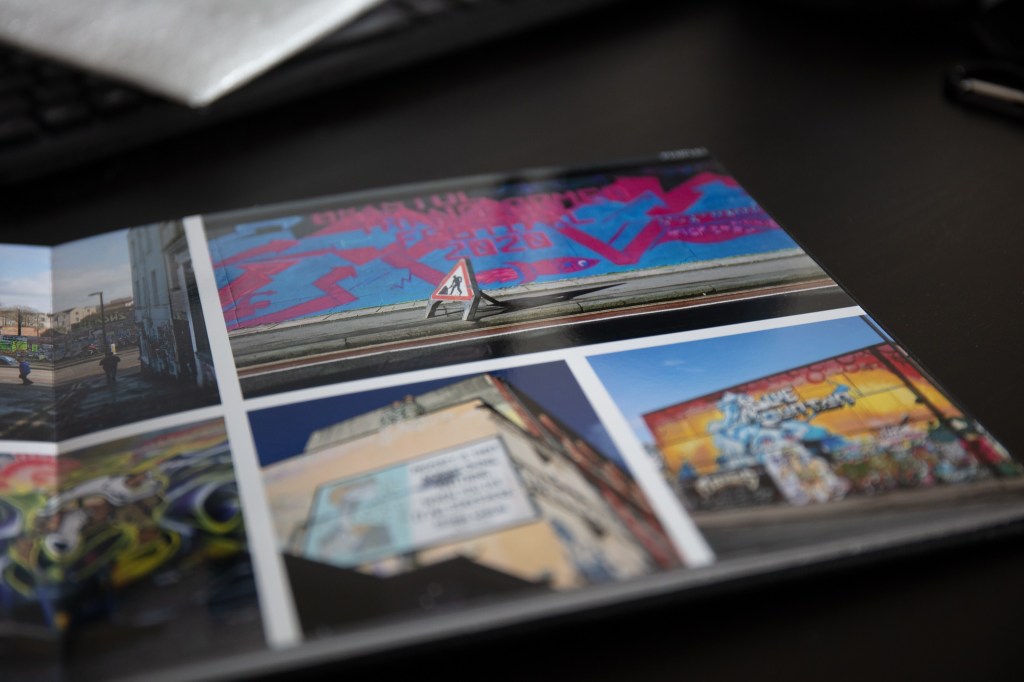
I decided to compile a portfolio book to represent my current body of work and used the time while under Covid-19 restrictions that limited my ability to get outdoors and work on my project. I was pleased with the result and the overall quality of the book, and also learned something about layout and different paper choices.

A number of my peers participated in the Falmouth Landings Exhibition 2020 and also presented workshops or interviews. I followed their work but did not participate myself for a number of reasons, primarily due to increased pressure and workload that has been ongoing since the pandemic began and the impact of this on my available time and my health. It has been very difficult trying to keep my project on the go under the circumstances and with lockdown restrictions having impacted on my ability to take my project in the direction I had originally planned.

It has been disappointing and I have floundered somewhat, struggling to find creative direction and to engage with the coursework. Things are very uncertain and I will have to make decisions about how to proceed with the Final Major Project as I am unsure whether I can continue with my original project idea or if I will need to make a tactical decision based on the circumstances in the next few months.

Strategies of Freedom

As part of our coursework we are being encouraged to explore Strategies of Freedom – the photographer’s relationship to the apparatus. This was a very interesting exploration as it challenged me to think beyond the camera and it’s prescribed way of working, to think of creative strategies to expand beyond its boundaries.

I regularly challenge myself in my own practice by making myself to work with a different lens to my usual preferred ones as it means I have to think and consider the way I am approaching my photography. I like to work with prime lenses so that I have to move around to find my composition and frame it the way I envisage it creatively.

I would like to explore different formats and have considered polaroid as an option, along with experimenting with 35 mm expired film to achieve interesting and unexpected effects. I have not considered any of these for my current project as they didn’t seem like suitable choices for what I was hoping to achieve, however, these could be an excellent fit for other landscape photography projects that I have in mind.

I feel that I have lost my creativity with my project and perhaps this has been due to feeling uneasy with the project itself and questioning whether this is the correct one for me to pursue. I also feel that I have limited myself in terms of technique and approach to my subject matter. This is something I will need to consider prior to my Final Major Project as I will need to find ways to stimulate ideas and create art.

In the meantime, I have found it helpful to work on other projects purely for the fun of it and to create a visual journal for myself as a way to experiment with my photography and approach it in a less serious way.

Cloudscapes © Juanita McKenzie, 2020.