Journal Reflection – Positions and Practice,Week 4

This week our coursework was focused on creative collaboration and learning how this could support and develop our photographic practice. The task was set to work in creative partnership with one or two of our peers to create and deliver a micro-project by the end of the week.

To find our creative partners, we were tasked to post something in our forum discussions, text or image, that we felt a connection to and which represented something about ourselves and our work. We then looked at the contributions shared by our peers to find a post that resonated with our own and from this established our groups.

I chose to post the following quote as it is how I approach much of my urban photography:

“To me, photography is an art of observation. It’s about finding something interesting in an ordinary place… I’ve found it has little to do with the things you see and everything to do with the way you see them.” – Elliot Erwitt

This immediately connected me with my peer, Dean, who posted these song lyrics: ” Life is just a bowl of All-Bran. You wake up every morning and it’s there. So live as only you can. It’s all about enjoy it ’cause ever since you saw it , there ain’t no one can take it away.” – lyrics from Happy Days Toytown by the Small Faces.

We both felt an immediate connection around finding beauty in the ordinary things and this became the foundation from which we structured our project. We had been given complete freedom to choose a theme, the content and creative direction of the project with the only specifications being that we needed to create a small body of work in it’s own right which was formed in collaboration and which could be presented in a digital format.

Dean and I had a conversation on the phone about the project and very quickly came up with a simple project idea and process. We agreed to take a walk in our respective cities with the parameters being the same day of the week, the same time and duration, and it had to be in a local context. The aim would be to look for the beauty in the ordinary along the path of the walk and this would generate a body of images we could then collate.

We both ended up wandering much further than we anticipated and went off the intended routes but the result was rather interesting. When we looked at our images side by side, we began to notice similarities in the forms, the themes, the subject and mood despite being in very different cities.
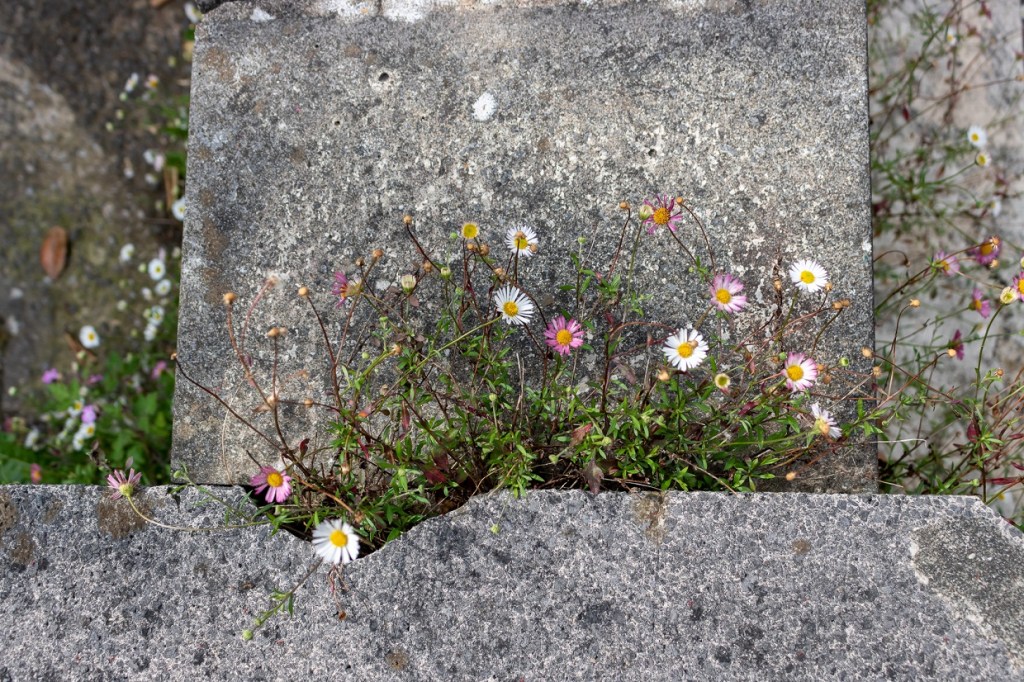
Harmony ©Juanita McKenzie
Image from the project. Full project slides can be viewed here.

I had a good eye for pairing up images so that each page of our presentation has a side by side image by each photographer. Dean was brilliant at designing and compiling the presentation. We chose the images together, agreed on the layout and edit of the final compilation and created the text together. The entire process felt incredibly easy and fluid because we made such a great creative match based on the shared vision in our work.

When we presented it at our webinar, we both spoke about our images and why we took them, also looking at why we paired them the way we did. I felt that it was a balanced dialogue between us and the creative vision was easily articulated to our peers and tutor. We got very positive feedback at the webinar and also when we shared it in our discussion forum.

Looking at the work produced by our peers, it was very exciting and inspiring to see how others had approached this micro-project and the way they had chosen to present it. I was also amazed at the way in which certain themes repeatedly came through in each of the projects, for example environmental issues, the celebration of day to day life, finding meaning within the ordinary, and home or sense of place.

This was an incredibly valuable experience as I mostly work on my own and did not realise how working collaboratively can actually take the creative process into new directions and out of the usual comfort zones. It was a great activity and I learned so much from my peers and from working in creative partnership!

Nature finds a way ©Juanita McKenzie
Image from the project. Full project slides can be viewed here.
Journal Reflection – Positions and Practice,Week 3

This week the focus of our learning was around the changing world of photography, with constantly evolving digital technology, especially the smart phone and it’s link to social media. This has had a tremendous impact on photography and on the associated industries with the rise of the phenomenon of ‘user-generated content’ and citizen journalism.

There were interesting discussions about this in our weekly forum and opinions are varied about whether this is a positive or negative phenomenon. In my opinion the use of smart phones has made photography accessible to most people, breaking down barriers to this medium and encouraging people to explore visual documentary of their lives and the world they live in, as well as being able to share these images. 

This leads into citizen journalism which I do believe has its place in these times – modern media seems to have become increasingly more biased  and narrow in scope which is why citizen journalism can provide real time, on the ground footage of events that might otherwise not have been shared.  The lack of editing and technique gives it a sense of immediacy and gritty realism which can have a strong emotive impact. 

On the negative side, there can be an element of sensationalism where people are constructing scenarios, or taking unnecessary risks to get more views or likes.  This can lead to a lack of context to the images and also a lack of respect or sensitivity towards the situation being photographed.  There have also been a number of incidents where people have died or been injured while taking selfies in an effort to get the best locations or views.

Although I am not interested in selfies or sensationalism, I must admit that I am an avid ‘Instagrammer’ and took to it very readily.  Personally, I have had very positive experiences and have found it to be quite valuable in terms of networking and creating an online presence.  Instagram’s estimated value, which appears to be rising rapidly, is a reflection of the growth in popularity of this medium as more and more people seek visual content rather than written word.  I think professionals have quickly realised that if you are in any way involved in visual media, then Instagram is the platform to be using. 

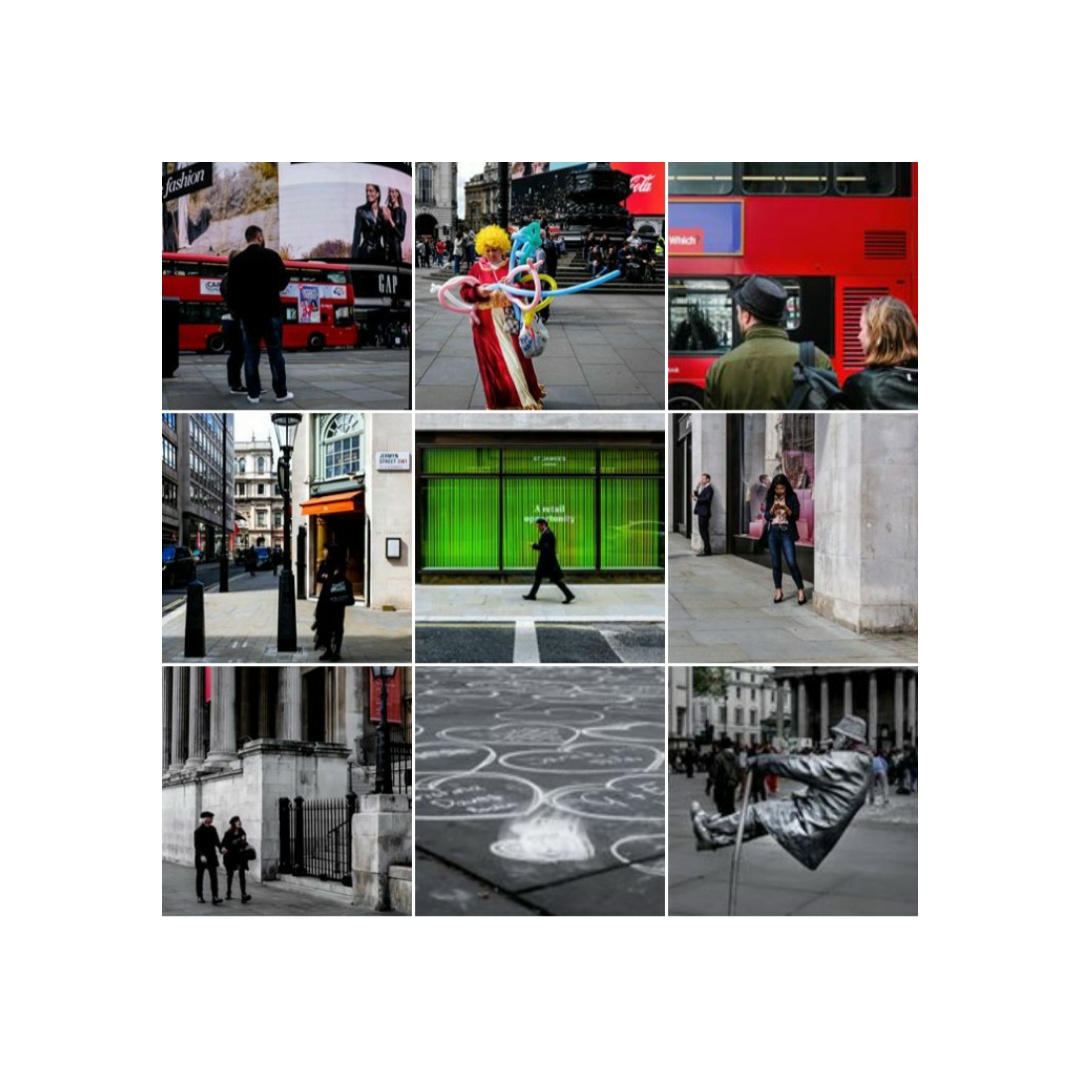
Snapshot of my Instagram feed @juanita_mckenzie_


Journal Reflection – Positions and Practice,Week 2

Having explored the concept this week of photography as an interdisciplinary field, I’ve spent some time reflecting on whether my current photographic practice is interdisciplinary and how I could expand further on this.

I am already focusing on aspects of documentary photography which may have its roots in early interests in journalism and film. Social and cultural commentary are present in my work already and this draws upon earlier studies in psychology. Within my current practice I explore urban art as an integral part of the urban landscape and the social commentary it provides.

I would like to expand my practice by learning more about Fine Art photography and how this can be combined with street and documentary photography to create something more contemporary. I would like to explore surrealism, Bauhaus and expressionism as art movements that could inform, develop and deepen my photographic practice.

My interest in the urban landscape is closely linked to the architecture of places as well as the historical, cultural and geographical elements within these landscapes. Studies and research across all these areas would be extremely useful for contextual research and project development.

László Moholy-Nagy, Bauhaus balconies in Dessau, 1927.
© László Moholy-Nagy 

Journal Reflection – Positions and Practice,Week 1

The first week of the MA Photography has been simultaneously challenging and stimulating.  The enormity of the amount of work that the MA entails has become real now and it has been challenging trying to balance the demands of full-time work, life and studies during this first week.  It has taken a little bit of time to understand the online learning environment but the available tutorials and introductory webinar have been excellent.

The opening lectures around the theme of the Global Image really got me thinking about what needs, questions and perspectives I bring to my own photography and also when viewing the work of others.  I had never really given this much thought previously so this was insightful and I realised that whether conscious of it or not, we do bring to our work a set of perspectives that shape what we choose to photograph and the context in which we do so.  This catalysed some deep internal searching that wasn’t necessarily easy but which was revealing and has brought new depth to my understanding of my photography. 

I can definitely see in my own work that I have a need to explore and discover the urban environment because it is relatively new to me and perhaps this is how I try to gain an understanding of it and find my own place within it.  I have questions about the inequality so prevalent in the world at this time and the way in which I see this occurring within the city I live in and other cities that I visit. These questions arise because on a daily basis I encounter how there are different realities and different experiences of these cities depending on the level of affluence and security of the individual. 

I question our very humanity in an urban setting that can be an extremely hostile environment and also one of isolation.  My perspective is that of social commentary in which I identify more with those communities which are being fractured and displaced, pushed to the outskirts of the cities as rapid commercial development and gentrification become the norm.  At the same time, I look for beauty in the ordinary, in the small details, in the often overlooked and forgotten things, or those we take for granted within our urban environments.  I can see that it is necessary for me to find these things as a way to balance the darker realities of urban life and inequality in Britain today. 

I learned this week that photography is both window to the world and mirror to the inner aspects of the photographer and I understood how this impacts on our position and practice as photographers, on the viewpoints we present to the world and the context in which we do so.  This is a theme I will continue to explore within my own photographic practice and when analysing the work of others.  I understood the global impact that photography has as a medium and how the photographic image is imbued with a catalytic power which makes it even more important to understand my own position and practice as a photographer.  The tremendous self-questioning this week was challenging and at times brought up emotions and deep feelings but this is exactly what will add greater depth and meaning to the way I approach my work. 

Big City, Small Human
©Juanita McKenzie