Journal Reflection -Sustainable Prospects Week 3

Thinking about the lessons, this week, I have had to consider where I locate my practice between personal projects and commercial photography. I am not yet doing any commercial work and it was only a few years ago that I rediscovered photography after earlier aspirations of being a photojournalist.  Although I no longer necessarily wish to pursue a career in journalism, the documentary impulse still remains but is focused on social issues and causes. I also feel increasingly drawn to fine art photography and wonder if there is a way to combine both aspects into my photographic practice.

The difficulty for me has been in finding my voice as a photographer and I took on the MA Photography because I wanted to develop my personal style and learn more about turning my personal projects and passion for photography into pieces of art or meaningful bodies of work. I think that initially I would lean naturally towards photographic books and related exhibitions around these bodies of work. I am increasingly drawn to the work of social documentary photographers such as Zed Nelson and Alec Soth. Looking to the works of established photographers will be important in providing inspiration and helping me to find my own style within these genres of photography.

Learning from others in the industry, participating in contests and reviews, attending workshops, networking and developing my personal brand are my next steps in this process, and I will explore these avenues concurrent with my MA project and other personal projects as these may be the beginnings of a meaningful body of work.  At the same time, I will look at breaking into the commercial photography market possibly through the sale of prints, stock photography and even some portrait work.  I am currently building up a portfolio of related work.  Due to working a full time job, my efforts to break into any form of commercial photography would need to be on a part-time basis and will take some time to plan. That said, it is a priority for me to put in the time and energy to build something for the future that is both sustainable and meaningful. 

Although I am still establishing and developing my own visual language, I do have a personal style that comes through my work but which I still find difficult to define.  Not everyone relates to or understands some of my projects, wondering why I would consider the subject matter that I do, but as these are personal projects, I make conscious photographic choices and stay true to my creative vision in this way.    Learning from others is very important to my development and growth as a photographer, however, I have also learned it is essential that I don’t make comparisons to the work of others because this can be a downfall not just in photography but in all areas of life. 

I do tend to focus on long term project work, so some of my ideas would take years to reach fruition and show results. This means that they would remain personal projects for now although there is always the possibility that this could change in the future. My current project for the MA is one that I view as a long term project that I foresee developing throughout the two years, however, as the course is structured into modules across terms, my challenge is to create meaningful visual chapters of a much longer process.
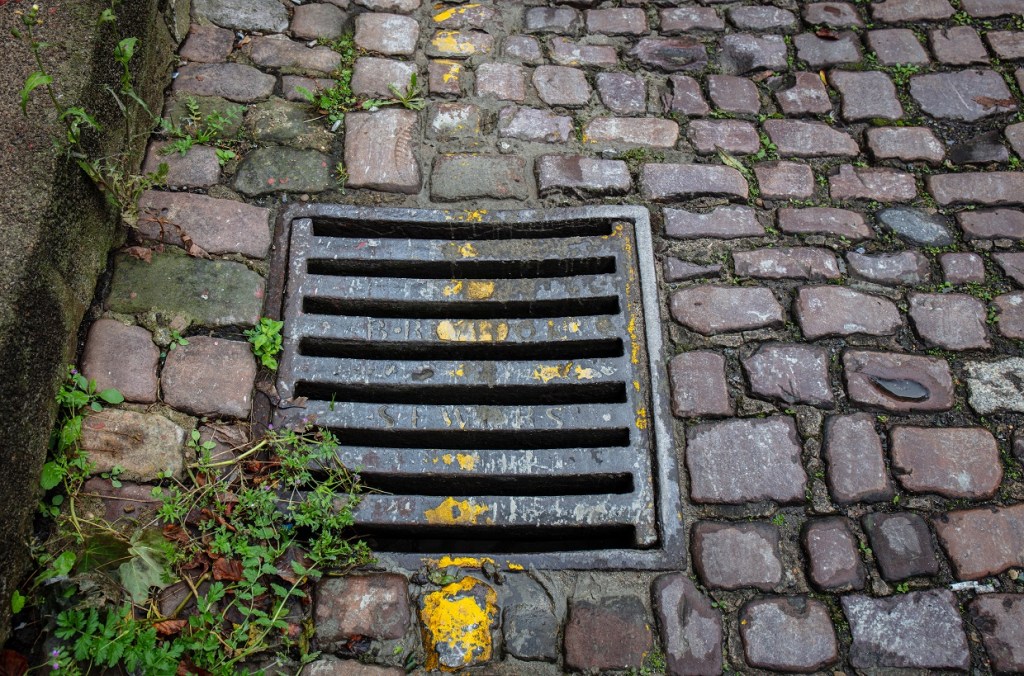
Urban wanderings © Juanita McKenzie

Journal Reflection -Sustainable Prospects Week 2

This week we looked at business basics and writing up business plans. We also touched briefly on copyright law. The practical aspects of working within the photographic industry were discussed alongside the various careers within the photography industry, as well as discussion around what it means to be a professional photographer in the industry today.

Scott Grant (2014) in his book identifies three types of professional photographer:

  • High end professional photographer – high end professional clients across many genres, high financial reward.
  • General professional photographer – clients across many genres from a less prestigious client base, lower financial reward, photographers tend to be from an art or academic background, aspire to becoming a high end professional photographer.
  • Domestic professional photographer – work in commercial photography for weddings, events, portraits and is not commissioned, usually self taught, regionally based and rely on constantly finding new clients.

I am not yet earning significant income from photography so I do not consider myself to be a professional photographer at this point, although I would like this to be a future prospect. I would aspire to freelance work as a general professional photographer and have an interest in social-documentary photography, architecture and cityscape photography, and the creation of photography books. Although, there are many other careers to be considered in the photographic industry, I am primarily interested in the photography itself. The challenge will be to succeed in a highly competitive industry in a digital age.

Photographing the Photographer – Image credit © K.Magro

Reference: Grant, Scott, Professional Photography: The New Global Landscape Explained (2014), CRC Press, p. 5

Journal Reflection -Sustainable Prospects Week 1

The first week of this module has been incredibly exciting with the introduction of the live briefs and the opportunity to participate in these.  We have been allocated our groups for the live brief project and I am pleased to have been allocated to my first choice, even though this is likely to take me out of my comfort zones as a photographer. Read more about the live brief here.

Already the importance of research in this context has been emphasised as it is essential to understand the client and the brief in order to create an effective project pitch.  Preliminary research for the live brief projects has involved looking at the client, the visual language they are using, where their campaigns are appearing and how they are being presented.

I have undertaken a lot of online research this week around the live brief, focusing on how the client is utilising social media channels, where they are focusing their campaigns and how they are presenting themselves visually.  This has led me to consider my own visual language and how I am portraying myself and my work online.  I anticipate that I will be making some changes in the near future as I consider the importance of personal branding.

I have looked into various definitions of research methodologies and initially struggled to apply this to my artistic and photographic practices as it seemed rather theoretical. It was immensely helpful to look at how other photographers approach their research and to discover a number of varied yet equally relevant ways to approach this. 

In the past I have used research methods in my formal studies, however, as these were not art studies, it was predominantly through books, periodicals, text books and online sources.  These are equally relevant to my current photography project, along with practice-based research and constructivist methodologies. 

This includes physical exploration of the urban landscape, engaging with people in these landscapes and communities, placing myself within the context of the project, and exploring relevant techniques.  I was pleased to gain a real sense of context for my research and feel this will help to focus my work and photographic practice.

Inspiration © Juanita McKenzie

Journal Reflection – Positions and Practice, Week 6 & 7

Last week I had my tutor meeting with Jesse Alexander which was very supportive and encouraging. We spoke about the challenges of being a part-time student and balancing studies, work and life. I was able to discuss my ideas for project work and get some advice around finding a focus as I am still struggling to identify my style of photography.

Later in that week, I also had my 1-2-1 session with my tutor for this semester, Paul Clements. Again the feedback on my work was encouraging and some great suggestions were put forward for me to explore by looking at the work of other photographers who have produced work on similar projects to what I am currently focusing on – namely, that of the urban landscape, the constant changes and cycles of urban decay and renewal, as well as issues such as gentrification.

This week we have had the opportunity to present our draft Oral Presentations to our peers and tutor during a webinar. Unfortunately, I wasn’t able to attend due to other commitments and I am feeling somewhat anxious about missing this opportunity as my peers have said it was extremely helpful. It seems that one of my biggest challenges is going to be time constraints.

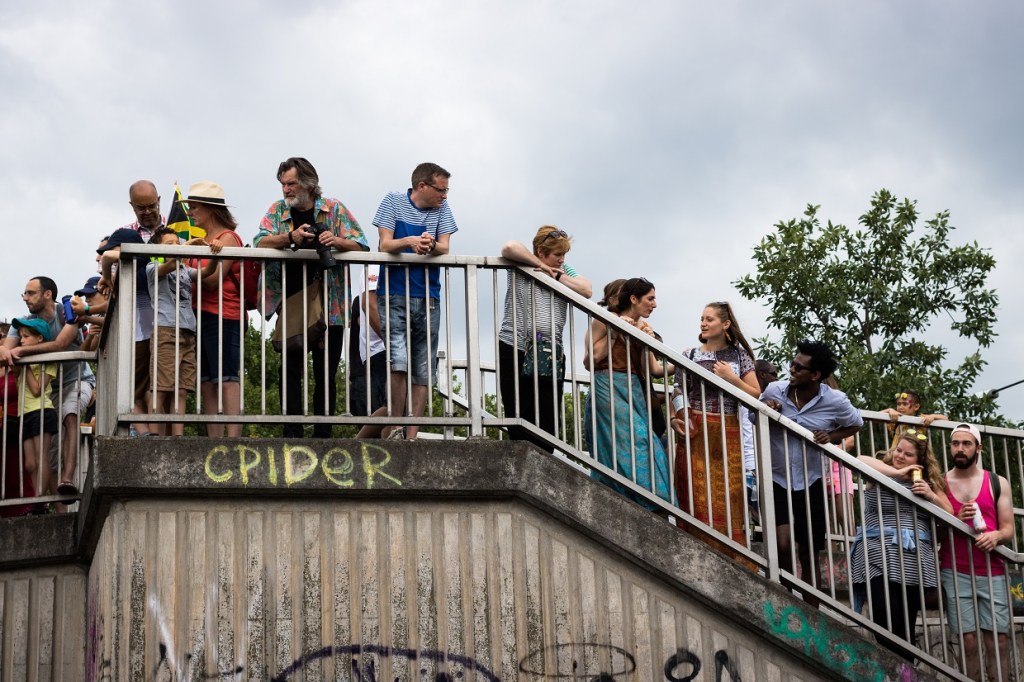
On a positive note – last week I had spent a day at the St Paul’s Carnival in Bristol with the aim of doing some street and carnival photography. The Martin Parr Foundation, Arnolfini Gallery and St Paul’s Carnival organisers had announced a pop up gallery event that would be hosted after the carnival and invited the public for submissions. I found out this week that some of my images had been selected as part of the pop-up exhibition. Really excited about this!

Viewpoint – St Paul’s Carnival, Bristol 2019 ©Juanita McKenzie
One of the images selected as part of the pop up exhibition held at the Arnolfini.

Journal Reflection – Positions and Practice,Week 5

During coursework this week, we explored issues of power and responsibility as photographers. I am very clear on my own morals, ethics and responsibilities as a photographer, however, I found it difficult to come to terms with power. This is a concept I was initially very uncomfortable with as I had never considered myself as powerful in my role as a photographer or as having power over others in this capacity. 

Upon reflection I came to understand through Henri Cartier-Bresson’s concept of the decisive moment, that the moment of decision, choosing when to take a photograph, was actually an act of power. This led me to consider how as photographers we should reflect upon why we choose a particular subject to portray, or a particular moment in time to capture, and what we will include in the frame. Conversely, what we exclude or leave out – the photographs never taken – are equally significant. What is present or absent in an image is a conscious decision made by the photographer that will not only create meaning but will speak of the photographer’s relationship to the subject matter.

Our tutor, Jesse Alexander, emphasised that it is vital for us as photographers to understand the relationship between subject, image, viewer and photographer, and that it is our moral and ethical responsibility to make that relationship as fair as we believe is reasonably possible. In discussions on the forum, we looked at how photographs can be misused, and debated our responsibility as photographers in this context. It made me extremely aware of the need to be careful about who I am willing to work with and just how much ownership of my work I am prepared to give away.

I think its also extremely important to be aware of the kind of contracts involved and define both who the contract serves and protects.  We always have a moral and ethical responsibility that is implicit in our work as photographers by virtue of the relationship that exists between the photographer, the subject and the viewer. For me this triangular ‘model’ is a good starting point from which to make ethical judgments about my own photographic practice or that of another, and to enable me to assess the balance of power in each situation. We need to always be aware of the power of an image and therefore be discerning and sensitive in the way we work.

In peer debates privacy and dignity were raised as being important to ethical photography, and this is very pertinent to me as somebody with an interest in both street and social documentary photography. I had in fact been considering working on a project around social issues in the urban environment, in particular homelessness.  I am acutely aware of the vulnerabilities in these circumstances and how essential it is to protect what little privacy and dignity such people have. 

The conflict for me is between feeling I have a responsibility to tell the story while constantly questioning myself around the moral aspects of photographing such vulnerable subjects. I believe it is essential to be sensitive towards the subject, to be very clear on personal integrity, and to work collaboratively where possible.  I particularly feel that collaborative work is not only ethical but also empowering for all involved and is particularly important in portraiture, photojournalism and social documentary photography.

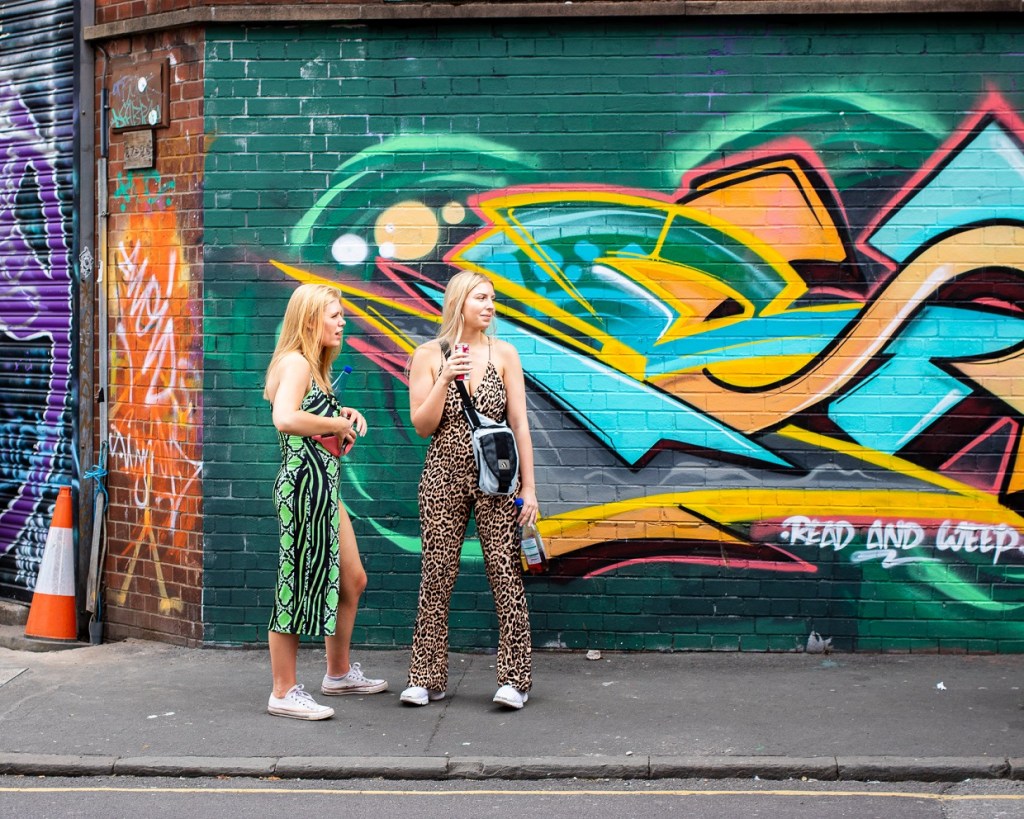
I am currently focusing on urban architecture and some street photography, so in this context it’s very important for me to understand the law,  particularly in respect of private buildings and photographing people.  My first responsibility is always to make sure I know the law and to work within those boundaries while also maintaining my rights as a photographer. The second very important aspect for me is to consider the subjects that I am photographing and to make sure that I am photographing with sensitivity, respect and compassion. 

Colour Co-ordination – Street Photography, Bristol ©Juanita McKenzie