Strategies of Sharing

In this module, the focus was on strategies of sharing – the challenges of working with others and the different ways of working collaboratively. This is an important topic for me as I consider the way in which my project is progressing and whether it will become the social documentary I had always intended or whether I shall approach this from the perspective of conceptual and landscape documentary approaches.

I have looked to the work of a number of artists that have worked with various communities and individuals in different ways that have involved participation, collaboration or co-operation. I was particularly interested in Zed Nelson’s documentary film, The Street, depicting life in Hoxton Street in East London over a period of 4 years. Nelson is primarily a photographer but decided to create this documentary film and the result was a powerful, authentic and deeply moving record of a community impacted by change.

Nelson interviews members of the community and builds up rapport in ways that shows a deepening of the relationship through the course of the film and the greater sense of trust and sharing that it conveys. The interviews are revealing and at times surprising, getting to the heart of issues within the community and the impact on individual lives. The interviews are powerful and give voice to the community.

The Street, Zed Nelson – Trailer

The work Nelson has done in creating The Street, is deeply inspiring to me as it touches so closely on key themes I am working with in my own project. The idea of creating a documentary film is something I feel is a creative direction that could transform the project I am working on and take it to a different level. It will require a tremendous amount of collaboration with the communities involved and of course, it means learning new techniques in order to create a film. I am contemplating this as a creative possibility but realise that this would mean a far longer term project than the scope of the MA Photography.

Whether I choose to produce a documentary film or a photobook, as was my early intention, I know that collaborative work and participation from the community will be essential in order to represent a community that has been underrepresented and distinctly lacks a voice. Their views would be far more personal and accurate than my own view as the observer and photographer, and it is also essential to incorporate many different views, opinions and perspectives within a documentary work.

My intention in the previous term had been to begin meeting up with people from the community and exploring the possibilities of collaborative work. I had identified key community organisations that would have been a logical and natural starting point for this collaboration in order to facilitate building relationships within the community itself. The sudden and expected Covid-19 Pandemic and the resulting lockdowns prevented me from pursuing this at the time and even now I am feeling limited by the rules and regulations around social interactions.

From my perspective there is a tremendous sense of confusion around rules and social distancing, as well as a measure of anxiety, fear and mistrust that I perceive in society at the moment and this does not seem like an appropriate or suitable time to try to begin building relationships in a community I am not part of. It is a dilemma for me as I am unsure how to move this project forwards now and what direction to take.

References:

Art Display: Ed Ruscha – Artist Rooms, Tate Modern

In January 2020, I visited the Tate Modern to explore the Ed Ruscha collection on display in their Artist Rooms. As an avid fan of Ruscha’s work I was eager to see this display encompassing a selection of his works spanning across his entire career and including his photographic books, photographic series and some of his iconic paintings. 

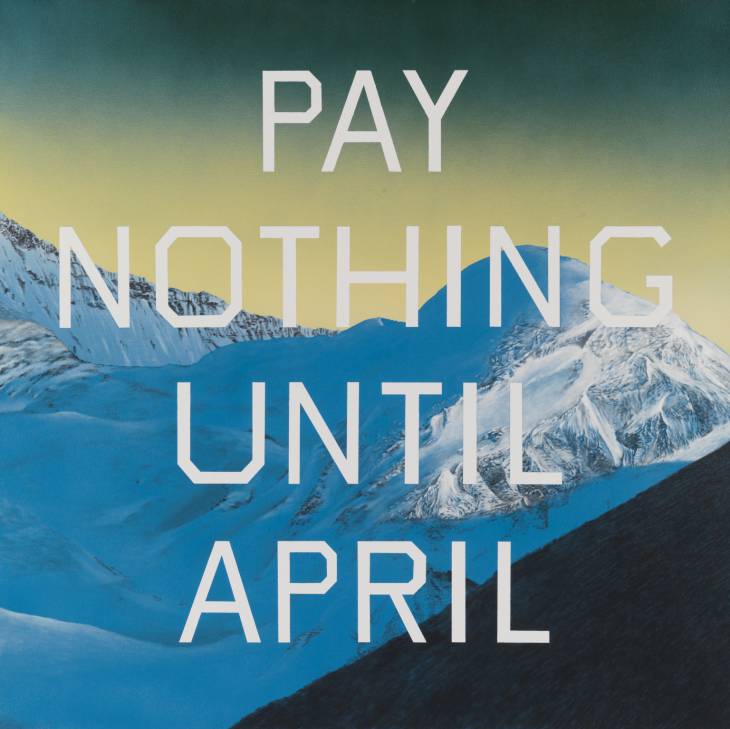
Text has always been an integral part of Ruscha’s work with his clever use of typography and seemingly random use of isolated words and phrases.  This was the first time that I have seen his paintings, all of which incorporated interesting textures and words or phrases superimposed on landscapes or sometimes on plain backgrounds.  

Ruscha’s early career was as a graphic artist and it is clear that he draws upon these techniques to create his art, cleverly working with different styles, fonts and layouts both on canvas and within is photographic books. Ruscha’s background in graphic art also influences his use of language and text as he frequently draws upon the language of advertising and adverts. This is quite obvious in works such as the one below:

Pay Nothing Until April 2003 Edward Ruscha born 1937 ARTIST ROOMS Acquired jointly with the National Galleries of Scotland through The d’Offay Donation with assistance from the National Heritage Memorial Fund and the Art Fund 2008 http://www.tate.org.uk/art/work/AR00047

Edward Ruscha, Pay Nothing Until April 2003 . ARTIST ROOMS Tate and National Galleries of Scotland . © Ed Ruscha

The same language of advertising also appears in his photographic books with titles such as Some Los Angeles Apartments (1965) and Real Estate Opportunities (1970). Furthermore, this is a language that appears in Ruscha’s images and artwork not only as words, but also as a visual language through objects, signs and various other symbols.

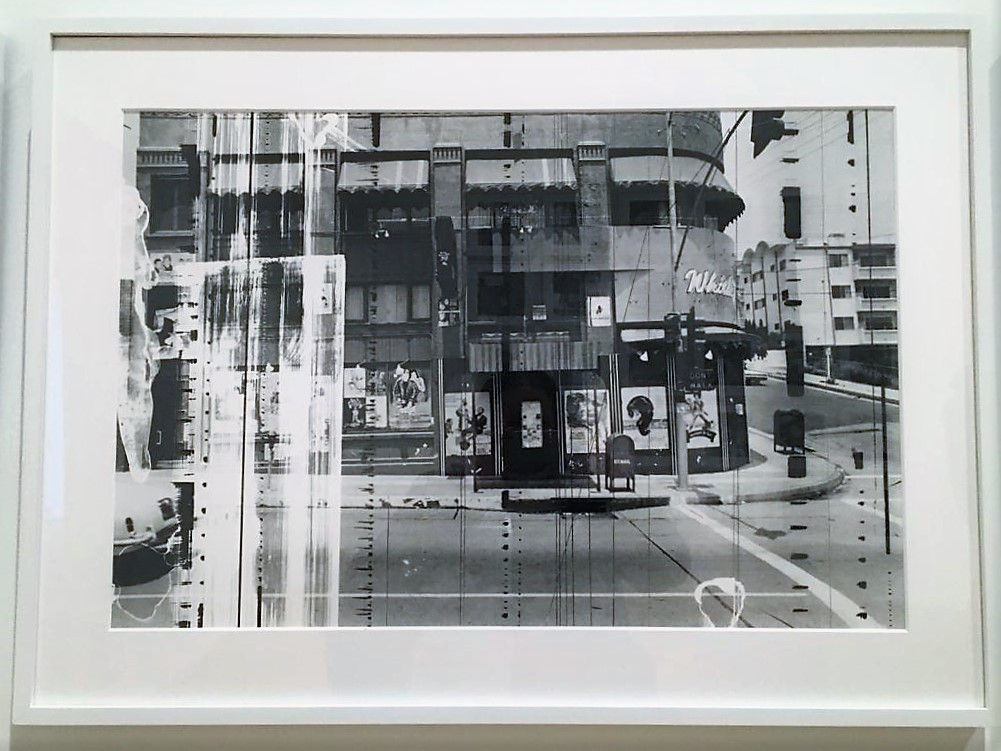
Ruscha was fascinated by sign painters and he was inspired by the colourful billboard signs he saw all around him in Los Angeles. In a fascinating interview with Tate Modern’s Director, Frances Morris, he also refers to speeches made by people such as Mohammed Ali and authors such as Gertrude Stein, people who had a colourful and descriptive way with words. Ruscha describes these as being early influences that were part of his environment and his history and which later became incorporated into his work. 

Edward Ruscha, Liquor Locker (Sunset Strip Portfolio) 1976, printed 1995. © Ed Ruscha Photo taken with iPhone at Tate Modern, Artist Rooms
Edward Ruscha, Whiskey A-Go-Go (Sunset Strip Portfolio) 1976, printed 1995. © Ed Ruscha Photo taken with iPhone at Tate Modern, Artist Rooms

Ruscha is a talented conceptual artist and seeing his paintings gave me a greater understanding of his photographic works as it emphasised how he approaches his subject matter as a conceptual artist influenced by his earlier career as a graphic artist in the advertising industry.  He incorporates text into his paintings in ways that are often out of context or at odds with the image in order to emphasise stereotypes and cultural conditioning.  In his photographic books and series, this influences his choice of subject matter, the clever use of repetition of a theme or concept, his unusual book titles, and the use of very minimal words in his books, as well as the layout of his images. 

A series of aerial shots of Los Angeles parking lots, originally forming Ruscha’s book, Thirtyfour Parking Lots (1967) and then printed again as a series in 1999. © Ed Ruscha Photo taken with iPhone at Tate Modern, Artist Rooms

His use of everyday words and phrases combined with images of the banal have create Ruscha’s iconic conceptual artworks. The image below is inspired by British writer J.G. Ballard whom Ruscha greatly admired. The text is taken from Ballard’s 1975 novel, High-Rise, a dystopian novel that revolves around a modern residential tower block and the process of social breakdown which occurs in this setting. The text appears at odds with the tranquil landscape it is superimposed upon, creating a contrast between two very different landscapes and states of being. Interestingly, J G Ballard, once said of Ed Ruscha:  “The coolest gaze in American art.” (Ed Ruscha: ‘There’s room for saying things in bright shiny colours’, 2020)

Edward Ruscha, The Music from the Balconies 1984. © Ed Ruscha Photo taken with iPhone at Tate Modern, Artist Rooms

Ruscha finds inspiration in his everyday environment and in the banal, transforming it into art and offering a form of commentary on American life and politics, stereotypes, consumerism and mass media imagery.  He draws upon the topography, architecture, and mundane objects of his environment, in particular his home town Los Angeles and Hollywood and attempts to record what he sees.   He draws consistently upon the urban landscape, as well as the typical cultural brands, icons, signs and language that form part of the ‘American Dream, for example cinema, the automobile culture, billboards. 

For me there is a fascination with Ruscha’s focus on the icons of the ‘American Dream’ as there is something alluring about the concept of the American automobile culture and the classic road trip that is perhaps resonant with my own childhood experiences and landscapes growing up in South Africa. The similarity is in the wide open roads and constantly changing landscapes, the isolated petrol stations along the way, as well a the fascinating signposts, local icons and well known brands. The large American cities and icons were always present in the films of my teenage years and the Hollywood influence feels always familiar as a result. Ruscha’s interest in the urban landscape and it’s banal details, inspire much of my current photographic practice as I now find meaning in the urban landscape in which I find myself and which forms the narrative of my daily life.

References:

The Miniclick Photo Talks – Laia Abril

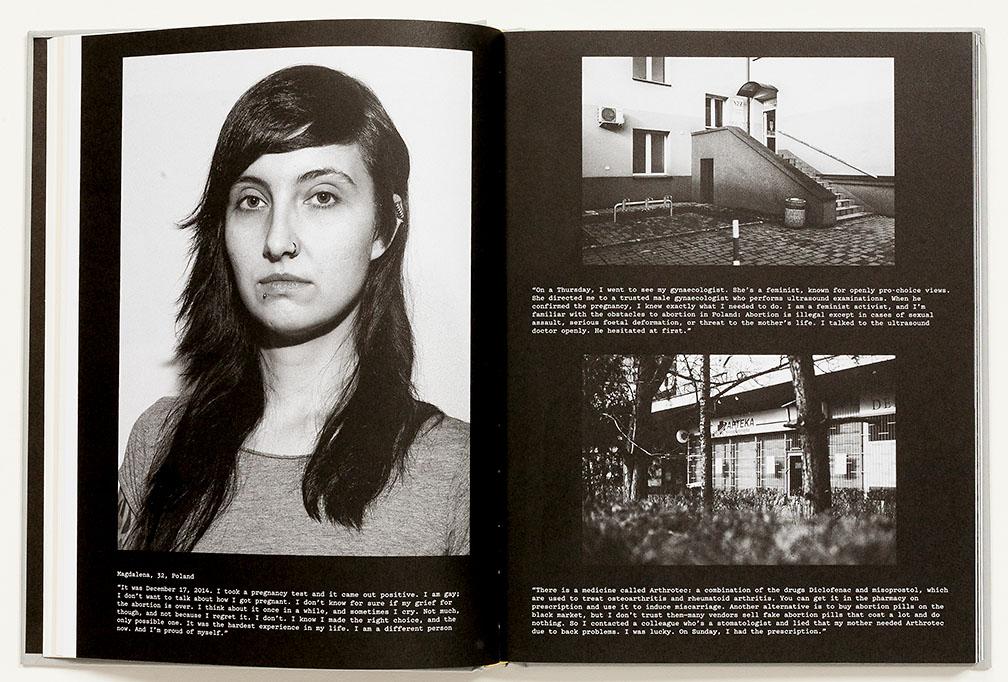
This was a fascinating talk that I attended with a fellow student on the MA Course. It was a Miniclick Photo Talk with Laia Abril, a photographer and multi-disciplinary artist who works across a number of different mediums and platforms. Her work relates to femininity but addresses the uneasy stories and realities around subjects such as gender equality. She has produced a number of books around these subjects, including A History of Misogyny: Chapter One: On Abortion (2018), which looks at abortion controls and how this appears across many different cultures, as well as showing the repercussions of these controls. Abril is currently working on A History Of Misogyny, Chapter 2: On Rape Culture.

This is not my usual choice of photography or artist, however I was quickly captivated by Abril’s own review of her work, which showed her to be a deeply insightful, sensitive and courageous human being. She spoke of how she considered her subjects and the potential danger they could be placed in through working with her. She was always aware of this every step of the way and was very protective of the woman who agreed to be her subjects. She also admitted that the danger and threat was also a potential for her as the photographer who could easily become a target around such emotional issues and readily acknowledged that she sometimes feels scared. I was very impressed with her strong sense of ethics and courage.

Abril approached these books by visualising complex situations and emotions, things that cannot be photographed. She then attempts to articulate and represent these visually. She supports her work by doing an immense amount of research and this stems from her journalism background. She said that reading and text research was central to her projects and that this is valuable when as a photographer you are located geographically far away from your subjects. Abril said that her process was one of accumulating information and then finding her position in it.

Her goal, she says, is usually a book and her aim is to make sure the viewer enjoys it from start to finish, so this can be difficult when presenting uncomfortable issues such as abortion. This has meant she has had to become very creative in how she designs a book or presents an exhibition. Abril focuses on how she groups images together, integrates text into the artwork, uses clever inserts and includes interesting representational images. She makes use of small, simple images because she believes it is more powerful for people to make the connections themselves.

Abril is always incredibly sensitive towards the women who are her subjects and says that it is through building a connection that they will talk to her, when they feel comfortable and safe. She cautions that it is important to be aware of how a subject experiences working with a photographer as we do not know the impact we have on them emotionally and psychologically. As photographers we must always consider how we portray our subjects, but also how we interact with them and what the impact on them will be.

Although, this is not my particular style of photography, I learned a tremendous amount from this discussion and would be apply to apply this in the future if I begin to work with subjects as part of social documentary projects.

On Abortion, 2018 ©Laia Abril

F22 Workshop

This week I attended the F22 – Survival Skills for Freelance Creatives Workshop in London as I was fortunate enough to be there at the time. I had seen the workshop advertised by the AOP and thought it would be invaluable for me as somebody who is planning to enter this market, and also felt it matched very well with this term’s coursework. The workshop was presented by Sheryl Garratt, previously the editor of The Face and The Observer magazine, and now a life coach working with freelancers and creative people.

In her workshop, Sheryl discussed the changing photographic market and the difficulties facing freelancers in the industry. She spoke of the constant pace of change and the lack of security in an industry that is in flux, as well as the impact of social media and the way in which ‘content creation’ threatens the photographic industry. This was confirmed by other people attending the workshop who have personally experienced this impact on their photographic careers.

One lady I spoke to was actually attending the workshop because she had previously worked as a freelance photojournalist but was no longer able to earn a living from this work due to the rise in citizen journalism and the use of image submissions from the public. She mentioned that both full-time and freelance jobs in this industry had been significantly reduced across the last decade or more. She was attending the workshop as she is hoping to take a new direction and break into the commercial photography market. It was very informative to hear from other photographers and people in the industry just how they were approaching their freelance work and where they felt the most impact.

Sheryl presented her workshop around ten core foundations that would assist in being successful in growing a business and doing the creative work that we love to do. Based on these principles I identified the following important steps I can take in developing my own freelance path:

  1. Get very clear on my creative vision, my reasons for doing what I do and what I hope to achieve.
  2. Create some great short descriptions of what I do and why I do it. Sheryl advises that we need to find ways of talking about what we do that makes it sound exciting.
  3. Marketing must become part of my daily routine as this is how I will get work.
  4. Do less and focus more on what matters. I would do well to simplify, streamline and focus my work in order to be more productive.
  5. I need to build up an effective working routine that suits my needs and this will increase my productivity.
  6. I should start a savings fund as this is what will give me the creative freedom to explore personal projects and have greater autonomy.
  7. It is essential for me to create a portfolio career, as multiple income streams are the only way to succeed as a freelancer nowadays. I will do some thinking about ways to do this and can also refer to our current coursework for ideas about other careers in the industry.
  8. Networking is extremely important, as is building peer support.
  9. Always invest in what I need to support my continued personal and business growth.
  10. Be realistic and manage my time and energy as this is my most important resource.

The workshop was a great experience as the content was excellent and I learned a number of important tips about how to find clients, how to manage my business and how to maintain a healthy balance between earning a living and doing what I love. It was also invaluable to meet other professionals in the industry, both to learn from them and to network among peers. For further information about Sheryl’s informative and insightful workshops and coaching, please visit her website.

Photography as a profession ©Juanita McKenzie

Contextual Research – Viviane Sassen

In the previous webinars discussing photography markets, I came across the work of Viviane Sassen. She is a Dutch photographer who is extremely successful in both fine art and fashion photography. Although her genre of photography seems completely unrelated to my own practice in urban photography, there was something about her work that really stood out to me and made an impact.

I was particularly drawn to her 2014 series, Umbra, in which she makes strong use of shadow, contrasts, colour, shadow and lines. When I came across the video below and heard Viviane Sassen describe how and where she discovered her photographic voice, I began to understand that I had been unconsciously drawn to the light and colours familiar to a landscape I had known most of my live, the African landscape, having grown up in South Africa. Viviane Sassen describes that it was only upon spending time in Africa that she connected to her creative voice and it is there that she learned about working with light and shadow, bright colours and sharp contrasts.

Her sensitivity to her subjects while in Africa is so clearly expressed and she acknowledges an awareness of the imbalance in power between her as the photographer and her subjects. Sassen approaches her subjects by gaining their understanding of her intention and that the photography is about concepts that are far larger and more abstract than themselves. She approached these images from a symbolic perspective and this resulted in a powerful series of portraits that made a tremendous impact on me because she has succeeded in capturing the essence of her subjects, somehow merging the present moment, with the cultural and historic inheritance of people and place.

“One of the best ways to appreciate Sassen’s work is through her photobooks. Flamboya merges documentary and fine art to find a new way of looking at Africa, one that is neither exoticising nor straightforward reportage. Parasomnia is a more dreamlike exploration of Africa that draws on those childhood memories and vivid dreams.” (O’Hagan, 2013) Sassen herself encourages photographers and artists to experiment and push the boundaries on creativity, working intuitively to create the magic . I feel truly inspired by her approach to photography and will refer to her work often as I experiment with the use of light, shadow, colour, contrast and line in my own work.

Viviane Sassen talks about her photographic process and how she discovered her creative voice.

Reference: O’Hagan, S. (2013). Fashion photographer Viviane Sassen: a different take. [online] the Guardian. Available at: https://www.theguardian.com/fashion/2013/oct/12/fashion-photographer-viviane-sassen [Accessed 8 Dec. 2019].