Journal Reflection -Sustainable Prospects Week 3

Thinking about the lessons, this week, I have had to consider where I locate my practice between personal projects and commercial photography. I am not yet doing any commercial work and it was only a few years ago that I rediscovered photography after earlier aspirations of being a photojournalist.  Although I no longer necessarily wish to pursue a career in journalism, the documentary impulse still remains but is focused on social issues and causes. I also feel increasingly drawn to fine art photography and wonder if there is a way to combine both aspects into my photographic practice.

The difficulty for me has been in finding my voice as a photographer and I took on the MA Photography because I wanted to develop my personal style and learn more about turning my personal projects and passion for photography into pieces of art or meaningful bodies of work. I think that initially I would lean naturally towards photographic books and related exhibitions around these bodies of work. I am increasingly drawn to the work of social documentary photographers such as Zed Nelson and Alec Soth. Looking to the works of established photographers will be important in providing inspiration and helping me to find my own style within these genres of photography.

Learning from others in the industry, participating in contests and reviews, attending workshops, networking and developing my personal brand are my next steps in this process, and I will explore these avenues concurrent with my MA project and other personal projects as these may be the beginnings of a meaningful body of work.  At the same time, I will look at breaking into the commercial photography market possibly through the sale of prints, stock photography and even some portrait work.  I am currently building up a portfolio of related work.  Due to working a full time job, my efforts to break into any form of commercial photography would need to be on a part-time basis and will take some time to plan. That said, it is a priority for me to put in the time and energy to build something for the future that is both sustainable and meaningful. 

Although I am still establishing and developing my own visual language, I do have a personal style that comes through my work but which I still find difficult to define.  Not everyone relates to or understands some of my projects, wondering why I would consider the subject matter that I do, but as these are personal projects, I make conscious photographic choices and stay true to my creative vision in this way.    Learning from others is very important to my development and growth as a photographer, however, I have also learned it is essential that I don’t make comparisons to the work of others because this can be a downfall not just in photography but in all areas of life. 

I do tend to focus on long term project work, so some of my ideas would take years to reach fruition and show results. This means that they would remain personal projects for now although there is always the possibility that this could change in the future. My current project for the MA is one that I view as a long term project that I foresee developing throughout the two years, however, as the course is structured into modules across terms, my challenge is to create meaningful visual chapters of a much longer process.
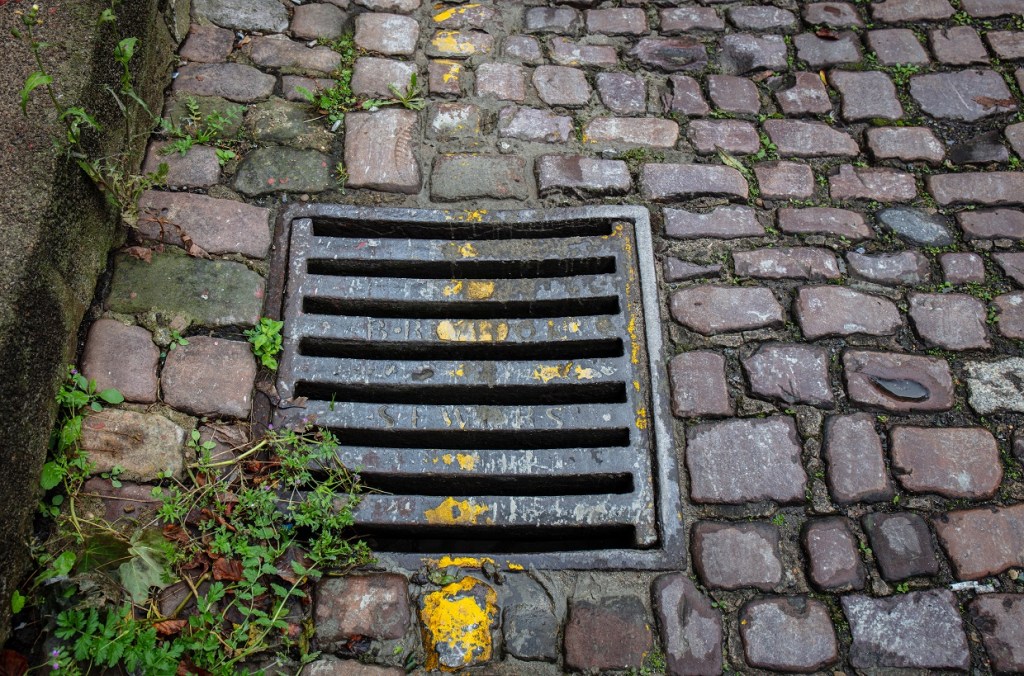
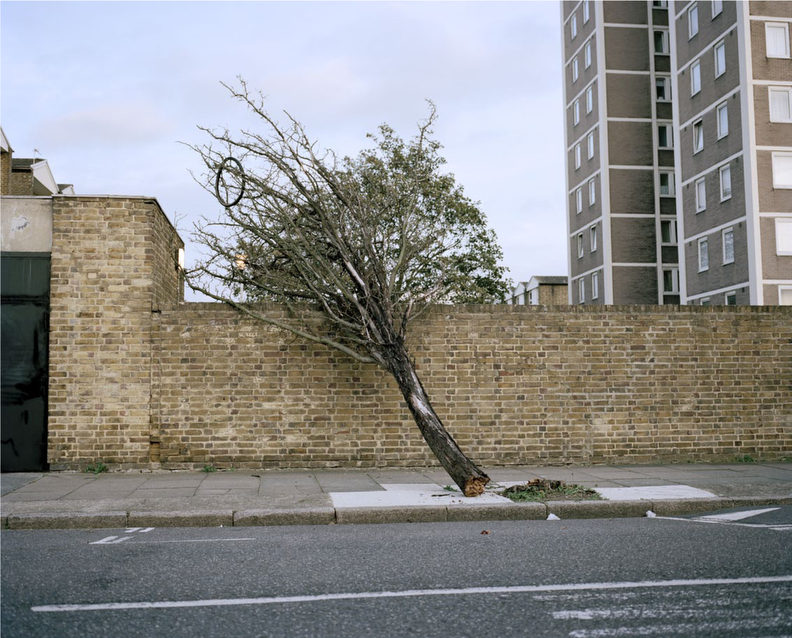
Urban wanderings © Juanita McKenzie

Art and Commerce

The focus for our coursework this week was to explore how photographers mix art and commerce in different ways, as well as discussing the importance of developing a unique vision and distinctive visual language as this is the type of originality and consistency that clients are looking for. It is what makes a photographer stand out from the crowd and, very importantly in my opinion, makes them both recognisable and memorable. These qualities are essential now with the rise in digital technology and social media.

Personal branding is an important part of this too and must be considered when developing and online presence and creating content to be shared through these channels. The personal brand must not only be consistent with the professional image the photographer wants to create, but must also appeal to the appropriate market while remaining authentic and original. These aspects must all combine to compliment and highlight the visual language of the photographer.

Our tutor, Anna, emphasised that is is through the love of photography and the experience of practising it that we develop a personal style and visual language.  Having personal projects to work on not only helps to achieve this, but also keeps a connection to the love of photography. This is very important to allow for artistic expression, rather than having to focus on the commercial aspects of being a photographer and working within the design of the client brief.  It is important to create a balance between the art and the commercial practice

As Anna said, “Successful projects are produced by those who find interesting stories and interesting ways of telling them.” This really made an impact on me and got me thinking about the narrative aspect of photography, the visual story telling, something I would like to develop further in my own practice. It is important to create a balance between the art and the commercial practice of photography, and if done successfully, the two aspects could even merge, and personal projects may attract new clients.

As I am not yet a commercial photographer, I am predominantly working on personal projects and my MA Photography projects, so finding a balance would be about breaking into a commercial market, finding new clients and a market for my photography. I am still developing my style and visual language, which is one of the reasons I have chosen to do the MA Photography, as I believe this will help to challenge, inspire and develop my photographic practice.

 Some of the artists who inspire me and who have successfully combined their personal projects and vision with commercial photography are:

  • Zed Nelson is a highly successful documentary photographer and filmmaker who makes use of long-term personal projects to explore current social issues with a scope and depth that results in his very successful books and exhibitions. His project, The Family, for example, is ongoing since 1991 and will continue indefinitely.
A Portrait of Hackney, 2014 © Zed Nelson
  • Alec Soth, the well known American documentary photographer who developed his unique style and visual language by wandering and exploring to find the subjects of his work. His first book, Sleeping by the Mississippi, was born out of his travels along the Mississippi River and was self-published in 2004. It was this project that drew attention from the art world and firmly established his career.
Harbor Marina (Morning), Memphis, TN, 2000 © Alec Soth

References:

Photoworks. (2019). New Writing: Hackney: A Tale of Two Cities | Photoworks. [online] Available at: https://photoworks.org.uk/hackney-tale-two-cities/

Widewalls. (2019). Alec Soth. [online] Widewalls. Available at: https://www.widewalls.ch/artist/alec-soth/

Journal Reflection -Sustainable Prospects Week 2

This week we looked at business basics and writing up business plans. We also touched briefly on copyright law. The practical aspects of working within the photographic industry were discussed alongside the various careers within the photography industry, as well as discussion around what it means to be a professional photographer in the industry today.

Scott Grant (2014) in his book identifies three types of professional photographer:

  • High end professional photographer – high end professional clients across many genres, high financial reward.
  • General professional photographer – clients across many genres from a less prestigious client base, lower financial reward, photographers tend to be from an art or academic background, aspire to becoming a high end professional photographer.
  • Domestic professional photographer – work in commercial photography for weddings, events, portraits and is not commissioned, usually self taught, regionally based and rely on constantly finding new clients.

I am not yet earning significant income from photography so I do not consider myself to be a professional photographer at this point, although I would like this to be a future prospect. I would aspire to freelance work as a general professional photographer and have an interest in social-documentary photography, architecture and cityscape photography, and the creation of photography books. Although, there are many other careers to be considered in the photographic industry, I am primarily interested in the photography itself. The challenge will be to succeed in a highly competitive industry in a digital age.

Photographing the Photographer – Image credit © K.Magro

Reference: Grant, Scott, Professional Photography: The New Global Landscape Explained (2014), CRC Press, p. 5

Whose Image is it Anyway?

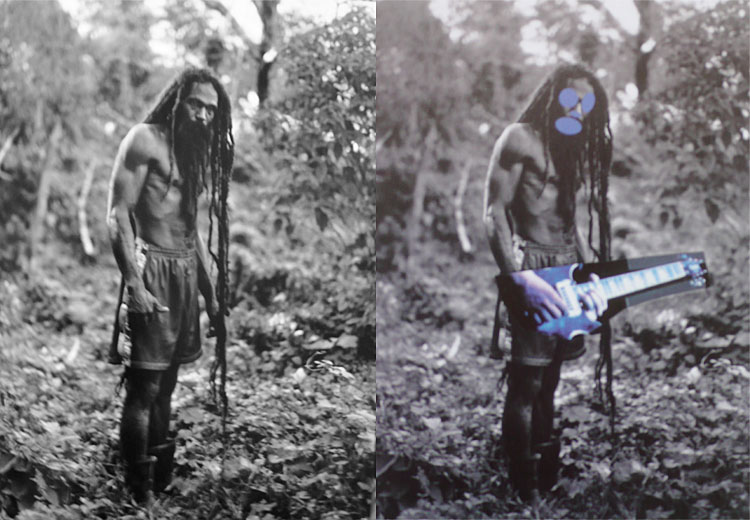
Image on left: original photography by Patrick Cariou / Image on right: artwork by Richard Prince (Boucher, 2019)

This week our coursework looked at copyright and referred to the well documented copyright case of Cariou vs. Prince.  French photographer Patrick Cariou opened a case against Richard Prince and his gallery, Gagosian, for copyright infringement. Prince, a well known appropriation artist had incorporated some of Cariou’s images from his book, Yes, Rasta, published in 2000, into his series of paintings and collages called Canal Zone, exhibited in 2008 at New York’s Gagosian Gallery .

 The outcome of this landmark case in 2009 initially found in favour of Cariou, but then on appeal in 2013, found that Prince, the defendant, was free of any copyright infringement and this decision was based on the principle of ‘Fair Use’.  Both the Warhol Foundation and the Robert Rauschenberg Foundation had filed briefs in the appeal case siding with Prince. “Their argument: the intellectual content and aesthetic meaning of works of art are not always visible to the naked eye without art-historical context. Their brief suggested that art historians, curators and other experts should have a say in the case”. (Boucher, 2019)

The principle of fair use, stipulates that the secondary use of an image must transform the original by using it in a different way or for a different purpose in order to create a new meaning, or message. “Whether or not art is transformative depends on how it may “reasonably be perceived” and not on the artist’s intentions. Even though Prince expressly stated he did not “have a message,” the court still found that most observers would see Prince’s “Canal Zone” as having a radically different purpose and aesthetic than Cariou’s “Yes Rasta” and that this was enough to make the work transformative”. Artist Rights. (2019)

This raises the question of what is considered ethical as there are a number of factors to be considered in this case, such as the financial impact – Prince made a significant amount of money with his series of ‘Canal Zone’, while Cariou as the original artist did not make much through the sales of his book. It raises the question of whether the appropriation of the images may have had a negative impact on the marketing of the original work.

Another important factor to consider is the length of time taken by the original artist to create the body of work. In Cariou’s case it took 6 years to create this body of work during which time he lived and worked alongside the Rastafarians in Jamaica building up the trust necessary to allow him to photograph them. Lastly, and most importantly, in the context of the Cariou vs. Prince case, I believe the question must be asked whether the subjects of the artwork were treated ethically and how they may have felt about the appropriation and subsequent use of the images.

In conclusion, this case highlights the fact that although the use of copyrighting indicates ownership of material, it doesn’t necessarily protect work from being utilised or re-purposed.  If copyrighted work is used without permission, there would be legal grounds to open a court case to defend the work based on the copyright laws of a particular country.  This would largely depend on whether or not one could afford such a case and then, should such a case goes to court, Fair Use would be applied in countries such as the USA and UK. 

References:

Boucher, B. (2019). Landmark Copyright Lawsuit Cariou v. Prince is Settled. [online] ARTnews.com. Available at: https://www.artnews.com/art-in-america/features/landmark-copyright-lawsuit-cariou-v-prince-is-settled-59702/ [Accessed 3 Dec. 2019].

Artist Rights. (2019). Cariou v. Prince — Artist Rights. [online] Available at: http://www.artistrights.info/cariou-v-prince [Accessed 3 Dec. 2019].

Live Brief – Introduction

As part of the module, Sustainable Prospects, students have been given an opportunity to participate in a live brief.  There were mixed feelings among the students, with many raising concerns about the workload for this term.  Working on the live brief is voluntary so not all students have chosen to participate.  I am also concerned about the workload and keeping up with everything during this term, however, I am very excited about the opportunity to participate in a live brief and have chosen to take part.

We had different briefs to choose from and these were for Oxfam, Headway East London and City ID who each presented a video for us about their respective campaigns.  Although City ID was probably the most logical brief for me to choose, it was Headway East London that really drew me and I put this forward as my first choice to work on.  I based my choice on the brief that I most wanted to work on and give me time to, the one that I connected to the most.  Headway East London’s video was great and I really felt that I would be proud to work with this organisation and I absolutely support the great work that they are doing. 

I was delighted to find out that this was the campaign I was allocated to with three of my fellow students – Bloo, Raeann and Oliver.  We have set up a WhatsApp group and have planned our first meeting as a group to do some initial brainstorming and discuss our next steps.  It was a great way to start as everybody in the group seems very enthusiastic about this project and eager to pitch in and do the work.  We will need to deliver the live brief for a pitch within 9 weeks and I look forward to working on this as a team.

Visit the website to find out more about this local charity and the amazing work they do.