Live Brief – Action

Live Brief – Week 4 & 5

After the review with our tutors, we met to discuss the feedback and reach a decision on the concept of our campaign.  We reached agreement around creating a video which would illustrate the hidden aspects of brain injury by using the concept of not always being able to see everything that is actually there.  As a group, we took on board the feedback received from our tutor, Jesse, about making short video clips rather than one longer video.  There were a number of ideas put forward and Oliver, who came up with the initial concept and has experience with creating video/film, will be working on creating the first video clip.  Bloo also has film/video experience and has agreed to create storyboards to illustrate the other ideas for short clips.

I expanded on the mood board concept that was introduced by Oliver previously and looked for images that represented the editorial look and feel that had interested our tutors and which also inspired us prior to the group meeting.  We discussed this and came up with an artistic direction to try for the stills that we would use in the campaign – the approach would be to create images that showed our subjects ‘breaking through’ and emerging from paper or fabric to represent the experience of brain injury impacting on personal identity. In the group discussion one of the team members suggested doing a workshop with the members of Headway in order to create the photographic stills and possibly we could incorporate some of their artwork.   

We each then created sample images for photographic stills which returned mixed results for various reasons.  I was not happy with my image quality as I had to rush it to deliver on time while juggling work demands.  I took quick ‘snapshots’ to illustrate my concept which was a person emerging through paper – I used newspaper because it was a resource I had, however, my vision was for our subjects, the members of Headway East London, to ‘emerge’ through paper covered in artwork they had created specifically for our project, in line with the workshop idea that we had discussed.  I chose to repeat the concept with a second series of images which were actually self-portraits, something I have not done before as I am rather camera shy. 

The other members produced images in their own unique styles, with Bloo cleverly emerging through white paper with reading glasses incorporated into the image, Oliver doing self-portraits with Stik-it notes on his face and our project leader, Raeann creating beautiful images working with a model.  There was some stunning work produced but I felt we lost focus by working individually in this way as we have such varied styles and genres of photography.  The ideas we have come up with as a result of this process are very creative and I still feel that we are working well together as a group, especially considering the challenges of working remotely from each other and juggling the demands of life, jobs and our coursework over and above this.

The one concern I have and which I raised with the group, is that I cannot see the link between our video concept and the photographic stills we are creating.  This leaves me feeling there is a lack of coherence in the design of this pitch and it actually feels like we are almost creating two entirely different campaigns.  We will continue this week to create more content for the presentation to put forward to the tutors next week and will start compiling a folder of the work that will be put into a presentation.  I will not be able to attend the next group meeting due to work demands so this is rather disappointing but I will contribute as much as I can prior to the meeting and will rely on the group to update me on the feedback. 
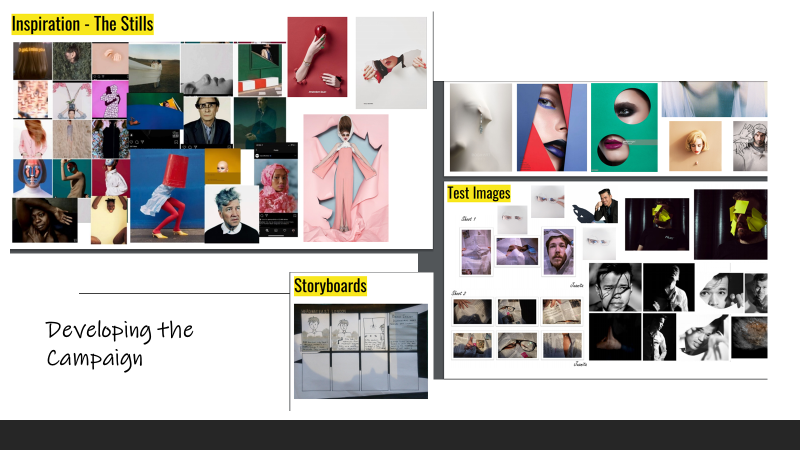
Developing the Live Brief Campaign

Journal Reflection -Sustainable Prospects Week 4

Reflecting on the topic for this week, I looked at where I am currently and where I imagine I would like to be in five years time. I am not yet a commercial photographer, so I do not have a current market, however, I do have a small and growing audience which has largely been gathered via social media, in particular, Instagram. My audience has good engagement with my content and there is a core group of loyal followers who consistently interact with my feed. 

I started out sharing my photography on Instagram with no intention other than challenging myself to share my images and to make the commitment of sharing one image a day.  I was stunned by the response and positive feedback I received as I had never considered the prospect of an audience, and was merely posting images for myself.  This online platform has proven to be an incredible networking tool, helping me to connect to others and to form genuine relationships. Breaking Glass Magazine, who have recently shared some of my photography, are an example of the real networking, connection and community that I have discovered through Instagram. Below is one of my featured images from their October 2019 Anniversary Edition article which can be viewed here.

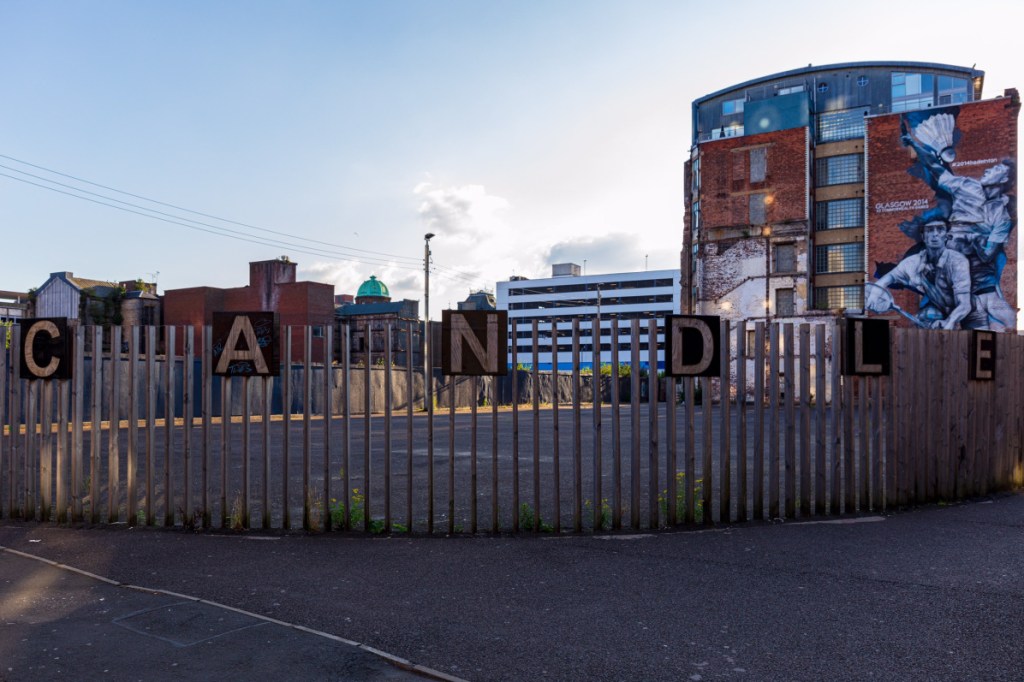
Candleriggs Square, Glasgow, July 2019 © Juanita McKenzie

I do now look at things like engagement statistics because they are a good measure of whether I am consistently creating quality content for my audience, but also it is a great marketing research tool as it can give good indications of trends, preferences and audience loyalty. However, I do not measure myself by my number of followers and likes, but rather on the quality of real engagement and authentic connection that I can form with others, and by staying true to my own artistic vision.

I imagine that in five years time, my audience would have grown considerably and I would have expanded my presence across other online channels.  I would also have begun to market my work and my personal brand through these channels and other areas that are industry relevant and which would place me in the correct market share for my work.  Networking is as important online as in person, so this will be central to connecting me to my particular market and over time, my audience and market would begin to see some overlap.

This would be achieved by a strong business plan which incorporates a marketing, communications and social media strategy, alongside creating the quality content and photographic products that my market and audience would engage with.  I am very interested in creating photographic books, selling prints and potentially doing freelance work for relevant publications, so my target market is easily defined.   I would also consider teaching, running workshops and curating content as supplements to my income in order to be able to freelance and commit to my photography as a full time and commercially viable practice.

The Current Commercial Environment

This week we explored commercial environments in photography and looked at whether there is a difference between commercial photography and art.  Although there is a clear difference in their intended audiences and market, the end result is the same, the aim is to gain income from the work.  This means that ultimately all photography could be considered as commercial, and it is not just confined to editorial or advertising markets.  What is also important to remember is that it is always the client who sets the rules for photography because they want content that matches their brand and their budget.  With the rise of digital technology and social media this has created an increased demand for images and quality content but it has also made the market far more competitive. 

In the publishing sector, many publications no longer have printed editions and have instead created online publications.  Their revenue has decreased and therefore so have their budgets, meaning that editorial work is now sparse and often poorly paid.  The rise of mobile phone technology and citizen journalism has also meant that many publications no longer need to pay for images and instead publish submissions from their viewers at no cost to themselves, further impacting on this market.  In an interview for the British Journal of Photography, Emma Bowkett, director of photography at the FT Weekend Magazine describes how online publication has changed the type of content needed and says:

“There has been a shift of focus from print to digital in newspapers and for our magazine, the challenge is to bring long-form journalism and visually rich content to this platform. We are working more with data and video to create a reader experience that is way beyond what we could achieve in print. It’s an interesting time for experimentation.” (Bowkett, Emma. 2017)

Advertising work has also had to change and adapt to the demand for online content and a changing audience.  The style of advertising has changed to reflect global brand identities and the aim of creating brand loyal communities.  There has also been a shift to using stock images for advertising campaigns rather than commissioning work, however, there is still a good market for photographers.  Stock photography is a potential commercial market for photographers to consider, however, it is important to consider the type of licensing and payment that will be received through this type of commercial market, and also what type of photographs are sold as all control over the use of these images is lost once sold as stock photography.  It is, however, a good market to consider as a supplement to earnings. 

One area of commercial photography that is still a good market and which is showing interesting and dynamic trends, is that of fashion photography.  There has been an increasing trend towards a merging of fine art and fashion photography which has resulted in some incredible editorial work.  A fine art fashion photographer whose work I admire is Lindsay Adler, an artist who has established herself firmly within the industry as both a photographer (doing commissioned fashion and editorial photography, as well as selling fine art prints) and an educator (selling books, tutorials and workshops).  She is an example of a photographer who has fully understood the modern commercial market and has created multiple income streams and a successful personal brand. 

Queen of the Desert © Lindsay Adler

References: Creative Brief Emma Bowkett. 2017. The British Journal of Photography, 164(7858), pp. 84-85.

Live Brief – Group Meetings

Live brief – Week 3

As part of our work on the live briefs, we had a scheduled meeting with our tutors, Jesse and Anna, and were tasked to be ready with a short presentation to put forward our initial ideas for the campaign.  We met earlier in the week to prepare for this and one of the members of our group, Oliver, created a mood board as a visual stimulus to help focus how we would like our campaign to look and to help us agree on a coherent style across the group.  We all have very different styles of photography and work in different genres, so it is going to be a challenge to bring this together into a consistent visual narrative. 

Oliver’s Mood Board

The mood board was a great idea and triggered a lot of discussion on the main visual themes we wanted to incorporate into the campaign.  This was incorporated into our presentation to the tutors, as well as main points from the research we had done so far.  Our research had led us to identifying Instagram as the focus for our campaign pitch as it is the online channel that we felt would most fit with our concepts and could incorporate clever use of video within the Instagram Stories function, as well as IGTV.  The tutors seemed to agree with us and liked the concept of video, but suggested that instead of long videos we look at creating short clips. They both seemed to like the editorial look and feel to our mood board and felt that this was a different approach to apply to this type of campaign. 

The tutor feedback was very positive and definitely helped us to arrive at a focus and direction for the way we want to design the campaign.  We also took the opportunity this week to establish a list of each group member’s key skills so that we could look at allocating roles for the duration of our work on the live brief.   We selected one of our team to be the Project Manager and take responsibility for planning our timeline as there are only 6 more weeks left before we need to be ready to pitch. It will be essential to plan effectively so we can deliver on time.

Journal Reflection -Sustainable Prospects Week 3

Thinking about the lessons, this week, I have had to consider where I locate my practice between personal projects and commercial photography. I am not yet doing any commercial work and it was only a few years ago that I rediscovered photography after earlier aspirations of being a photojournalist.  Although I no longer necessarily wish to pursue a career in journalism, the documentary impulse still remains but is focused on social issues and causes. I also feel increasingly drawn to fine art photography and wonder if there is a way to combine both aspects into my photographic practice.

The difficulty for me has been in finding my voice as a photographer and I took on the MA Photography because I wanted to develop my personal style and learn more about turning my personal projects and passion for photography into pieces of art or meaningful bodies of work. I think that initially I would lean naturally towards photographic books and related exhibitions around these bodies of work. I am increasingly drawn to the work of social documentary photographers such as Zed Nelson and Alec Soth. Looking to the works of established photographers will be important in providing inspiration and helping me to find my own style within these genres of photography.

Learning from others in the industry, participating in contests and reviews, attending workshops, networking and developing my personal brand are my next steps in this process, and I will explore these avenues concurrent with my MA project and other personal projects as these may be the beginnings of a meaningful body of work.  At the same time, I will look at breaking into the commercial photography market possibly through the sale of prints, stock photography and even some portrait work.  I am currently building up a portfolio of related work.  Due to working a full time job, my efforts to break into any form of commercial photography would need to be on a part-time basis and will take some time to plan. That said, it is a priority for me to put in the time and energy to build something for the future that is both sustainable and meaningful. 

Although I am still establishing and developing my own visual language, I do have a personal style that comes through my work but which I still find difficult to define.  Not everyone relates to or understands some of my projects, wondering why I would consider the subject matter that I do, but as these are personal projects, I make conscious photographic choices and stay true to my creative vision in this way.    Learning from others is very important to my development and growth as a photographer, however, I have also learned it is essential that I don’t make comparisons to the work of others because this can be a downfall not just in photography but in all areas of life. 

I do tend to focus on long term project work, so some of my ideas would take years to reach fruition and show results. This means that they would remain personal projects for now although there is always the possibility that this could change in the future. My current project for the MA is one that I view as a long term project that I foresee developing throughout the two years, however, as the course is structured into modules across terms, my challenge is to create meaningful visual chapters of a much longer process.

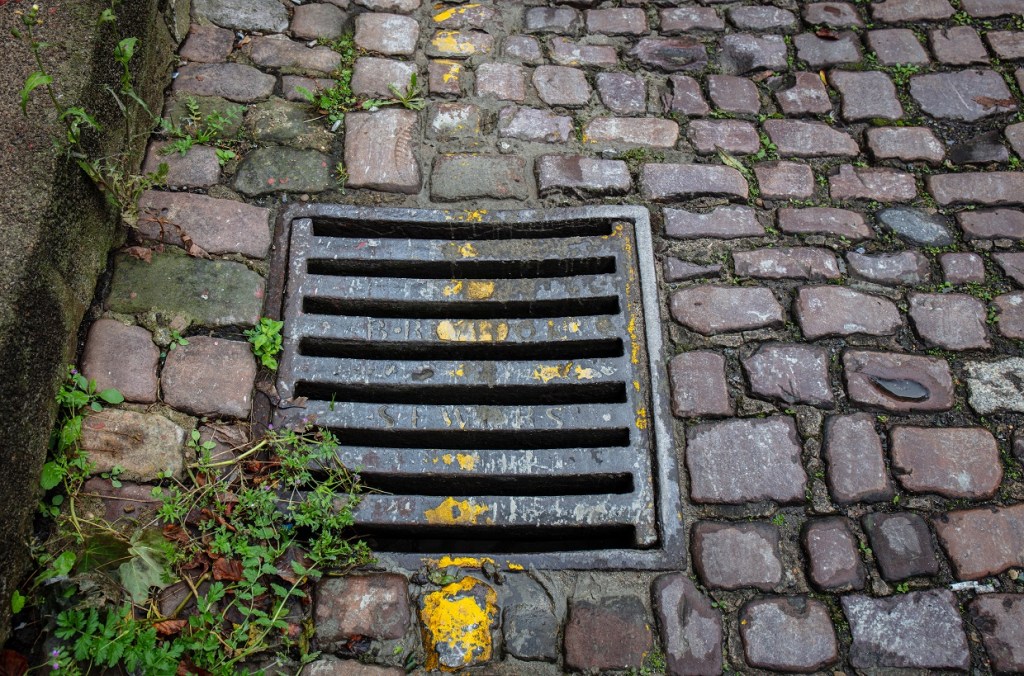
Urban wanderings © Juanita McKenzie