Photography and the Fine Art Market

This week we discussed the Fine Art market and how it has only been relatively recently that photography came to be seen as art. Unfortunately, it still sells at only a fraction of the price of other art, such as paintings. Although I don’t necessarily agree with this difference in pricing, it is likely because photographs can be reprinted and large editions of a print can be sold.

Fine art is a relatively small market as it is, and there are not many galleries that show photography. If they do, galleries will choose to represent only a small number of artists, making it a very limited market to break into. Nonetheless, there is a potential market out there, it is just about reaching it and getting the initial recognition.

We discussed that there are two types of fine art market:

  • Primary market – artwork is sold through a gallery or sold for the first time by the photographer.
  • Secondary market – the artwork is sold again or sold through an auction.

Our module leader, Anna, emphasised that networking is very significant in breaking into the market as it is often through introductions that work becomes visible. She suggested that in order to get our work and portfolios seen it would be a good idea to enter prestigious competitions, get portfolio reviews done, speak to producers and photo-editors at fairs, and try to get work into good magazines and group fairs.
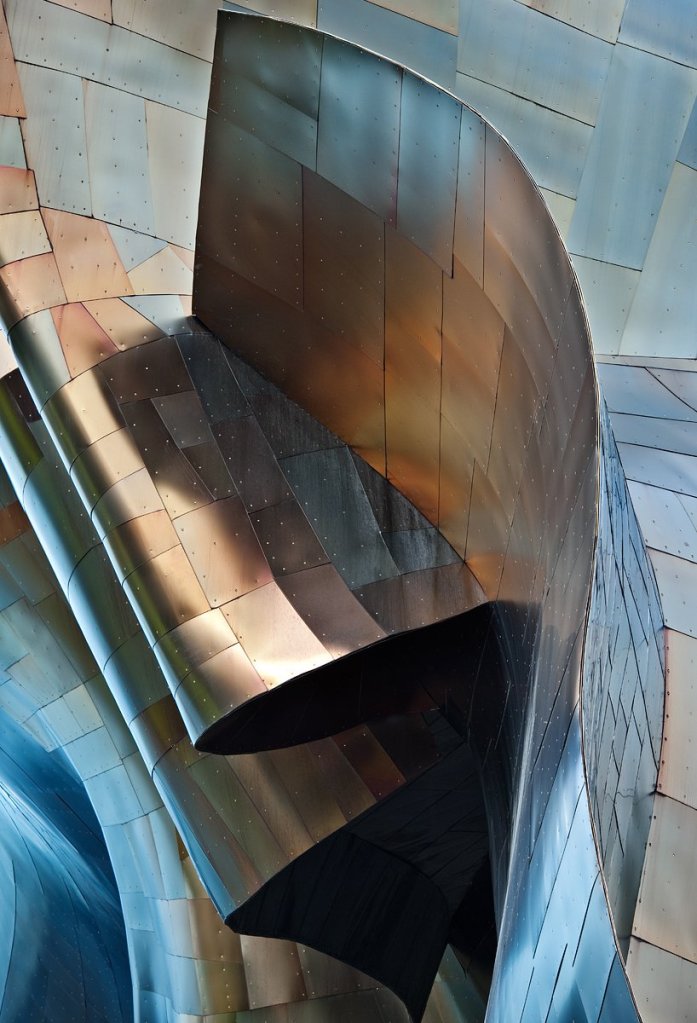
Gehry’s Children #5 © Andrew Prokos
Fine Art Architectural Photo Series

Live Brief – Week 7 & 8

Live Brief – Week 7 & 8

As a group we arranged a very quick meeting to review the feedback we had received from our tutors, Anna and Jesse. Based on their feedback, we decided to adjust our campaign by incorporating the video and photographic stills. At the very last minute, we also came up with a way to integrate into our campaign the concept of having a ‘workshop’ and decided we could illustrate this effectively in our pitch by including a ‘sample Instagram page’ illustrating the workshop concept. 

We agreed that we want to emphasise to Headway East London that the idea of having a workshop would be so that they have full control of creating the content of the campaign alongside us providing the technical and design skills required to create our videos and images. We want the members to at the centre of the campaign, co-creating it with us, as this would instil a sense of community, collaboration, accomplishment, authenticity, and inclusion.

I am particularly excited about this because the creative collaboration is exactly what makes our campaign ethical. In the discussion I identified certain key points that I will put together in a short blurb to be used within our pitch. We have agreed that we will work with the video that we have already from Oliver, use the final storyboard created by Bloo, and add any other creative content that we can and which is relevant prior to the pitch. Bloo is putting the final presentation together and we will have our final draft ready a week prior to pitch date.

I have noticed that there seems to be a little bit of strain within the group now as we approach the final weeks of this project. We are still working collaboratively but at various times we have each been pulled away from the project due to other demands. Occasionally I sense there is frustration building but our group always seems to remain positive and respectful towards each other. I think we have done exceptionally well with our communication and I am particularly proud of the way group members have stepped up to stand in when others are not available. We have done very well working together this far.

Final draft – almost ready to pitch

Journal Reflection -Sustainable Prospects Week 7

After the second webinar with our module leader, Anna, in which we discussed aspects of the various photographic markets, it is becoming very clear that this is tough industry to succeed in, despite the fact that there is a constant demand for imagery. I find myself feeling daunted at times, wondering if it is possible to break into the photographic industry at this stage in my life. At other times, I find myself comparing my work to that of others and wondering where exactly it fits in, as I’m not quite sure who would buy it or where my market would really be. These are the days where I suffer from ‘low creative worth’ and wonder what I was thinking taking on this course.

My research project is taking up all my spare time and I am spending most of the weekend walking around the city and in the underpasses, a far less than glamorous role and not quite what people think photography is like. I have been tired, cold, rained on and stared at by strangers who can’t understand what I am doing hanging around a concrete underpass. I am getting used to being uncomfortable now and no longer notice the stares but I do feel a little bit like I’m losing heart in my project. This might be since Ursa the Bear was removed from the Bearpit a few weeks ago, as I feel like the heart of the city went with her. Even though I predicted it would happen, I never anticipated that it would hit me quite so hard or that I would feel a little lost without Ursa. I wonder if others in the city feel that way too.

Where Ursa Once Stood ©Juanita McKenzie
St James Barton Roundabout, Bristol
Left: September 2019 Right: October 2019

Contextual Research – Viviane Sassen

In the previous webinars discussing photography markets, I came across the work of Viviane Sassen. She is a Dutch photographer who is extremely successful in both fine art and fashion photography. Although her genre of photography seems completely unrelated to my own practice in urban photography, there was something about her work that really stood out to me and made an impact.

I was particularly drawn to her 2014 series, Umbra, in which she makes strong use of shadow, contrasts, colour, shadow and lines. When I came across the video below and heard Viviane Sassen describe how and where she discovered her photographic voice, I began to understand that I had been unconsciously drawn to the light and colours familiar to a landscape I had known most of my live, the African landscape, having grown up in South Africa. Viviane Sassen describes that it was only upon spending time in Africa that she connected to her creative voice and it is there that she learned about working with light and shadow, bright colours and sharp contrasts.

Her sensitivity to her subjects while in Africa is so clearly expressed and she acknowledges an awareness of the imbalance in power between her as the photographer and her subjects. Sassen approaches her subjects by gaining their understanding of her intention and that the photography is about concepts that are far larger and more abstract than themselves. She approached these images from a symbolic perspective and this resulted in a powerful series of portraits that made a tremendous impact on me because she has succeeded in capturing the essence of her subjects, somehow merging the present moment, with the cultural and historic inheritance of people and place.

“One of the best ways to appreciate Sassen’s work is through her photobooks. Flamboya merges documentary and fine art to find a new way of looking at Africa, one that is neither exoticising nor straightforward reportage. Parasomnia is a more dreamlike exploration of Africa that draws on those childhood memories and vivid dreams.” (O’Hagan, 2013) Sassen herself encourages photographers and artists to experiment and push the boundaries on creativity, working intuitively to create the magic . I feel truly inspired by her approach to photography and will refer to her work often as I experiment with the use of light, shadow, colour, contrast and line in my own work.

Viviane Sassen talks about her photographic process and how she discovered her creative voice.

Reference: O’Hagan, S. (2013). Fashion photographer Viviane Sassen: a different take. [online] the Guardian. Available at: https://www.theguardian.com/fashion/2013/oct/12/fashion-photographer-viviane-sassen [Accessed 8 Dec. 2019].

Journal Reflection -Sustainable Prospects Week 6

This week we were given opportunity to prepare oral presentations ahead of our assignments at the end of the term and to practice these with our peers. Once again, I am unable to participate because my current work demands have been so high. There have been a number of events this term beyond my control that have thrown me into disarray, but work has been exceptionally demanding recently. I am beginning to worry that I am falling behind on coursework and not gaining the full benefit of the weekly discussions and peer work.

At the moment, I am using every available moment of my free time to work on my studies but there is simply not enough time in a day. I have had to prioritise certain parts of the course that I feel are most important: the live brief, as this is part of work within a group; getting out and taking the photographs that I need for my project this term; attending my individual tutorials and also webinars where possible, watching recorded materials as I can, and doing some of the contextual research and reading in the time that is left.

Feeling the pressure ©Juanita McKenzie