Journal Reflection – Positions and Practice,Week 4

This week our coursework was focused on creative collaboration and learning how this could support and develop our photographic practice. The task was set to work in creative partnership with one or two of our peers to create and deliver a micro-project by the end of the week.

To find our creative partners, we were tasked to post something in our forum discussions, text or image, that we felt a connection to and which represented something about ourselves and our work. We then looked at the contributions shared by our peers to find a post that resonated with our own and from this established our groups.

I chose to post the following quote as it is how I approach much of my urban photography:

“To me, photography is an art of observation. It’s about finding something interesting in an ordinary place… I’ve found it has little to do with the things you see and everything to do with the way you see them.” – Elliot Erwitt

This immediately connected me with my peer, Dean, who posted these song lyrics: ” Life is just a bowl of All-Bran. You wake up every morning and it’s there. So live as only you can. It’s all about enjoy it ’cause ever since you saw it , there ain’t no one can take it away.” – lyrics from Happy Days Toytown by the Small Faces.

We both felt an immediate connection around finding beauty in the ordinary things and this became the foundation from which we structured our project. We had been given complete freedom to choose a theme, the content and creative direction of the project with the only specifications being that we needed to create a small body of work in it’s own right which was formed in collaboration and which could be presented in a digital format.

Dean and I had a conversation on the phone about the project and very quickly came up with a simple project idea and process. We agreed to take a walk in our respective cities with the parameters being the same day of the week, the same time and duration, and it had to be in a local context. The aim would be to look for the beauty in the ordinary along the path of the walk and this would generate a body of images we could then collate.

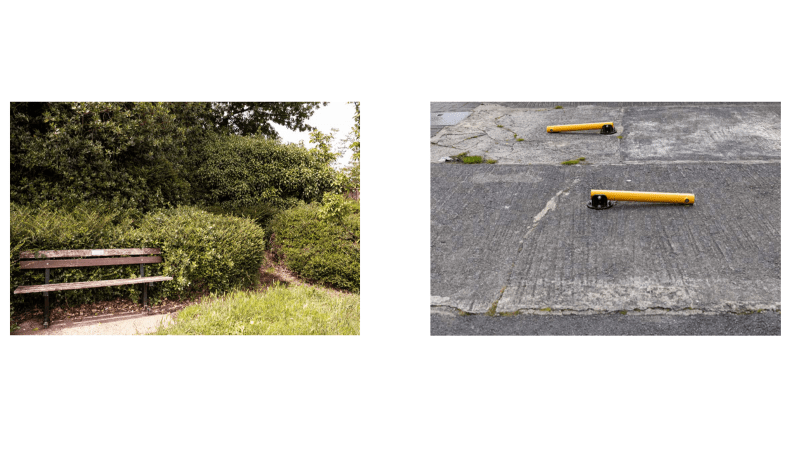
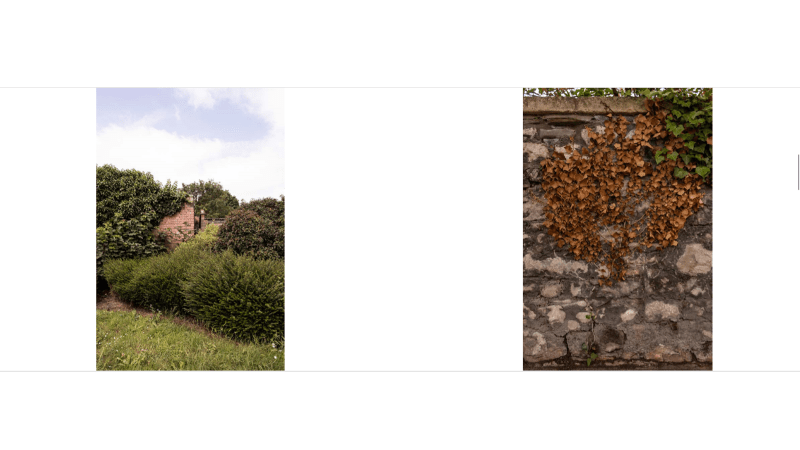
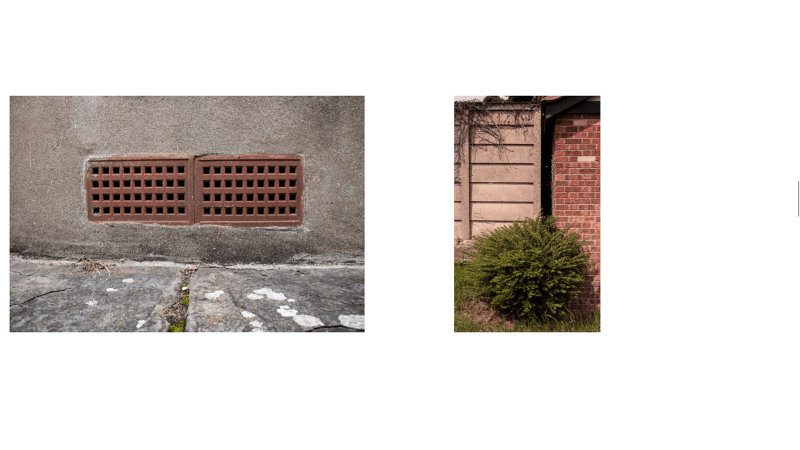
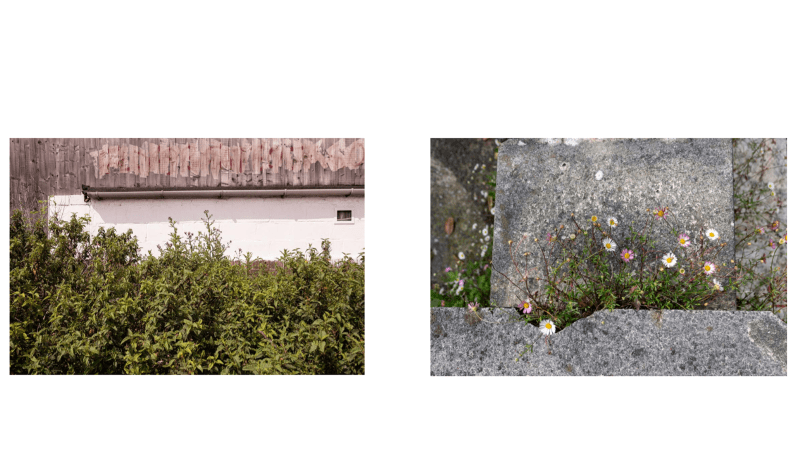
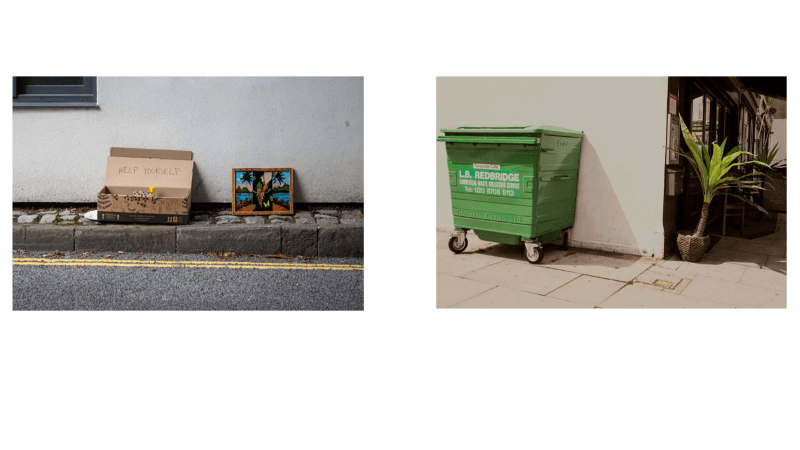
We both ended up wandering much further than we anticipated and went off the intended routes but the result was rather interesting. When we looked at our images side by side, we began to notice similarities in the forms, the themes, the subject and mood despite being in very different cities.
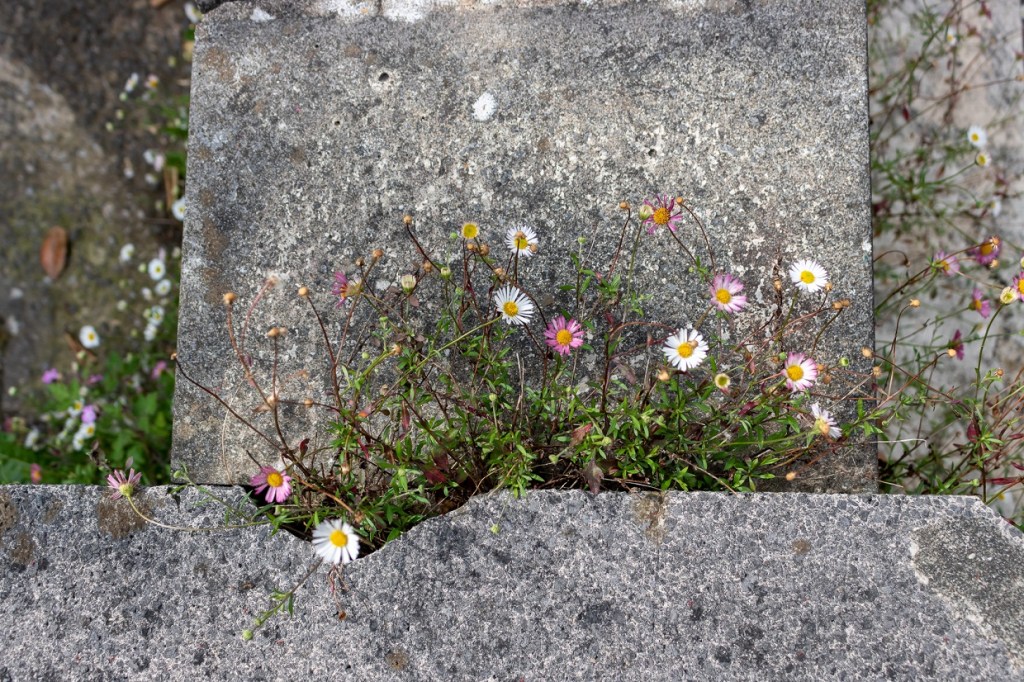
Harmony ©Juanita McKenzie
Image from the project. Full project slides can be viewed here.

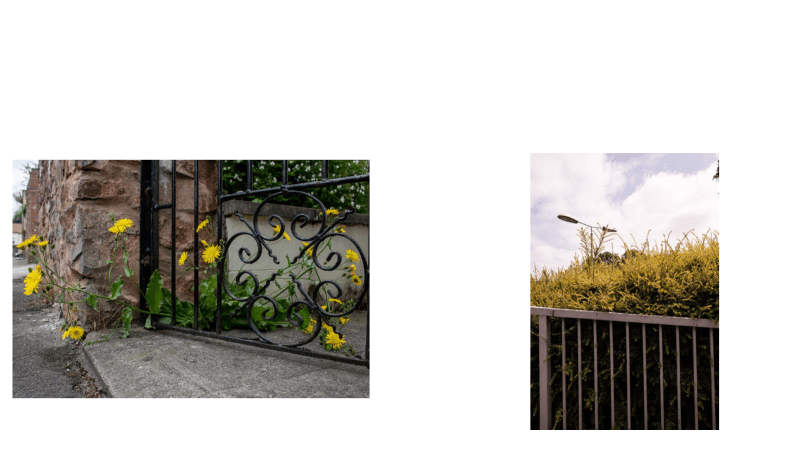
I had a good eye for pairing up images so that each page of our presentation has a side by side image by each photographer. Dean was brilliant at designing and compiling the presentation. We chose the images together, agreed on the layout and edit of the final compilation and created the text together. The entire process felt incredibly easy and fluid because we made such a great creative match based on the shared vision in our work.

When we presented it at our webinar, we both spoke about our images and why we took them, also looking at why we paired them the way we did. I felt that it was a balanced dialogue between us and the creative vision was easily articulated to our peers and tutor. We got very positive feedback at the webinar and also when we shared it in our discussion forum.

Looking at the work produced by our peers, it was very exciting and inspiring to see how others had approached this micro-project and the way they had chosen to present it. I was also amazed at the way in which certain themes repeatedly came through in each of the projects, for example environmental issues, the celebration of day to day life, finding meaning within the ordinary, and home or sense of place.

This was an incredibly valuable experience as I mostly work on my own and did not realise how working collaboratively can actually take the creative process into new directions and out of the usual comfort zones. It was a great activity and I learned so much from my peers and from working in creative partnership!

Nature finds a way ©Juanita McKenzie
Image from the project. Full project slides can be viewed here.
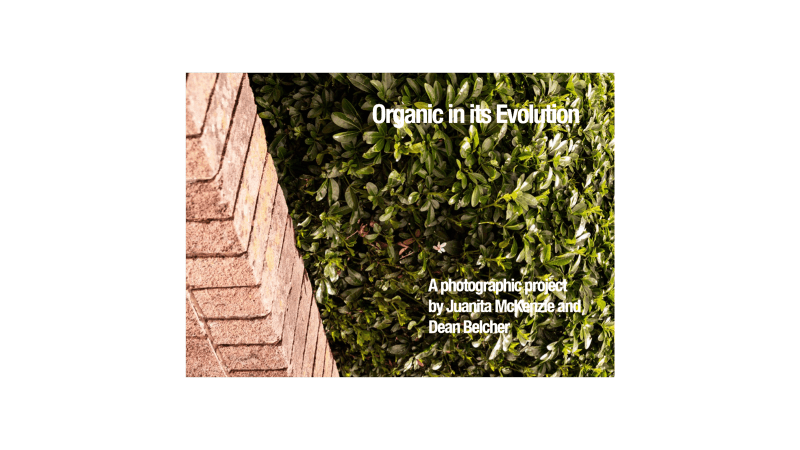
Creative Collaboration

Two photographers with different styles and working in different genres, living in two different cities in the UK paired up to create this project.  The connection happened through posting of two quotes that immediately revealed a similar vision or outlook on life.

Photographer 1 – Dean Belcher

Quote:  “Life is just a bowl of All-Bran. You wake up every morning and it’s there.  So live as only you can.  It’s all about enjoy it ‘cause ever since you saw it there ain’t no one can take it away.” – Lyrics from Happy Days Toytown, by the Small Faces. 

Photographer2 – Juanita McKenzie

Quote:  “To me, photography is an art of observation.  It’s about finding something interesting in an ordinary place…I’ve found it has little to do with the things you see and everything to do with the way you see them.” – Elliott Erwitt

Organic in its Evolution is a project named after the process of collaboration as it unfolded but also describes the essence of our urban environments and their relationship to nature.  It reflects our human responses to this constant dance of cycles between the apparent opposites and it speaks of our human desires to have spaces of our own and mark them in some way to defy the transience and isolation of modern and urban life. 

Note: Journal reflection on this project can be read here.

Journal Reflection – Positions and Practice,Week 3

This week the focus of our learning was around the changing world of photography, with constantly evolving digital technology, especially the smart phone and it’s link to social media. This has had a tremendous impact on photography and on the associated industries with the rise of the phenomenon of ‘user-generated content’ and citizen journalism.

There were interesting discussions about this in our weekly forum and opinions are varied about whether this is a positive or negative phenomenon. In my opinion the use of smart phones has made photography accessible to most people, breaking down barriers to this medium and encouraging people to explore visual documentary of their lives and the world they live in, as well as being able to share these images. 

This leads into citizen journalism which I do believe has its place in these times – modern media seems to have become increasingly more biased  and narrow in scope which is why citizen journalism can provide real time, on the ground footage of events that might otherwise not have been shared.  The lack of editing and technique gives it a sense of immediacy and gritty realism which can have a strong emotive impact. 

On the negative side, there can be an element of sensationalism where people are constructing scenarios, or taking unnecessary risks to get more views or likes.  This can lead to a lack of context to the images and also a lack of respect or sensitivity towards the situation being photographed.  There have also been a number of incidents where people have died or been injured while taking selfies in an effort to get the best locations or views.

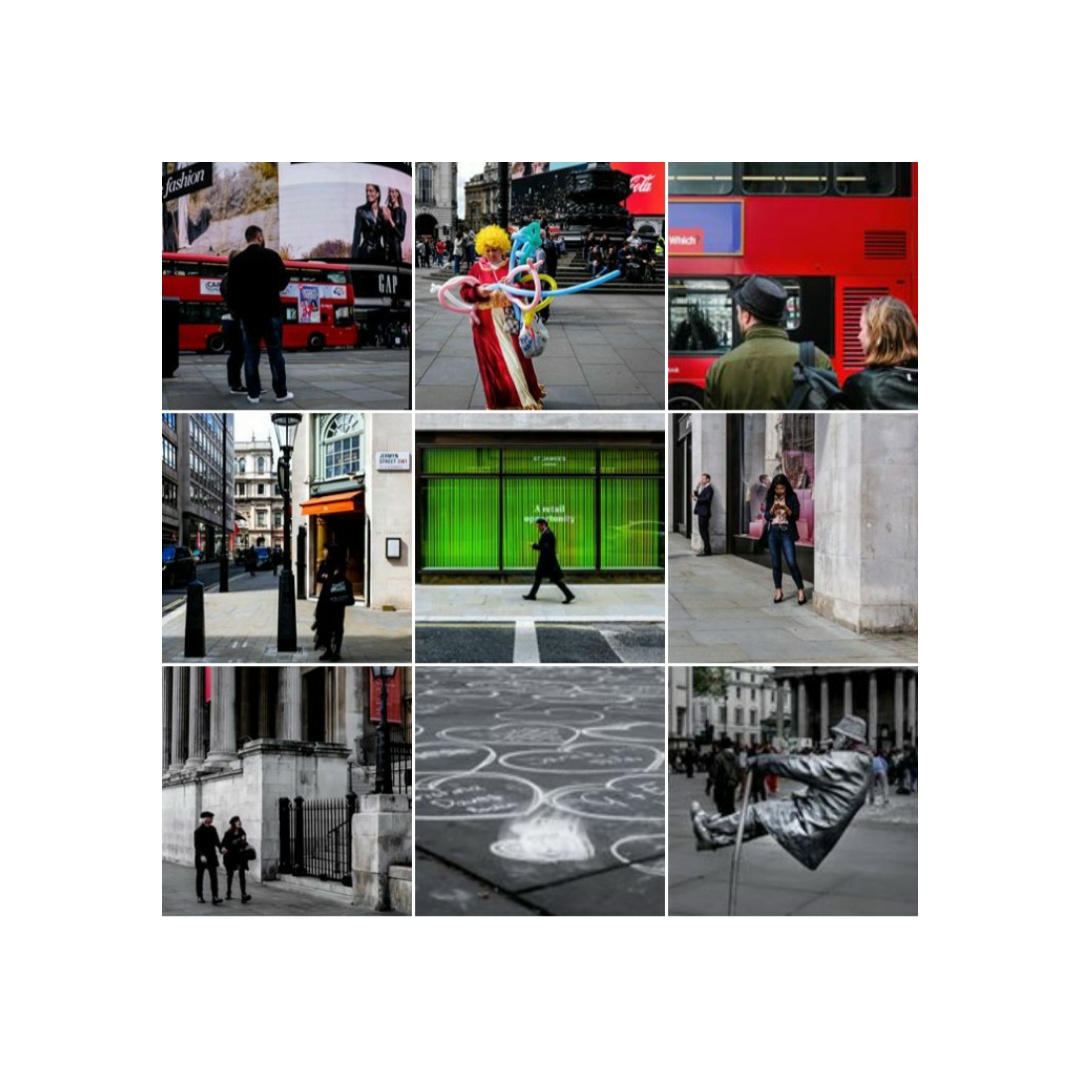
Although I am not interested in selfies or sensationalism, I must admit that I am an avid ‘Instagrammer’ and took to it very readily.  Personally, I have had very positive experiences and have found it to be quite valuable in terms of networking and creating an online presence.  Instagram’s estimated value, which appears to be rising rapidly, is a reflection of the growth in popularity of this medium as more and more people seek visual content rather than written word.  I think professionals have quickly realised that if you are in any way involved in visual media, then Instagram is the platform to be using. 

Snapshot of my Instagram feed @juanita_mckenzie_


Rethinking Photographers

There are many opinions about photographers (some positive, some negative) and they’re not always accurate. The perception of photographers and what they do is heavily influenced by the media and other mainstream ways in which photography is portrayed, for example in news, film and advertising. These are often based on stereotypes, particularly those around gender stereotyping. Sometimes photography is portrayed as being an exciting, adventurous and highly paid profession with an accompanying lifestyle, or it can be portrayed as a ruthless, voyeuristic and dishonest profession.

This excellent video created by Mishka Henner and David Oates looks at the way photographers have been portrayed in film by creating a clever montage. Their introduction to the video is very apt:

“Voyeur, hunter and investigator are just a few of the roles that have characterized the photographer when depicted in modern cinema. In Photographers, hundreds of scenes involving this now ubiquitous character are remixed and re-sequenced to expose the clichés, tropes and accidental truisms associated with the medium. As the sole subject of the film, the photographer is turned from observer to observed.”

Advertising for cameras has always portrayed the camera equipment as being the key to successful photography, however, now more than ever with such rapidly changing digital technologies, there is a constant emphasis on the value of the equipment in creating professional images. The aim is to encourage purchasing and upgrading to new equipment and to do so means creating a hype around the value of the camera, rather than the value of the photographer. This puts tremendous pressure on photographers to keep up with the newest and latest equipment in order to compete with what is out there and also diminishes the value and skill of the photographer.

Smart phone technology has gone hand in hand with the rapid rise in social media use and has created a digital culture of image sharing and content creation. The capabilities of smart phone cameras have been developed to the point that many people no longer use cameras and indeed that’s the way the technology is marketed. There is a tendency for the technology to be marketed in such a way that it implies anybody with a good camera or smartphone can be a good photographer. This has resulted in our day to day lives becoming saturated with average images that can completely obscure real photography and visual arts.

I have chosen to work with digital technology and use a DSLR camera because of the image quality and the immediacy, however, there is a part of me that wants to explore analogue as an artistic medium and return to the older technology for the enjoyment of the process and the distinct style of analogue images. There is a growing trend towards retro cameras with new Polaroid type cameras and other retro styles becoming very popular. Personally, I would prefer the original technologies rather than new versions created to look old as it lacks authenticity.

I have readily embraced social media as a means to showcase photography and have enjoyed the experience so far. I have learned that there is a lot more required than good photography in order to succeed on social media, so this can be challenging initially when starting out. There are many large accounts on social media that are about content creation and I have repeatedly seen that the most successful ones are those that have strong personal branding.

I believe these days it is essential for photographers to have an online presence as this is where the audience is located, and also where the photographer’s work can be found by potential clients. The caution is that it is a highly competitive and saturated market, so it is essential to plan content and share high quality, memorable images that will not only stand out from the rest, but will also showcase the photographer’s personal style.

It is a constantly changing visual world with rapid advancements in digital camera and smart phone technology and the subsequent rise of social media. Photographers could easily become lost amid the constant visual noise so they need to always be creating, adapting and competing in this digital arena. The perceptions are quite often that photographers are not highly skilled and people are not always willing to pay for photographic services or products when they believe they can do just as well themselves.

It really is essential that photographers rethink where they are positioning themselves in the market, what they are offering and how they can adapt to the changing terrain of visual art and technology. It is also vital that photographers think about their personal branding, what visual language they are using and how they are being perceived.

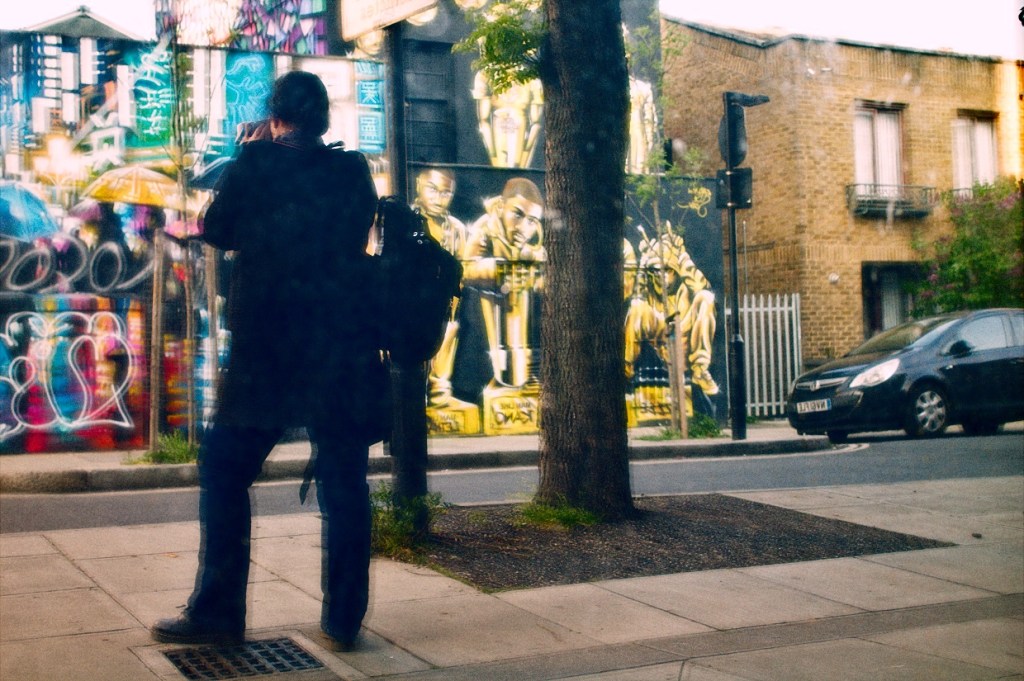
Artistic shot of me photographing street art in the rain. Photo by K.Magro

Journal Reflection – Positions and Practice,Week 2

Having explored the concept this week of photography as an interdisciplinary field, I’ve spent some time reflecting on whether my current photographic practice is interdisciplinary and how I could expand further on this.

I am already focusing on aspects of documentary photography which may have its roots in early interests in journalism and film. Social and cultural commentary are present in my work already and this draws upon earlier studies in psychology. Within my current practice I explore urban art as an integral part of the urban landscape and the social commentary it provides.

I would like to expand my practice by learning more about Fine Art photography and how this can be combined with street and documentary photography to create something more contemporary. I would like to explore surrealism, Bauhaus and expressionism as art movements that could inform, develop and deepen my photographic practice.

My interest in the urban landscape is closely linked to the architecture of places as well as the historical, cultural and geographical elements within these landscapes. Studies and research across all these areas would be extremely useful for contextual research and project development.

László Moholy-Nagy, Bauhaus balconies in Dessau, 1927.
© László Moholy-Nagy