Journal Reflection -Sustainable Prospects Week 1

The first week of this module has been incredibly exciting with the introduction of the live briefs and the opportunity to participate in these.  We have been allocated our groups for the live brief project and I am pleased to have been allocated to my first choice, even though this is likely to take me out of my comfort zones as a photographer. Read more about the live brief here.

Already the importance of research in this context has been emphasised as it is essential to understand the client and the brief in order to create an effective project pitch.  Preliminary research for the live brief projects has involved looking at the client, the visual language they are using, where their campaigns are appearing and how they are being presented.

I have undertaken a lot of online research this week around the live brief, focusing on how the client is utilising social media channels, where they are focusing their campaigns and how they are presenting themselves visually.  This has led me to consider my own visual language and how I am portraying myself and my work online.  I anticipate that I will be making some changes in the near future as I consider the importance of personal branding.

I have looked into various definitions of research methodologies and initially struggled to apply this to my artistic and photographic practices as it seemed rather theoretical. It was immensely helpful to look at how other photographers approach their research and to discover a number of varied yet equally relevant ways to approach this. 

In the past I have used research methods in my formal studies, however, as these were not art studies, it was predominantly through books, periodicals, text books and online sources.  These are equally relevant to my current photography project, along with practice-based research and constructivist methodologies. 

This includes physical exploration of the urban landscape, engaging with people in these landscapes and communities, placing myself within the context of the project, and exploring relevant techniques.  I was pleased to gain a real sense of context for my research and feel this will help to focus my work and photographic practice.

Inspiration © Juanita McKenzie

Research Methods

The project I have proposed to work on is centred around the idea of impermanence and how this is expressed in the context of the urban environment.  I intend to explore the relationships between people, place and psyche through the concept of nonplace, impermanence and the architectural language of change.  I will mostly be exploring this within my local environment but also within any other cities or suburban landscapes that I may have the opportunity to explore.  The project will progress in stages across the different course modules and I am open to the idea that it could even change as I progress.

As part of my project I will be referring to a number of different sources to provide the contextual research that will underpin my work.  Some of this will be achieved through reading a variety of different books, articles and periodicals, as well as doing online research around the genre of urban photography, the techniques used, projects around similar themes,  and the work of photographers that inspire me or from whom I can learn. 

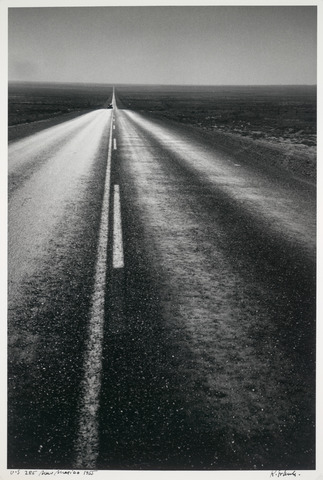
Robert Frank is one of a number of photographers whose work inspires me and is relevant to my current project.  He was an immigrant to America and set out on a two-year road trip to photograph the real America from the viewpoint of an outsider.  This resulted in his 1958 book called The Americans.  For Robert Frank, his work itself was the research, depicting a raw and honest documentary of America at that time. 


Robert Frank, U.S. 285, New Mexico, 1955. Photograph © Robert Frank, from The Americans

Lewis Bush is another photographer whose work is of great interest to me as he explores issues of gentrification, capitalism, urban change and the political context of urban landscapes.  His book, Metropole, is about the changing face of London in the context of global capitalism and how this drives modern property developments, gentrification and displacement of people.  Lewis Bush does a vast amount of research during his various projects and brings together knowledge and research in the fields of economics, politics, journalism, technology, art and history. 

Lewis Bush, Untitled, 2015 © Lewis Bush, from Metropole

I will be referring to the work of French anthropologist, Marc Augé, around the concept of non-place and will do further research on any other artists working with this concept, as well as any relevant sources within the fields of sociology and anthropology. The concept of psychogeography is another area for potential research that may bring a different aspect to my project.

Lastly, I plan to incorporate literature into my background research, and hope to find time to read some of the works by authors or poets, such as William Blake, who write about city life and the contrasts, paradoxes and changes inherent to it, as well as referring to other written or visual works that explore our relationship with the landscapes we explore, inhabit or interact with in some way.   

Another important aspect to my research will be the practical context of physically exploring the urban landscape to gain knowledge of it, as well as attempting to engage with people in these landscapes and communities.  This supports a practice-based approach to my research, as well as supporting a constructivist research methodology. 

These are perhaps ambitious plans for my research as time is always a constraint, however, I don’t see the research as being limited to only this semester of the course, but rather an ongoing process that will continue to inform, develop and evolve my project.

Journal Reflection – Positions and Practice, Week 6 & 7

Last week I had my tutor meeting with Jesse Alexander which was very supportive and encouraging. We spoke about the challenges of being a part-time student and balancing studies, work and life. I was able to discuss my ideas for project work and get some advice around finding a focus as I am still struggling to identify my style of photography.

Later in that week, I also had my 1-2-1 session with my tutor for this semester, Paul Clements. Again the feedback on my work was encouraging and some great suggestions were put forward for me to explore by looking at the work of other photographers who have produced work on similar projects to what I am currently focusing on – namely, that of the urban landscape, the constant changes and cycles of urban decay and renewal, as well as issues such as gentrification.

This week we have had the opportunity to present our draft Oral Presentations to our peers and tutor during a webinar. Unfortunately, I wasn’t able to attend due to other commitments and I am feeling somewhat anxious about missing this opportunity as my peers have said it was extremely helpful. It seems that one of my biggest challenges is going to be time constraints.

On a positive note – last week I had spent a day at the St Paul’s Carnival in Bristol with the aim of doing some street and carnival photography. The Martin Parr Foundation, Arnolfini Gallery and St Paul’s Carnival organisers had announced a pop up gallery event that would be hosted after the carnival and invited the public for submissions. I found out this week that some of my images had been selected as part of the pop-up exhibition. Really excited about this!

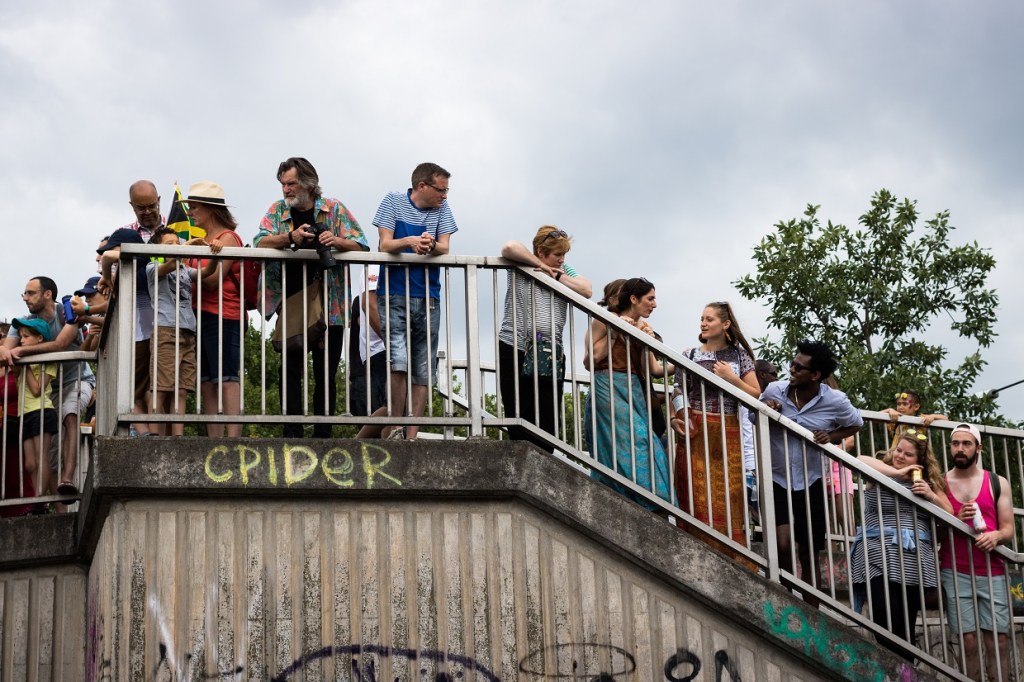
Viewpoint – St Paul’s Carnival, Bristol 2019 ©Juanita McKenzie
One of the images selected as part of the pop up exhibition held at the Arnolfini.

Methods and Strategies

Chance, coincidence and sometimes faux pas can play a very important role in photography and this is something I am always aware of in my practice, particularly when I am photographing in the streets and urban spaces of the cities that I visit. I always have my camera ready and know that I may need to be very quick in order to capture a fleeting moment in the dynamic of the every changing and moving urban environment.

Yet still there is a moment of choice involved as to whether to capture something in that precise timing and what to include within the frame. This is what Henri Cartier-Bresson refers to in his concept of the ‘decisive moment’, implying a readiness and ability to recognise the elements of a great photographic composition. This is both the creative impulse and the technical knowledge combined to bring forward a compelling photographic image.

As walking and exploring the urban environment is so integral to my photographic practice, I am often spontaneous in my work but have found it tremendously helpful to place a focus in my mind for the particular outcomes I hope to achieve in a given session. Finding a balance between planned focus and creative spontaneity is the way I endeavour to approach my photographic process so as to remain flexible and leave room for new directions.

“Having a clear understanding of concept, the rationale for a piece of work, will inform many decisions you will make as a photographer; prior, during and after the actual picture-making event. The conceptual approach is the essence of the process and the photograph. From informing subtle choices concerning subject, materials, composition and final presentation, the relationship between concept and subject underpins all that the photographer does.” (Short, 2011)

The choice of lens, location, time of day, season and intention can all be factors that will influence my work and all involve making technical and creative decisions beforehand. The processing and editing of images afterwards are also important technical and creative decisions that are part of my photographic practice. These decisions are always shaped by knowing my reasons for a particular project, enabling a focused and meaningful process. Yet it is often through remaining open to chance and spontaneity that some of my best work is achieved.

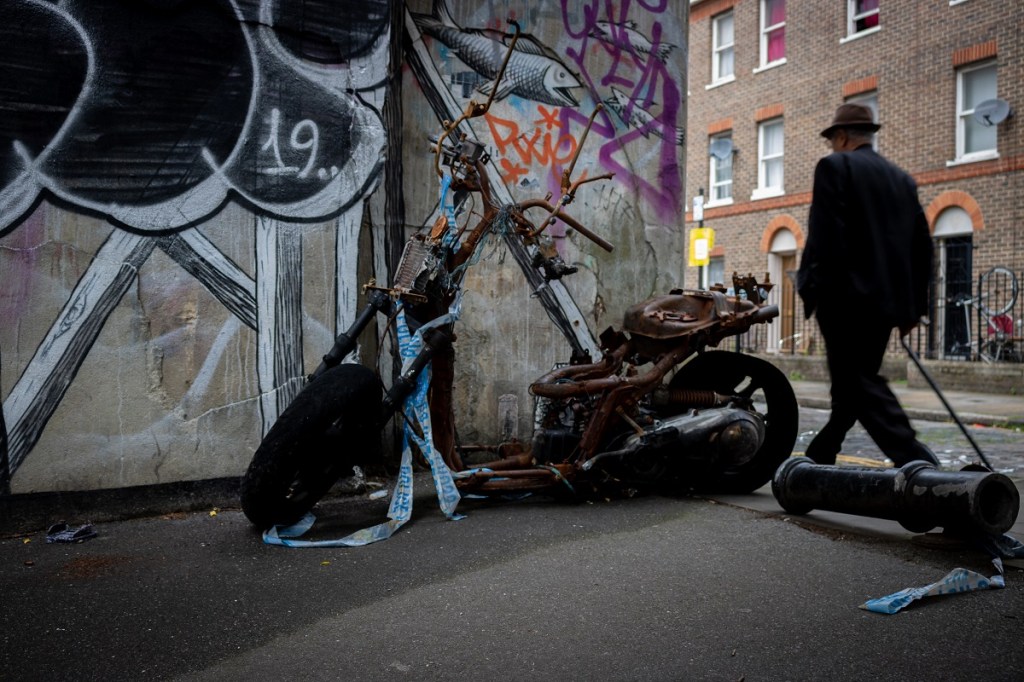
East London, June 2019 – The unexpected pedestrian strolling into my frame adds an interesting dynamic to the composition and enhances the narrative in a way that might not have been there without this chance happening.
©Juanita McKenzie

References:

* Short, M. (2011). Subject. In Basics Creative Photography 02: Context and Narrative (pp. 40–65). Lausanne: AVA Publishing SA. Retrieved November 29, 2019, from http://dx.doi.org/10.5040/9781350088993.ch-002

Journal Reflection – Positions and Practice,Week 5

During coursework this week, we explored issues of power and responsibility as photographers. I am very clear on my own morals, ethics and responsibilities as a photographer, however, I found it difficult to come to terms with power. This is a concept I was initially very uncomfortable with as I had never considered myself as powerful in my role as a photographer or as having power over others in this capacity. 

Upon reflection I came to understand through Henri Cartier-Bresson’s concept of the decisive moment, that the moment of decision, choosing when to take a photograph, was actually an act of power. This led me to consider how as photographers we should reflect upon why we choose a particular subject to portray, or a particular moment in time to capture, and what we will include in the frame. Conversely, what we exclude or leave out – the photographs never taken – are equally significant. What is present or absent in an image is a conscious decision made by the photographer that will not only create meaning but will speak of the photographer’s relationship to the subject matter.

Our tutor, Jesse Alexander, emphasised that it is vital for us as photographers to understand the relationship between subject, image, viewer and photographer, and that it is our moral and ethical responsibility to make that relationship as fair as we believe is reasonably possible. In discussions on the forum, we looked at how photographs can be misused, and debated our responsibility as photographers in this context. It made me extremely aware of the need to be careful about who I am willing to work with and just how much ownership of my work I am prepared to give away.

I think its also extremely important to be aware of the kind of contracts involved and define both who the contract serves and protects.  We always have a moral and ethical responsibility that is implicit in our work as photographers by virtue of the relationship that exists between the photographer, the subject and the viewer. For me this triangular ‘model’ is a good starting point from which to make ethical judgments about my own photographic practice or that of another, and to enable me to assess the balance of power in each situation. We need to always be aware of the power of an image and therefore be discerning and sensitive in the way we work.

In peer debates privacy and dignity were raised as being important to ethical photography, and this is very pertinent to me as somebody with an interest in both street and social documentary photography. I had in fact been considering working on a project around social issues in the urban environment, in particular homelessness.  I am acutely aware of the vulnerabilities in these circumstances and how essential it is to protect what little privacy and dignity such people have. 

The conflict for me is between feeling I have a responsibility to tell the story while constantly questioning myself around the moral aspects of photographing such vulnerable subjects. I believe it is essential to be sensitive towards the subject, to be very clear on personal integrity, and to work collaboratively where possible.  I particularly feel that collaborative work is not only ethical but also empowering for all involved and is particularly important in portraiture, photojournalism and social documentary photography.

I am currently focusing on urban architecture and some street photography, so in this context it’s very important for me to understand the law,  particularly in respect of private buildings and photographing people.  My first responsibility is always to make sure I know the law and to work within those boundaries while also maintaining my rights as a photographer. The second very important aspect for me is to consider the subjects that I am photographing and to make sure that I am photographing with sensitivity, respect and compassion. 

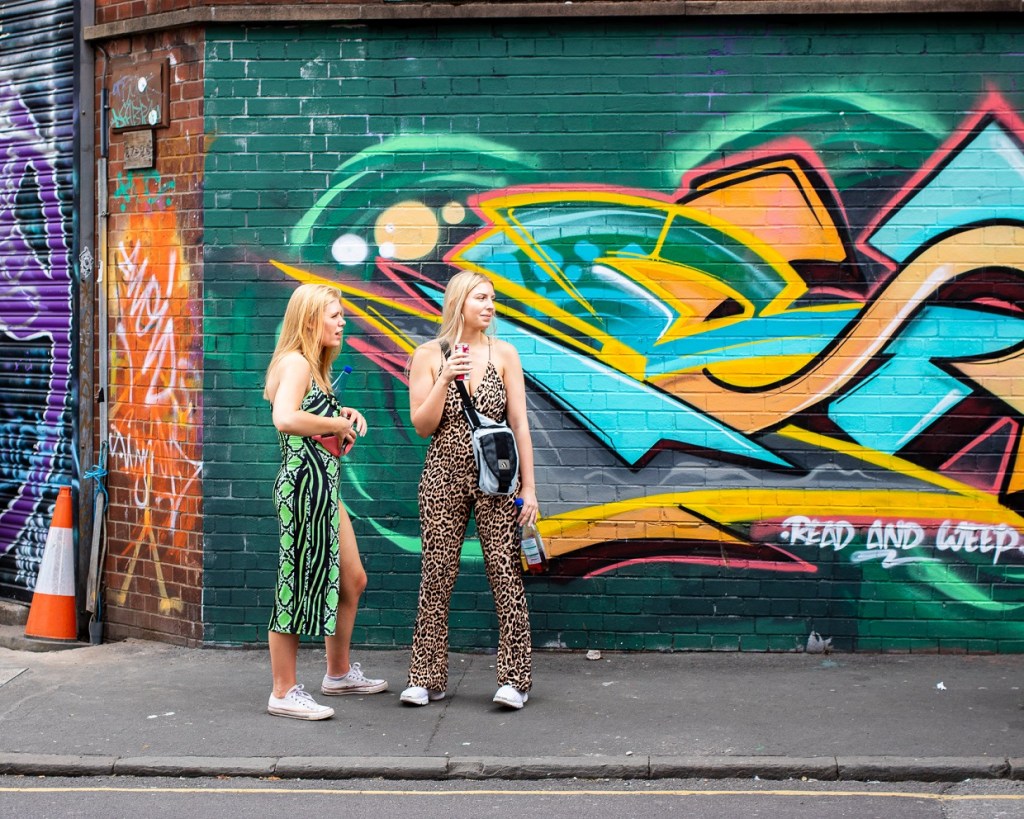
Colour Co-ordination – Street Photography, Bristol ©Juanita McKenzie