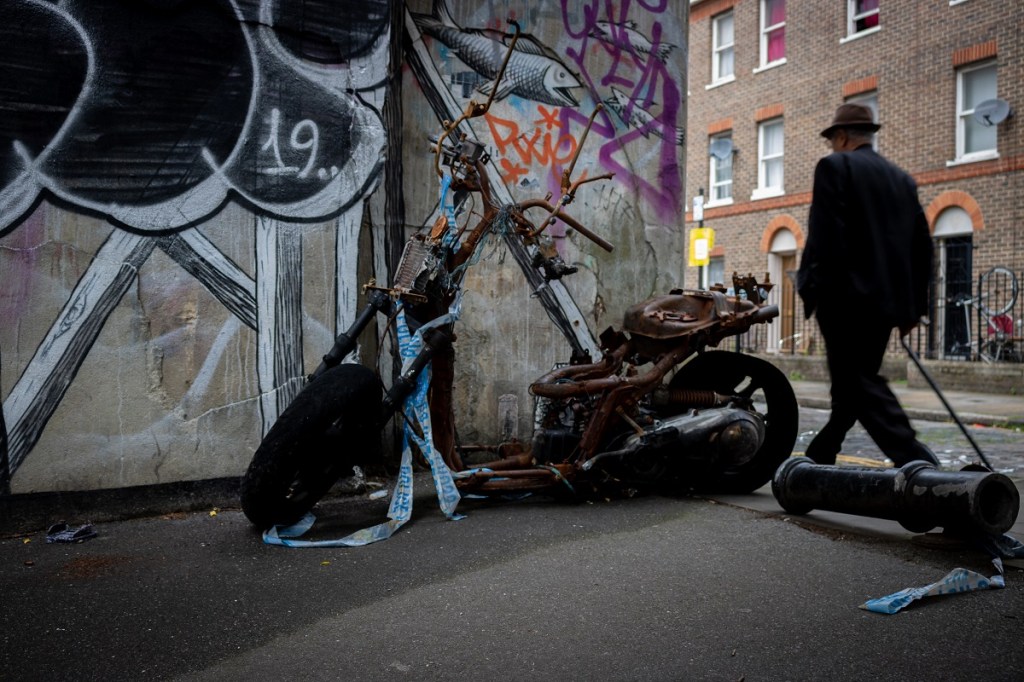
Chance, coincidence and sometimes faux pas can play a very important role in photography and this is something I am always aware of in my practice, particularly when I am photographing in the streets and urban spaces of the cities that I visit. I always have my camera ready and know that I may need to be very quick in order to capture a fleeting moment in the dynamic of the every changing and moving urban environment.
Yet still there is a moment of choice involved as to whether to capture something in that precise timing and what to include within the frame. This is what Henri Cartier-Bresson refers to in his concept of the ‘decisive moment’, implying a readiness and ability to recognise the elements of a great photographic composition. This is both the creative impulse and the technical knowledge combined to bring forward a compelling photographic image.
As walking and exploring the urban environment is so integral to my photographic practice, I am often spontaneous in my work but have found it tremendously helpful to place a focus in my mind for the particular outcomes I hope to achieve in a given session. Finding a balance between planned focus and creative spontaneity is the way I endeavour to approach my photographic process so as to remain flexible and leave room for new directions.
“Having a clear understanding of concept, the rationale for a piece of work, will inform many decisions you will make as a photographer; prior, during and after the actual picture-making event. The conceptual approach is the essence of the process and the photograph. From informing subtle choices concerning subject, materials, composition and final presentation, the relationship between concept and subject underpins all that the photographer does.” (Short, 2011)
The choice of lens, location, time of day, season and intention can all be factors that will influence my work and all involve making technical and creative decisions beforehand. The processing and editing of images afterwards are also important technical and creative decisions that are part of my photographic practice. These decisions are always shaped by knowing my reasons for a particular project, enabling a focused and meaningful process. Yet it is often through remaining open to chance and spontaneity that some of my best work is achieved.
©Juanita McKenzie
References:
* Short, M. (2011). Subject. In Basics Creative Photography 02: Context and Narrative (pp. 40–65). Lausanne: AVA Publishing SA. Retrieved November 29, 2019, from http://dx.doi.org/10.5040/9781350088993.ch-002
 Journey Through the Lens